
Self-Guided Mont Blanc East Hiking Tour
Aostatal, Val Ferret and Courmayeur are among the most breathtaking highlights of the Tour du Mont Blanc. The places you pass through in this section truly feel like a collection of the finest landscapes the Alps have to offer. Mighty glaciers sparkle under the sunlight, while peaceful mountain lakes rest quietly in flower-filled alpine meadows. Towering peaks, green valleys and charming mountain villages create scenery that feels both dramatic and serene. Every step reveals a new panorama, from rugged glacier walls to gentle pastures dotted with wildflowers.
The beauty of the trails, the purity of the mountain air and the constantly changing landscapes make this route one of the most spectacular hiking experiences in the world. It is often said that there are few walking trails anywhere in the mountains that can rival the unforgettable scenery of this legendary alpine journey.
Self-Guided
moderate
16 km / 10 mi
5
Casual+ Inns
Min. 2, Max. 12
Highlights

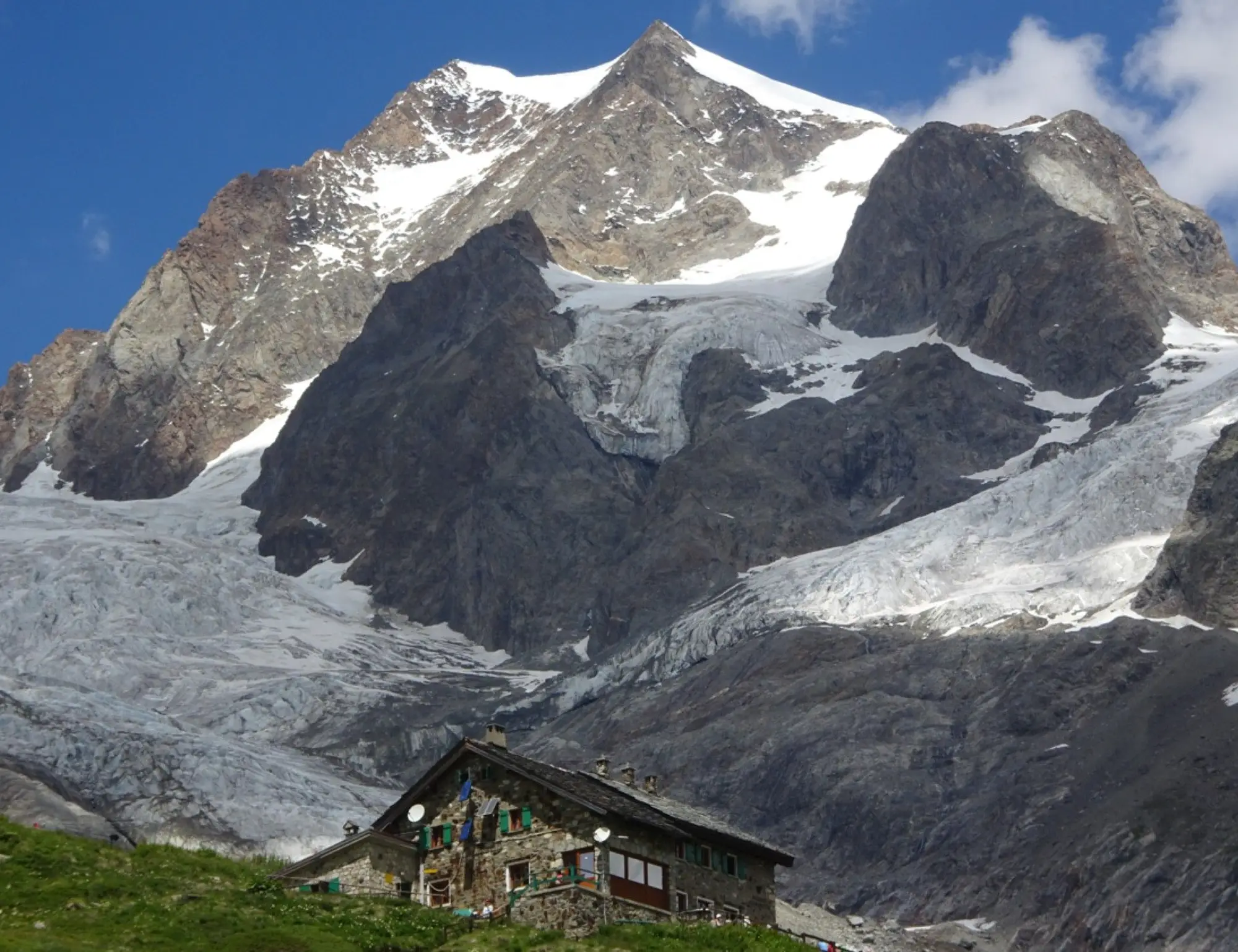
Spectacular Alpine Landscapes
The route passes through some of the most beautiful areas of the Alps, including Aosta Valley and Val Ferret. Hikers enjoy breathtaking views of towering peaks, shining glaciers, and peaceful mountain lakes surrounded by colorful alpine meadows.
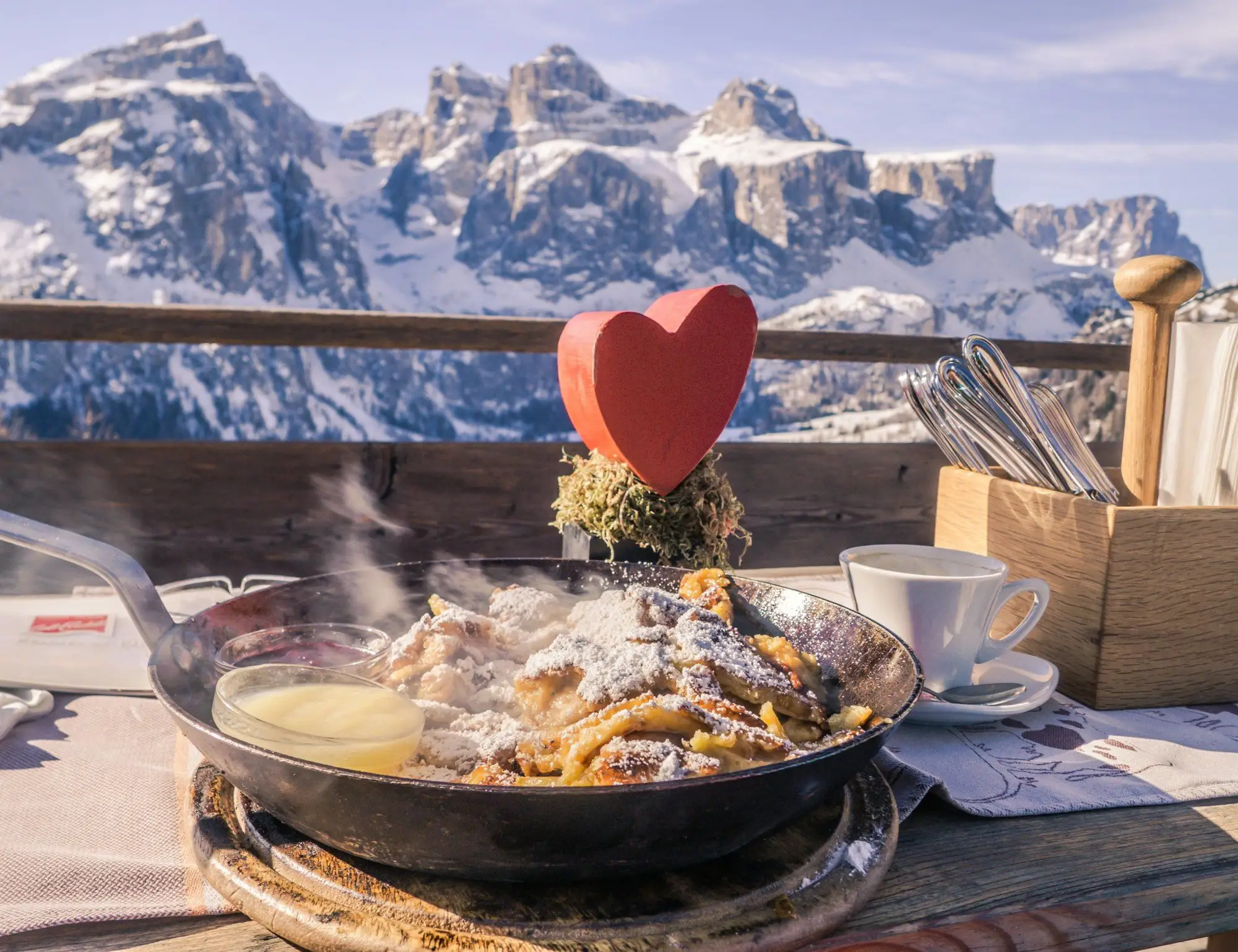
Three Countries in One Trek
This journey takes you through Switzerland, Italy, and France, offering a unique cultural experience along the way. Each region presents different landscapes, local traditions, and delicious alpine cuisine.
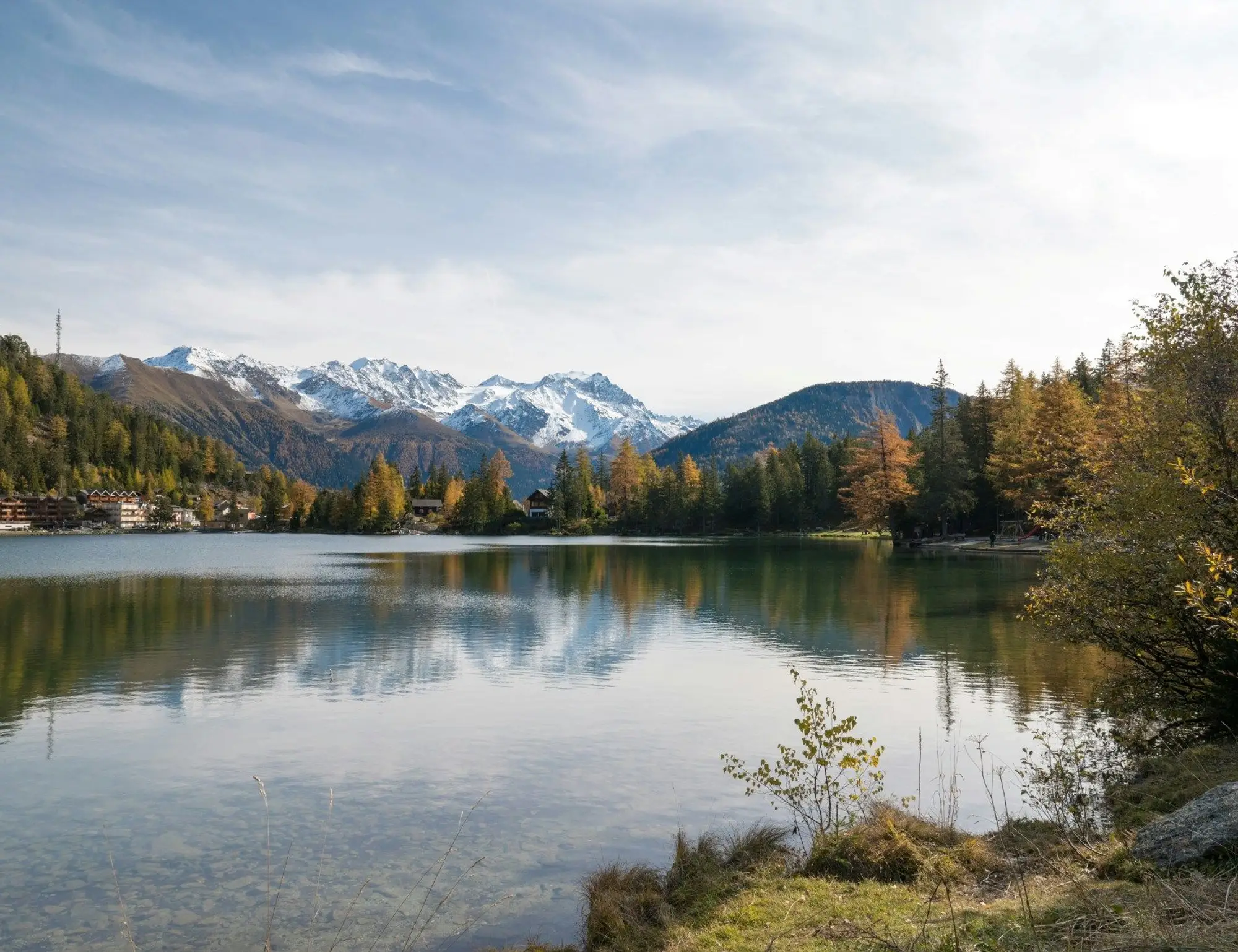
Champex-Lac – The “Canada of Switzerland”
Champex-Lac is a charming alpine village known for its crystal-clear lake surrounded by forests and wooden chalets. The peaceful scenery and reflections of the mountains in the lake create one of the most picturesque stops on the Tour du Mont Blanc.
Itinerary
Brief Itinerary
Meals are indicated as B = Breakfast, L = Lunch, D = Dinner.
Listed hotels are subject to availability and may be replaced with similar alternatives of equal standard.
| Day | Place | Casual+ Inns | Meals | Distance | Activity |
|---|---|---|---|---|---|
| DAY 1 | Martigny | Boutique Hôtel (4-star) | |||
| DAY 2 | Champex | Hotel du Glacier | B | 15 km / 9 mi | hiking |
| DAY 3 | La Fouly | Hotel Edelweiss | B | 15 km / 9 mi | hiking |
| DAY 4 | Courmayeur | Hotel Crampon | B | 14 km / 9 mi | hiking |
| DAY 5 | Courmayeur | Hotel Crampon | B | 19 km / 12 mi | hiking |
| DAY 6 | Bourg Saint Maurice | Hotel L'Autantic | B | 15 km / 9 mi | hiking |
| DAY 7 | Departure | B |
Detailed Itinerary

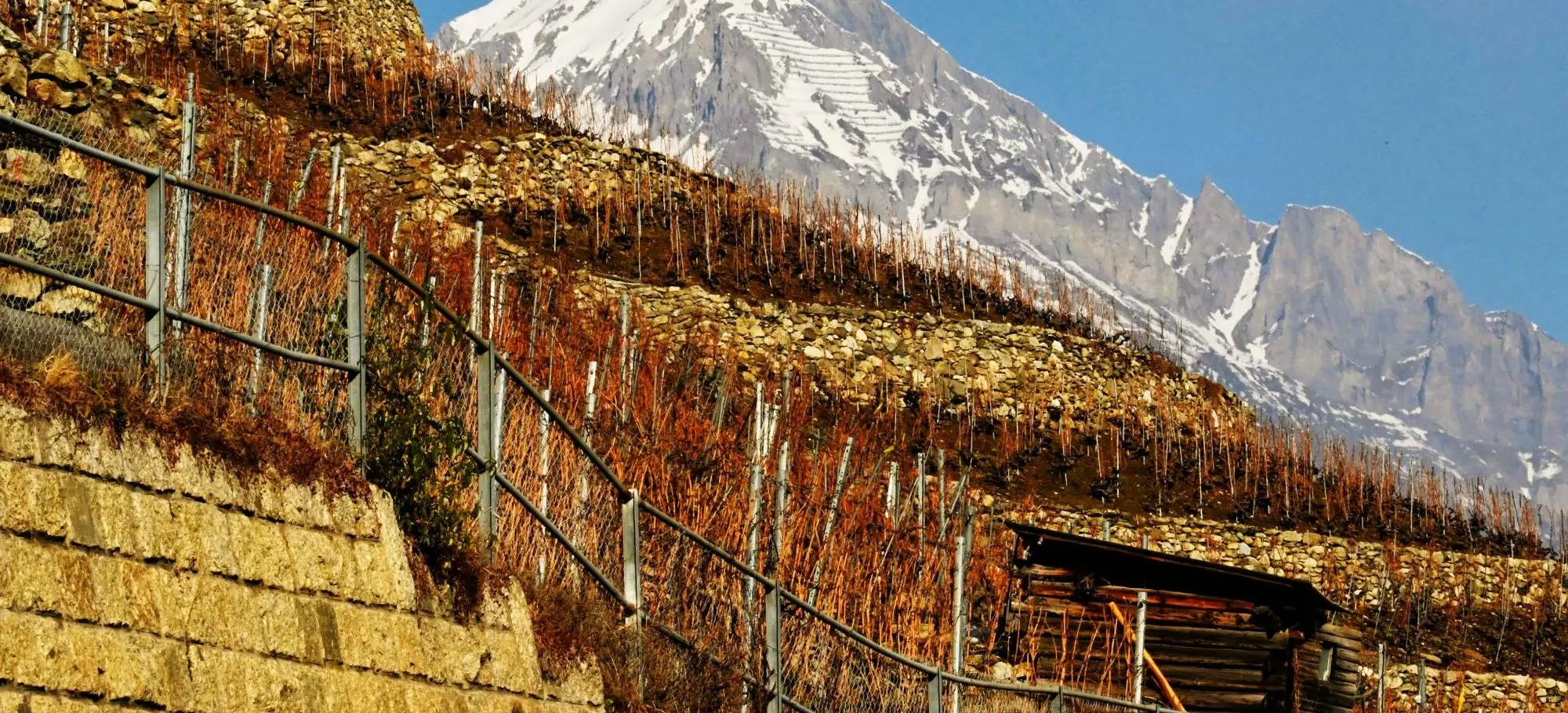
Day 1: Martigny
You arrive in the charming alpine town of Martigny, beautifully located near the Rhône River. Surrounded by vineyards and mountains, it’s the perfect peaceful start to your journey. You can walk through the old town, visit La Bâtiaz Castle or relax at a local restaurant and enjoy Swiss cuisine
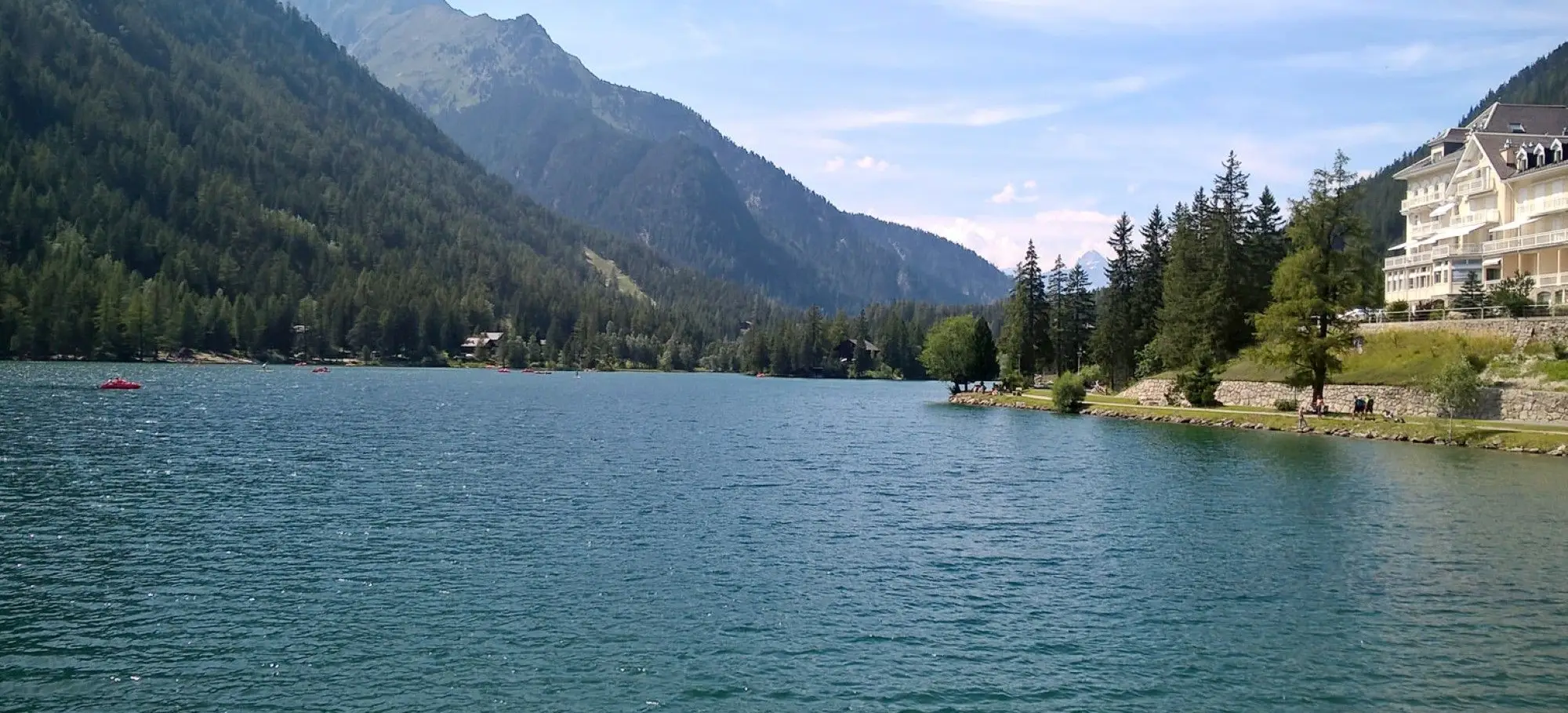
Day 2: Champex
In the morning, you transfer to Trient to begin your first hike. You climb the historic Col de la Forclaz pass, once an important connection between the Rhône Valley and Chamonix. From there, forest trails take you over Collet Portalo and towards the alpine pasture of Alp Bovine.
After a rest at this traditional mountain farm, you descend along dramatic cliffs and mountain streams. A farmhouse in the valley offers homemade local products.
The final gentle climb leads you to Champex-Lac, a serene lake surrounded by wooden chalets and pine forests, often called the “Canada of Switzerland.”
Day 3: La Fouly
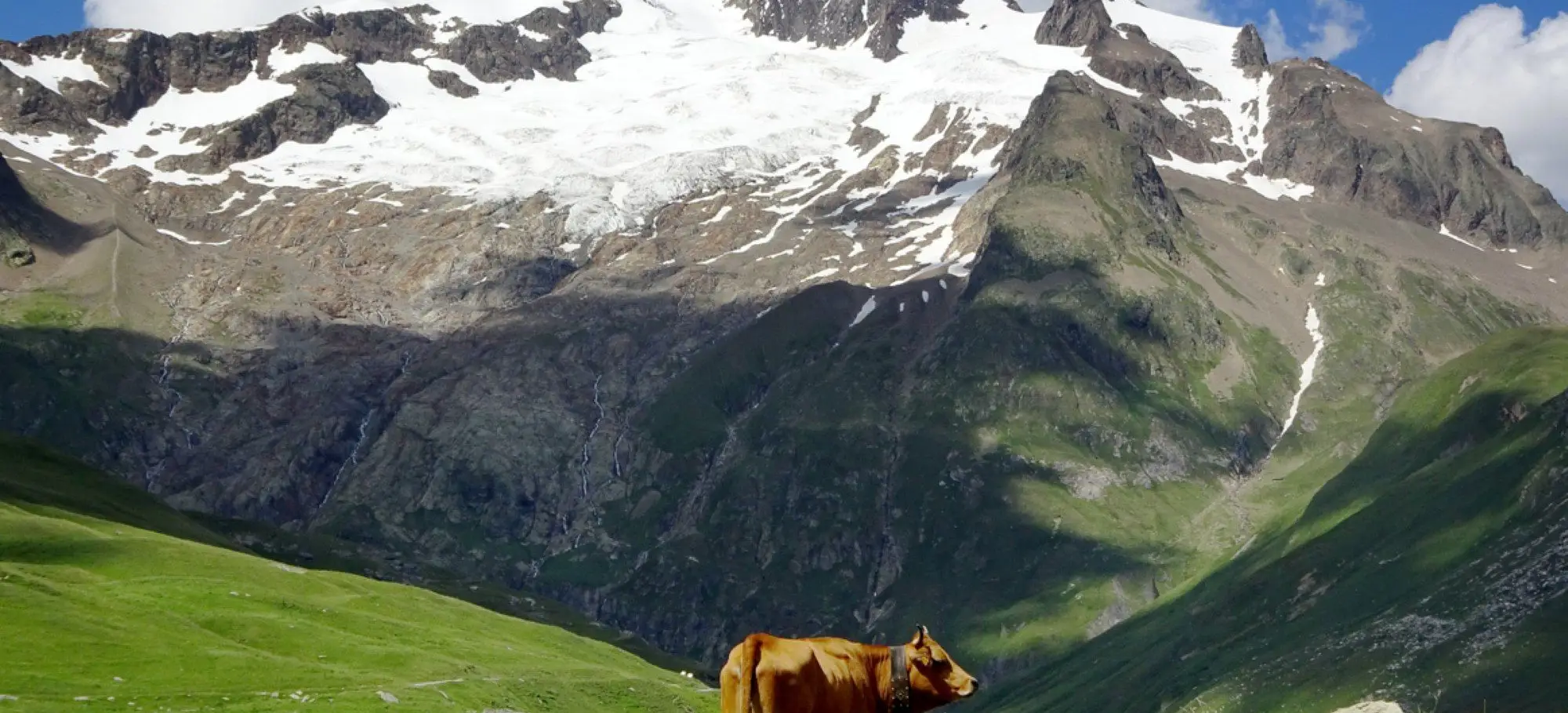
Today the trail leads you down along pleasant forest roads into the valley of the Dranse River. You follow the gentle course of the river as it winds through the charming mountain villages of Valais, where traditional wooden houses and peaceful alpine scenery create a calm atmosphere. Gradually, a scenic path climbs again above a rocky ravine carved by a mountain stream, guiding you toward the upper end of Swiss Val Ferret at La Fouly.
As you approach your destination, the landscape becomes increasingly dramatic, with striking sand coloured cliffs and enormous glacier flanks dominating the horizon. The area is popular with rock climbers and experienced alpinists, and you will notice several small bivouac huts that serve as base camps for high mountain expeditions. In the afternoon, you may take a cable car to a panoramic viewpoint for even wider alpine views, or simply relax and absorb the serenity of this breathtaking mountain setting.
Day 4: Courmayeur
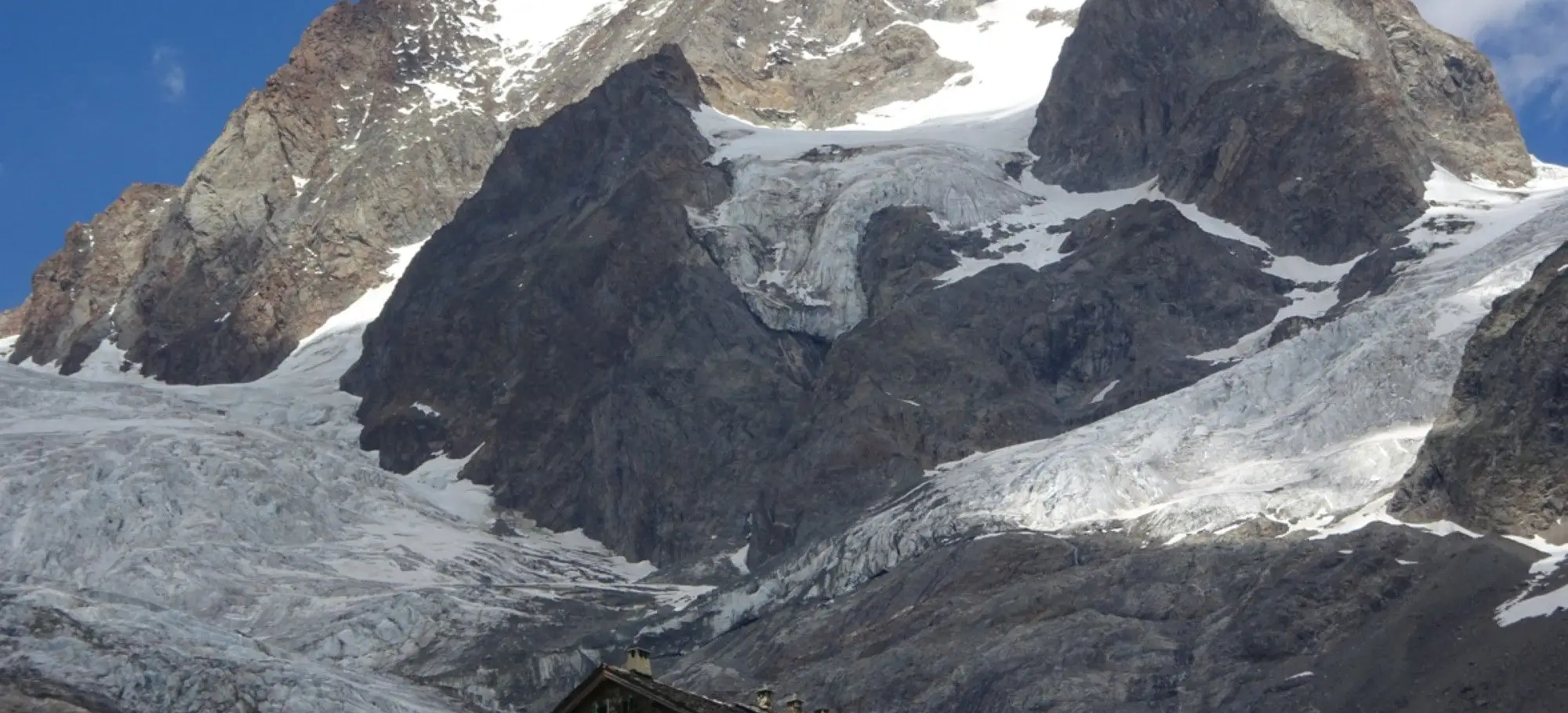
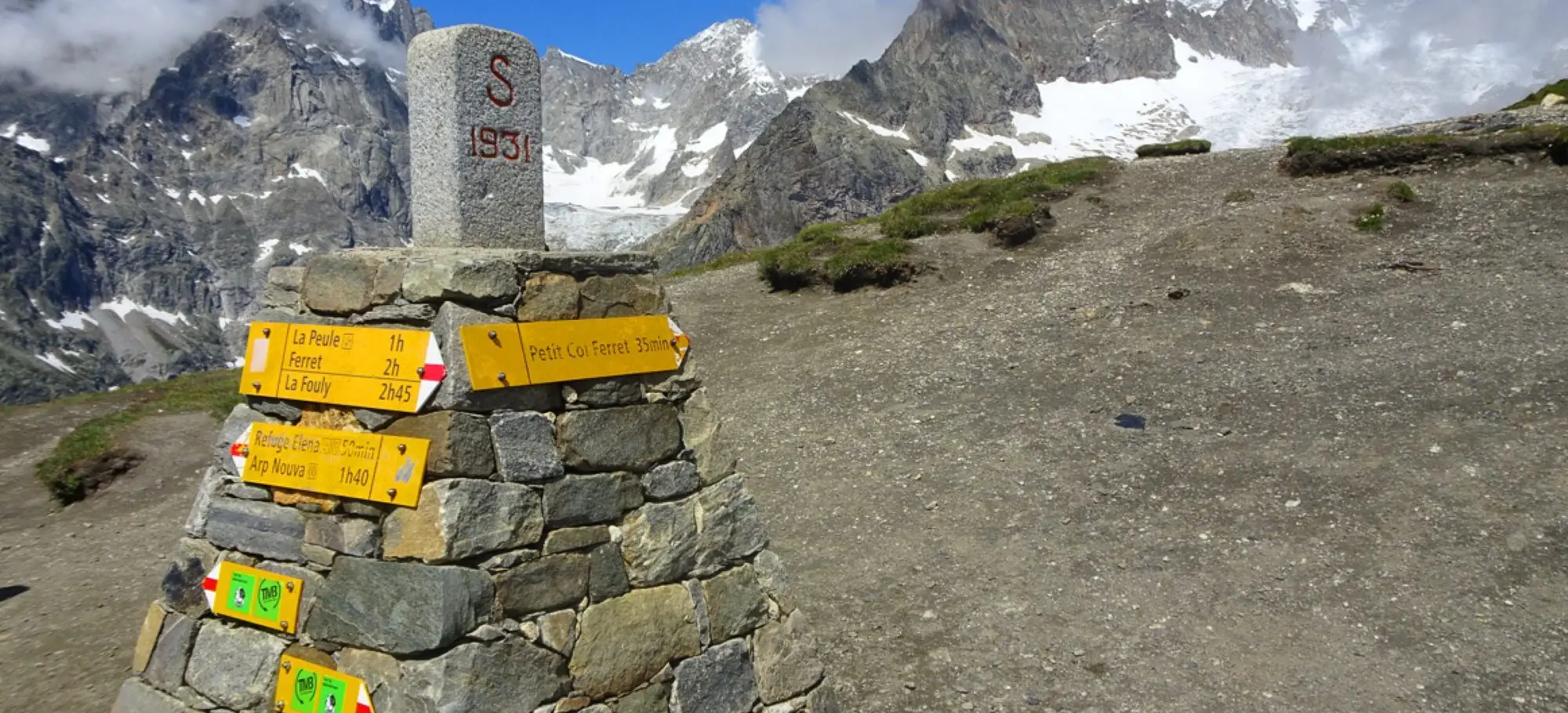
Today you cross your first major high mountain pass into Italy. The climb begins toward Alpe Peule, where you can pause and stock up on local products before continuing higher into the alpine landscape. The trail leads steadily upward to Grand Col Ferret at 2537 metres, marking the border between Switzerland and Italy. From the summit, the panorama opens dramatically over the Italian Val Ferret, where green valley slopes contrast with rugged rock faces and glacier covered walls.
The descent brings you directly to Refuge Elena, perfectly positioned beneath the glacier. Here you can enjoy an authentic Italian espresso while sitting on the terrace with breathtaking ice views in front of you. A scenic trail along the stream guides you down into the valley, followed by a bus transfer to the lively alpine town of Courmayeur
Day 5: Courmayeur
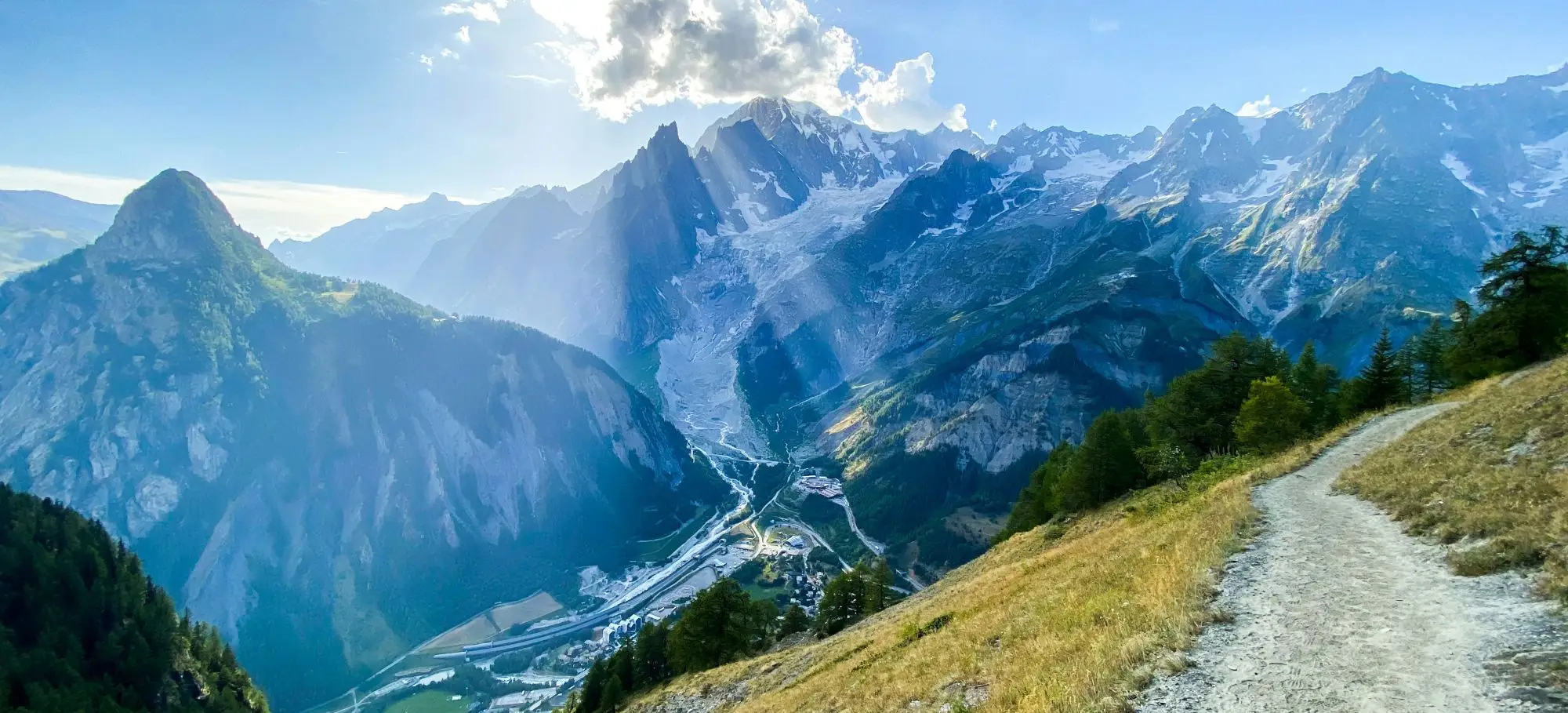
After breakfast, you return by bus to Val Ferret for a spectacular panoramic hiking day. The morning climb takes you onto a magnificent alpine trail with constant views of the Mont Blanc massif. The path leads to the legendary Refuge Bonatti, a famous hut deeply connected to the history of alpine mountaineering. From here you can choose between a shorter and more level route along the mountainside or a more demanding high alpine option crossing two additional passes along the ridgeline.
Both routes offer unforgettable scenery and eventually meet at Rifugio Bertone, where cappuccino and cake provide the perfect reward. In the afternoon, you descend to Courmayeur, known for its elegant pedestrian streets, rich mountaineering heritage and extraordinary views of Mont Blanc.
Day 6: Bourg Saint Maurice
In the morning you transfer to Chalet du Miage to begin your final hiking stage. The trail winds through the wide and impressive Veny Valley, passing striking lateral moraines, unusual limestone formations and hidden glacial lakes. The landscape feels wild and expansive as you approach Rifugio Elisabetta, where you may enjoy traditional Italian mountain specialities on the terrace.
The route then climbs to Col de la Seigne at 2516 metres, where you cross from Italy into France and enter the region of Haute Savoie. From the pass, you descend into the beautiful Vallée des Glaciers, once used as alpine pastureland and now surrounded by herds of grazing cows. A transfer from Ville des Glaciers brings you down to Bourg Saint Maurice, a charming French alpine town on the Isère River. This is the perfect place to celebrate the completion of your remarkable three country journey.
Day 7: Departure
Your journey officially ends in Bourg Saint Maurice. Before departing, you may explore the town, enjoy a relaxed walk through its traditional alpine setting, or take the funicular up to the hiking region of Les Arcs for panoramic views. If time allows, you can extend your stay and unwind further in the beautiful Savoie region before returning home.
Ready to plan your adventure? Download a print-ready detailed itinerary.
Map
Dates and Prices
Book with Confidence: For scheduled group departures, your 20% deposit is fully refundable until 60 days before departure. Solo travellers booking 120+ days in advance can avoid a mandatory Single Supplement. See terms & conditions.
Couldn't find a trip with convenient dates?
Open your date as a join-in tour or customize further as a private one.
Essential Info
Inclusions
LODGING
All hotels as mentioned in the tour details or similar (subject to availability).
Luggage Transfer
Transportation of luggage from one hotel to another.
meals
Meals as per itinerary. Guests are given the opportunity to dine on their own so that they discover a location independently.
Additional Inclusions
· overnight stays as stated incl. breakfast · Luggage transfer (1 piece of luggage per person, max. 15 kg) · Transfers as per program · Carefully elaborated route description · Detailed travel documents 1x per room (German, English) · Navigation-App and GPS-data
Exclusions
Airport pickup
We recommend to book direclty from airport.
Airport drop
We recommend to book direclty from your last hotel.
Beverages
Beverages such as alcohol, tea, coffee, juice at a hotel or restaurant.
Gratuity
Gratuities for your guide team are not included in the trip price.
Martigny
Bourg Saint Maurice
Geneva International Airport (GVA)
Geneva International Airport (GVA)
Arrival
The tour begins in Martigny, Switzerland, which is well connected by air, rail, and road. The most convenient fly-in airport is Geneva Airport, located about 1.5 hours away by direct train to Martigny. Another option is Zurich Airport, from where travelers can take a train via Visp to Martigny with a total journey time of approximately 2.5 to 3 hours. Martigny is easily accessible through the Swiss rail network, with frequent train connections from major cities. Travelers arriving by car can drive directly to Martigny, although parking is limited. A small number of parking spaces are available near the railway station at an approximate cost of CHF 10 per day. Regional bus services also connect Martigny with nearby towns and villages.
Departure
The tour ends in Bourg-Saint-Maurice, France. From here, travelers can depart by train or bus to major transport hubs. A common option is to travel to Geneva Airport, which takes approximately 3 to 4 hours by train and bus connections and is the most convenient fly-out airport for international flights. Lyon Saint-Exupéry Airport is another possible departure airport and can be reached by train connections via Chambéry or other regional stations. Travelers wishing to return to the starting point can take a combination of bus and train from Bourg-Saint-Maurice back to Martigny, with a total journey time of about 8 hours and several transfers. Road connections are also available for private transfers or car travel.
The Tour du Mont Blanc region experiences typical alpine mountain weather, which can change quickly due to high altitude and mountain conditions.
The best season for trekking is July and August, when trails are fully accessible, mountain huts are open, and daytime temperatures usually range from 15°C to 25°C (59°F to 77°F) in the valleys, while higher passes remain cooler at around 5°C to 15°C (41°F to 59°F).
The good season includes late June and September, when most routes are open, the weather is generally stable, and the trails are quieter, though temperatures may be slightly cooler.
Mixed or shoulder seasons occur in May and October, when weather can be unpredictable with possible snow on high passes and limited services.
The off season runs from November to April, when heavy snowfall covers the trails, temperatures often drop below 0°C (32°F), and most trekking routes and mountain refuges remain closed. Since alpine weather can change rapidly, hikers should always be prepared for sudden temperature shifts, rain, or strong winds.
January
Offseason
February
Offseason
March
Offseason
April
Offseason
May
Mixed
June
Good
July
Best
August
Best
September
Best
October
Mixed
November
Offseason
December
Offseason
Best
Good
Mixed
Offseason
Packing wisely ensures comfort and safety on your hiking adventure. This list covers essential hiking gear, clothing, and travel items to help you handle varied terrain and weather conditions.
Recommended Hiking Clothes & Gear
- Lightweight hiking shoes or boots with good traction.
- Moisture-wicking base layers and breathable hiking shirts.
- Quick-dry hiking pants or shorts.
- Light fleece or down jacket for cooler temperatures.
- Waterproof and windproof shell jacket.
- Sun hat and sunglasses with UV protection.
- Hiking poles (optional but recommended on uneven terrain).
- Small daypack with hydration system or water bottles.
- Headlamp or small flashlight.
- Light gloves and beanie for early mornings or high altitudes.
Clothing
- Layered clothing for temperature changes throughout the day.
- Full-sleeved tops for sun and insect protection.
- Comfortable evening wear for lodges or inns.
- Compact rain jacket for unpredictable weather.
- Extra socks (preferably synthetic or wool).
Other Necessities
- Basic first-aid kit with personal medication.
- Sunscreen, lip balm, and insect repellent.
- Reusable water bottle or hydration bladder.
- Snacks like trail mix, nuts, or energy bars.
- Plug adaptor and power bank for charging devices.
Pro Tips
- Pack light — you’ll appreciate it on uphill climbs.
- Break in your shoes before the trip to avoid blisters.
- Keep rain gear easily accessible in your daypack.
Luggage
Please limit your luggage to one medium-sized suitcase and one daypack. Mark your luggage clearly with your name, address, and phone number.
Before venturing on your adventure, make sure you're equipped with essential travel advice, including security updates, local laws, and crucial passport and visa information. Start by visiting the official government website of your home country for accurate and reliable guidance:
- UK Residents: Stay informed by reviewing the Foreign, Commonwealth & Development Office (FCDO) Travel Advice.
- US Residents: Access vital travel tips and updates through the US Department of State Travel Advice.
- Australian Residents: Plan ahead with the latest updates on the Smart Traveller website.
- Canadian Residents: Find comprehensive travel and visa guidance on the Government of Canada's Travel Advice and Advisories.
- New Zealand Residents: Get practical travel advice on the New Zealand SafeTravel website.
- Residents of Other Countries: Check with your government or local consulate for tailored travel advice and requirements.
Note: Passport and visa regulations can change at any time. Stay proactive by checking for the latest updates to ensure a smooth and stress-free journey.
Medical insurance that covers medical costs in case of an accident during the trip is mandatory to participate in our tours.
We recommend purchasing adequate travel insurance to protect yourself from unforeseen events. Our experience shows that guests who purchase travel insurance—including coverage for all activities on the itinerary, trip cancellation, interruption, delay, baggage damage, loss or theft, personal accident, death and repatriation costs, medical and emergency expenses (including Covid-19), and personal liability—travel with greater peace of mind.
Is proof of medical insurance required?
Yes. You must provide your insurer's name, policy number, and emergency contact via our reservation form. This is mandatory. If you cannot provide proof, you’ll need to purchase insurance before traveling with us.
Can I use my credit card insurance?
Yes, as long as it meets our requirements and provides adequate coverage. Ensure you have an emergency contact number and policy number available.
When should I buy travel insurance?
Purchase travel insurance as soon as you've paid in full or booked your flights.
Does Art of Bicycle Trips sell travel insurance?
We do not sell travel insurance directly, as we believe our customers should have the freedom to choose a policy that best suits their needs. However, we recommend Insured Nomads as a great starting point.
