
Self-Guided Kattegattleden Bike Tour
The Kattegattleden Cycling Tour is a breathtaking journey along Sweden’s west coast, stretching from Helsingborg to Gothenburg. As Sweden’s first national cycle route, it’s designed with cyclists in mind—mostly car-free, well-signposted, and packed with panoramic views. This week-long ride takes you through charming seaside towns, expansive beaches, rugged cliffs, nature reserves, and rolling countryside. Each day offers something different: lush gardens at Sofiero Castle, vineyard tastings near Höganäs, historic forts in Varberg, and even a ride past Sweden’s only Tudor-style castle, Tjolöholm.
You’ll pedal alongside the sparkling Kattegat Sea, with plenty of opportunities for swimming, fika breaks, and cultural stops along the way. Whether you're cycling past fields of wildflowers, watching windsurfers in Apelviken, or coasting into lively cities like Halmstad and Gothenburg, the tour offers a perfect balance of nature, history, and Scandinavian charm. Daily distances range from 39 to 72 km, with options to shorten several days using trains—making the tour flexible for various fitness levels.
Accommodations are comfortable and conveniently located, often near the sea, and your luggage is transported, allowing you to ride light and carefree. This journey is perfect for anyone who wants to experience the slower rhythm of coastal life while staying active in stunning surroundings. Whether you’re cycling for the sea air, the scenery, or the joy of the open road, Kattegattleden delivers an unforgettable Scandinavian adventure.
Self-Guided
Helsingborg
Gothenburg
moderate to challenging
59 km / 37 mi
6
Min. 2, Max. 14
Copenhagen Airport (CPH)
Copenhagen Airport (CPH)
Highlights

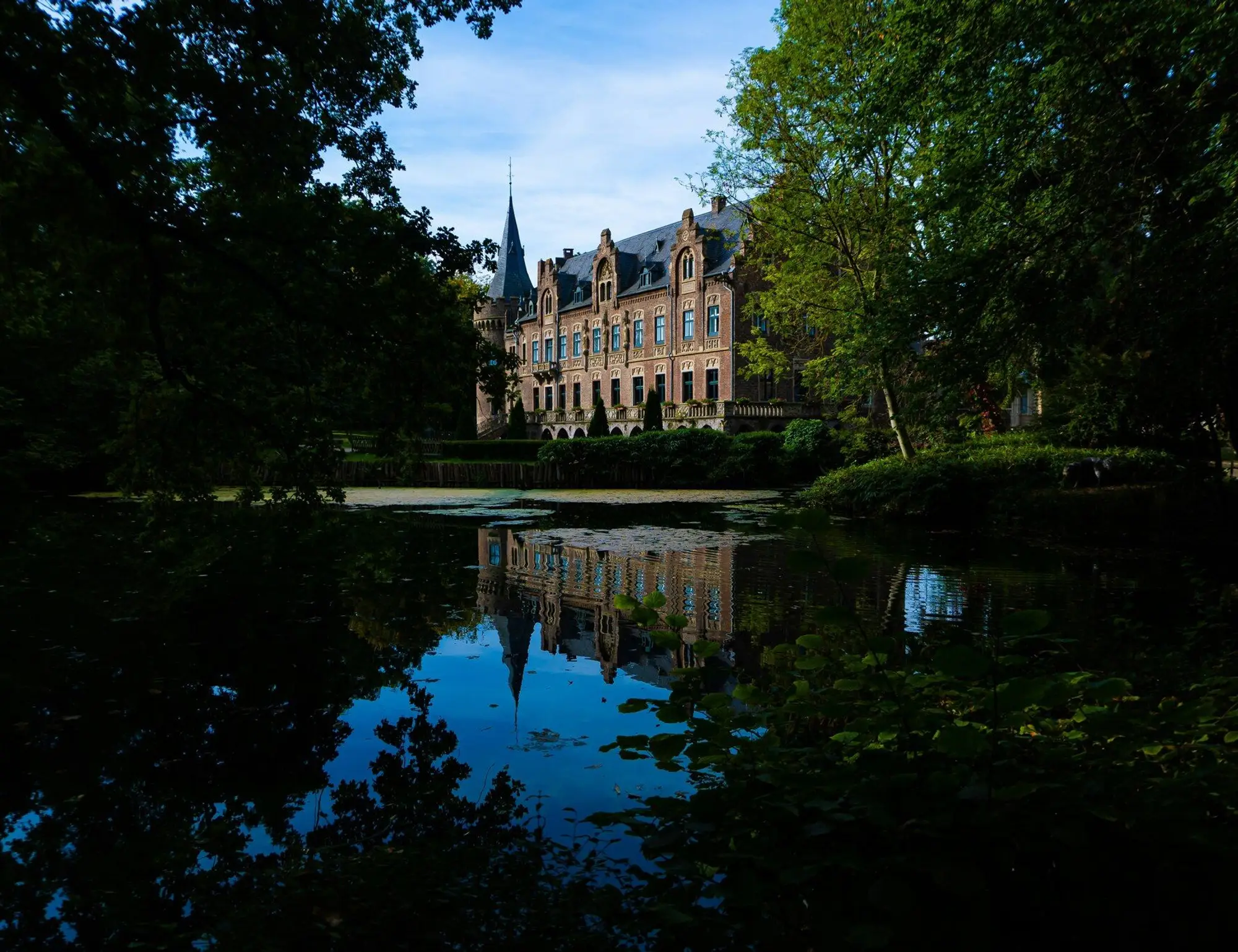
Kullahalvön Peninsula And Sofiero Castle
Start your journey with dramatic coastal views and a visit to Sofiero Castle’s exquisite gardens. The Kullahalvön Peninsula’s rocky landscapes and nearby vineyards make this day especially scenic, blending cultural heritage with natural beauty.
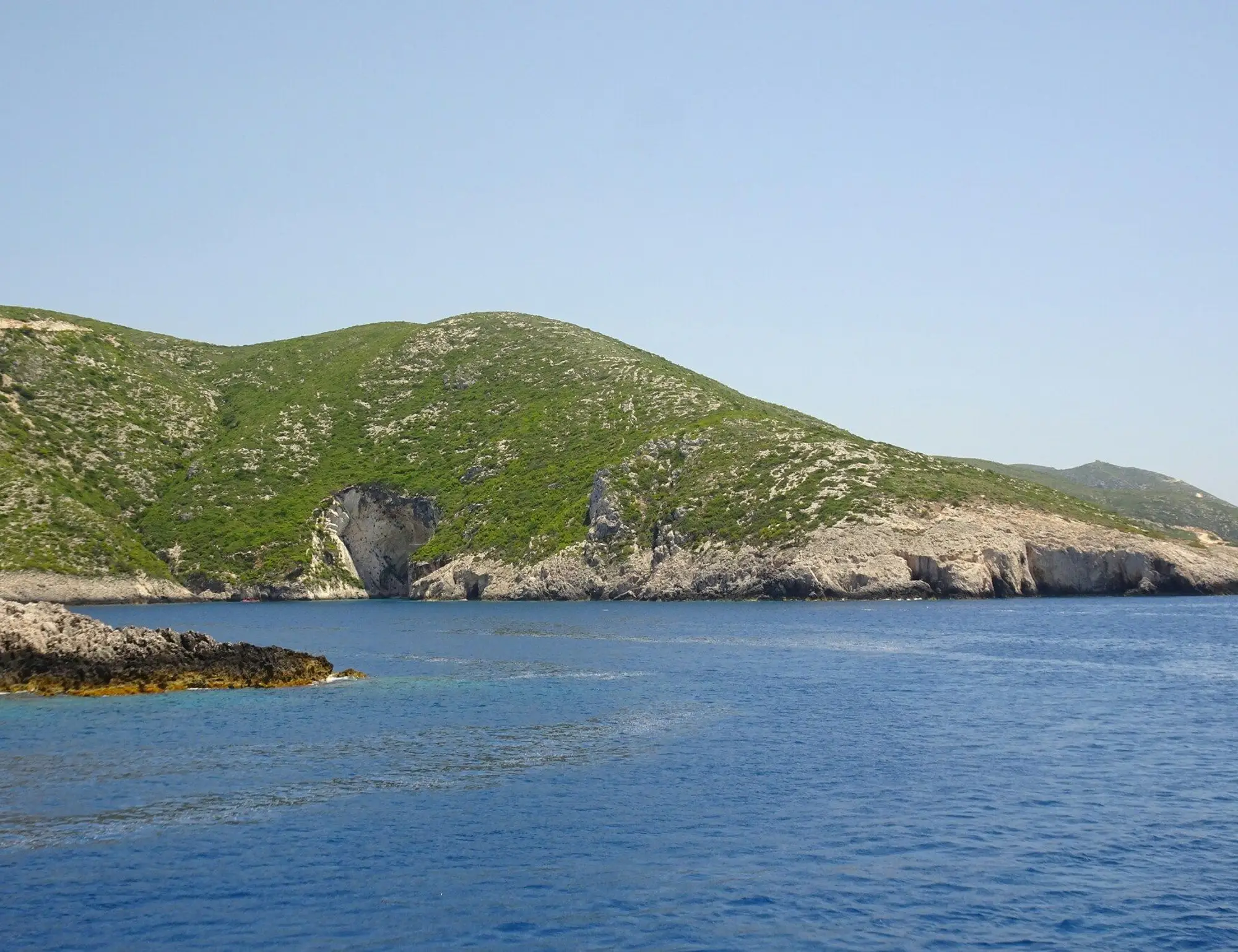
Båstad And The Bjäre Peninsula
Climb gently into ancient farmland, then descend into the lively beach town of Båstad. This stretch showcases Sweden’s rural heritage and coastal charm, with rolling hills, timeless villages, and one of Sweden’s most famous tennis hubs.
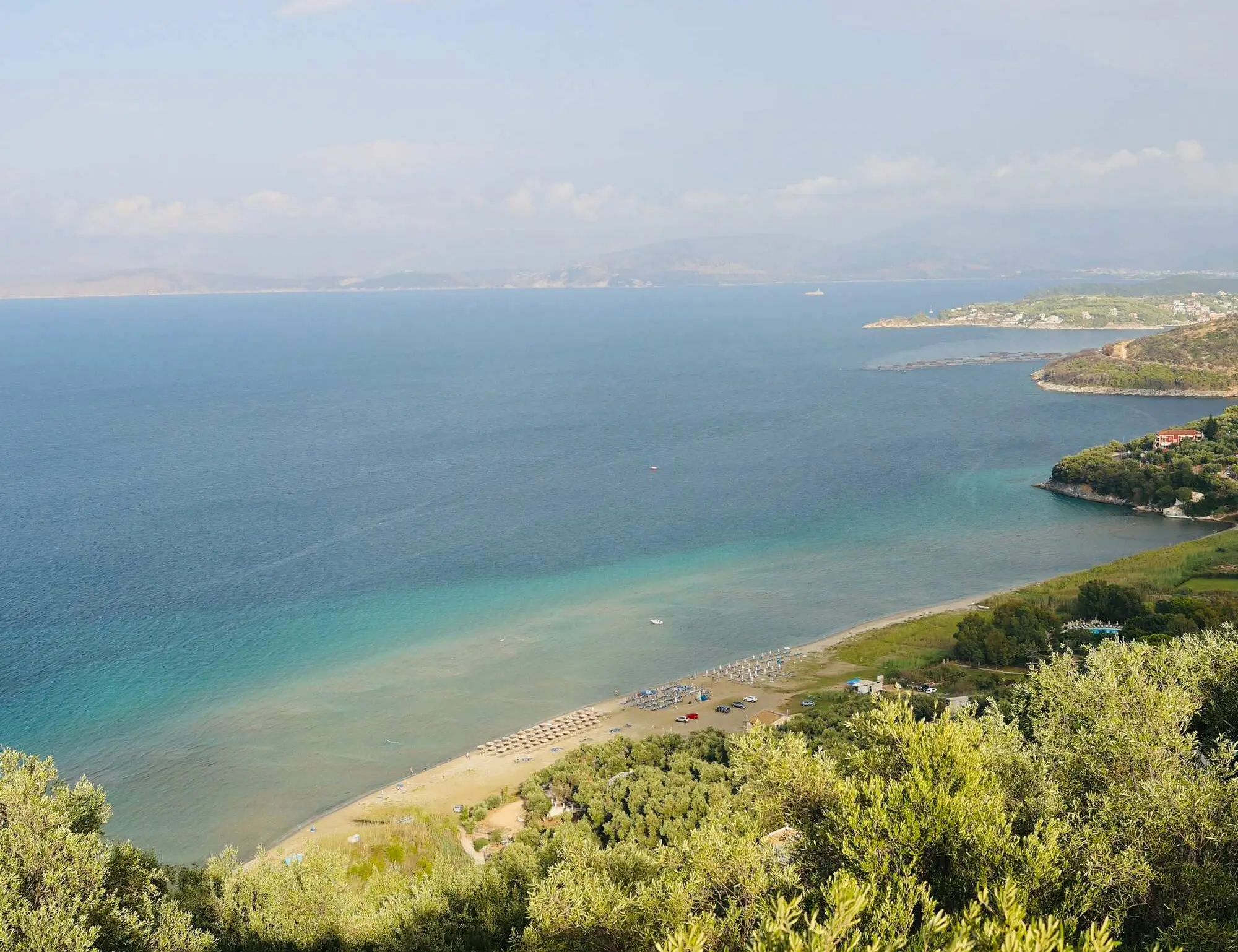
Varberg Fortress And Apelviken Beach
As you cycle toward Varberg, pass Apelviken’s surfing beaches and arrive at the iconic Varberg Fortress. Perched beside the sea, the fortress is a dramatic historical site and a fantastic viewpoint—perfect for a rest before heading north.
Itinerary
Brief Itinerary
Meals are indicated as B = Breakfast, L = Lunch, D = Dinner.
Listed hotels are subject to availability and may be replaced with similar alternatives of equal standard.
| Day | Place | null Inns | Meals | Distance | Activity |
|---|---|---|---|---|---|
| DAY 1 | Helsingborg | Elite Hotel Marina Plaza (4-Star) | |||
| DAY 2 | Ängelholm | Best Western Plus Hus 57 | B | 62 km / 39 mi | cycling |
| DAY 3 | Halmstad | Elite Hotel Mårtenson (4-Star) | B | 60 km / 37 mi | cycling |
| DAY 4 | Falkenberg | Gits Gård Hotel | B | 57 km / 35 mi | cycling |
| DAY 5 | Varberg | Varbergs Stadshotell & Asia Spa (4-Star) | B | 39 km / 24 mi | cycling |
| DAY 6 | Kungsbacka | Hotell Halland | B | 72 km / 45 mi | cycling |
| DAY 7 | Gothenburg | Elite Plaza Hotel (4-Star) | B | 63 km / 39 mi | cycling |
| DAY 8 | Departure |
Detailed Itinerary

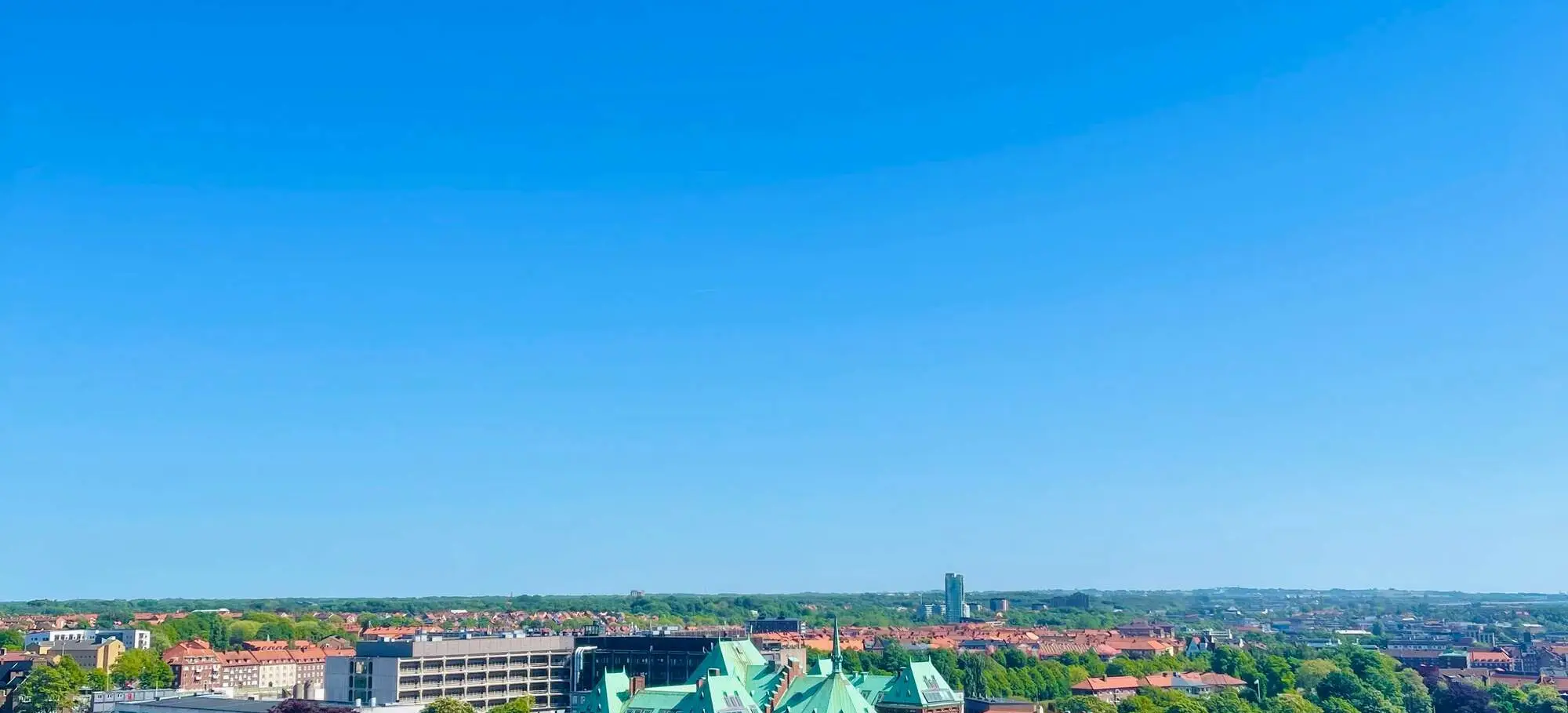
Day 1: Helsingborg
Welcome to the charming coastal town of Helsingborg. Once you check in to your centrally located hotel, take some time to explore. This medieval town has one foot in the past and the other in the sea. Walk along cobbled streets lined with half-timbered houses or head down to the waterfront for sunset views over the Öresund Strait. If time allows, visit Kärnan, the medieval fortress tower that still stands proudly above the city. Enjoy dinner at one of the cozy local restaurants—seafood is always a good idea here. Tomorrow, your cycling journey along the scenic Kattegattleden begins, so take the evening to relax and soak in the maritime vibe of this gateway town.
Day 2: Ängelholm
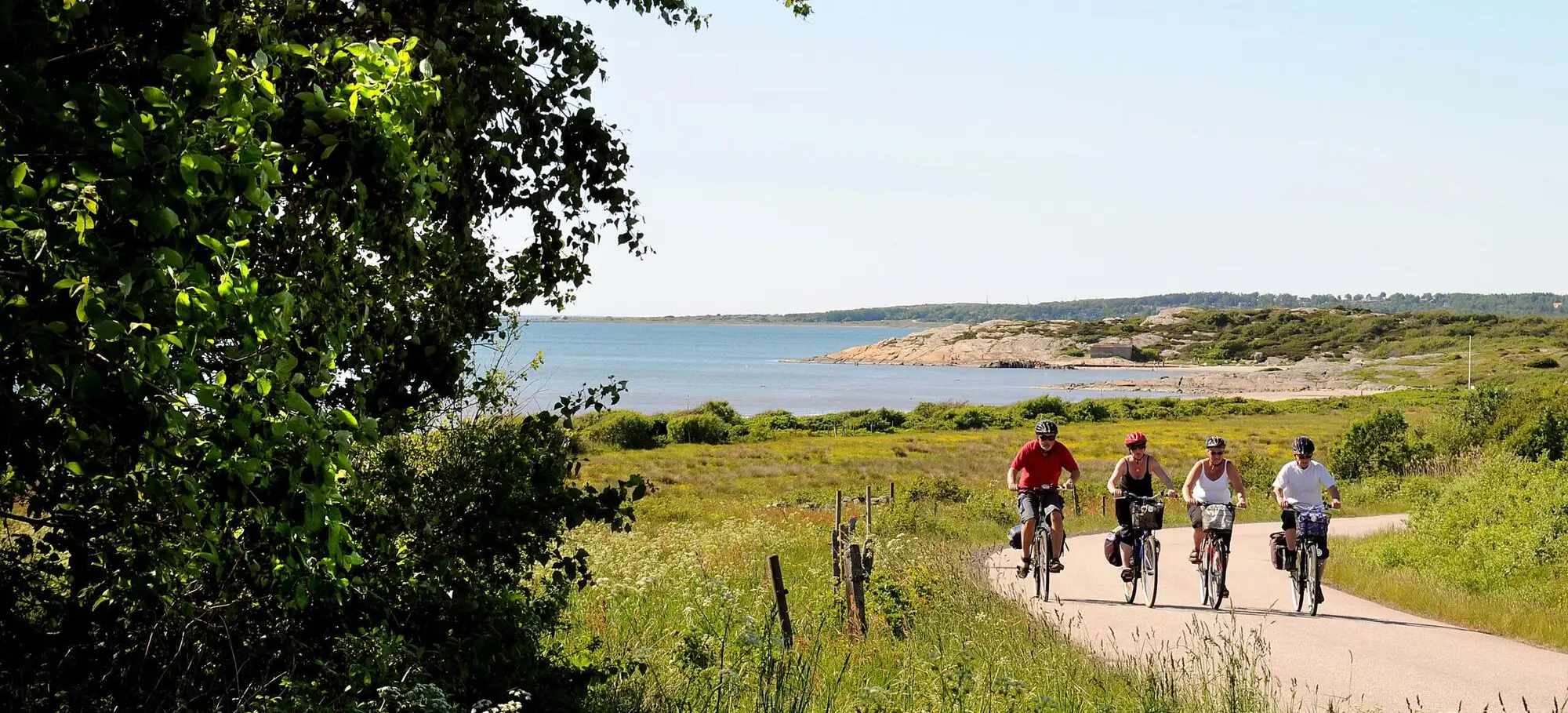
Your journey begins along the sparkling coastline of Öresund. The day starts with a ride past Sofiero Castle, famous for its magnificent gardens. The route then curves toward Höganäs and the dramatic headlands of the Kullahalvön peninsula.
If you’re up for a detour, Kullaberg Nature Reserve offers wild cliffs and spectacular views worth the climb. Don’t miss the local food stops in Höganäs—perfect for a scenic picnic. Cycle past vineyards and continue on quiet roads hugging the coast.
As you approach Ängelholm, you’ll pass through picturesque villages and open fields. This historic town is your stop for the night, a perfect blend of culture and calm. Want a slightly easier ride? Take a shorter inland route between Höganäs and Jonstorp.
Elevation: +213 m
Day 3: Halmstad
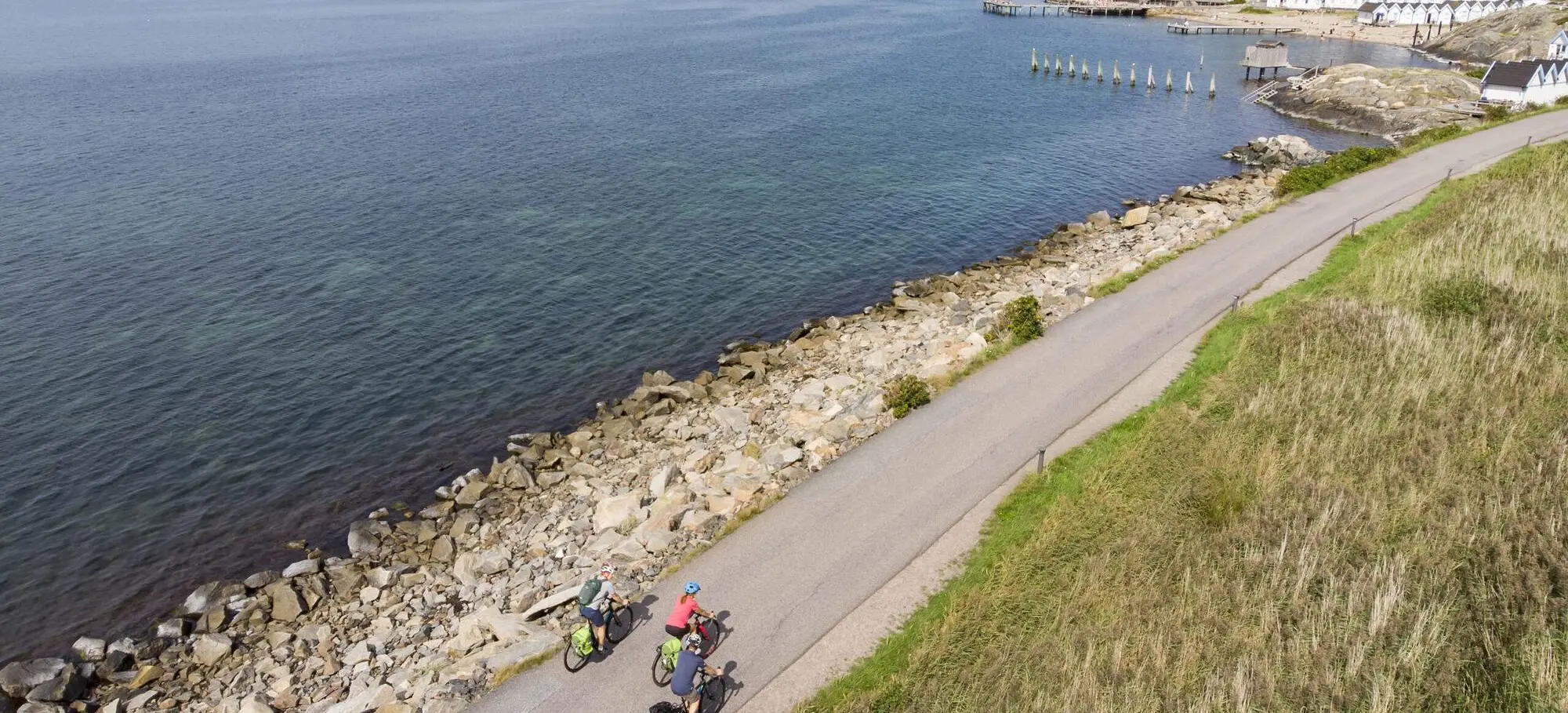
Leave the coast behind and head inland through the lush Bjäre peninsula. The climb starts gently but soon takes you up to rolling farmland and sweeping views. This region has been farmed for centuries, and it still feels wonderfully rural. After a downhill ride through peaceful lanes, you’ll reach Båstad, a lively seaside town famous for tennis and summer vibes.
From here, catch a train with your bike to Halmstad, or if you're feeling energetic, continue cycling along the full 94 km route. The final stretch leads you through forest and beachside nature reserves like Gullbränna and Tönnersa, ending in the vibrant city of Halmstad. Whether you train it or bike it, you’ll end the day with a blend of nature and Nordic urban life.
Elevation: +322 m
Day 4: Falkenberg
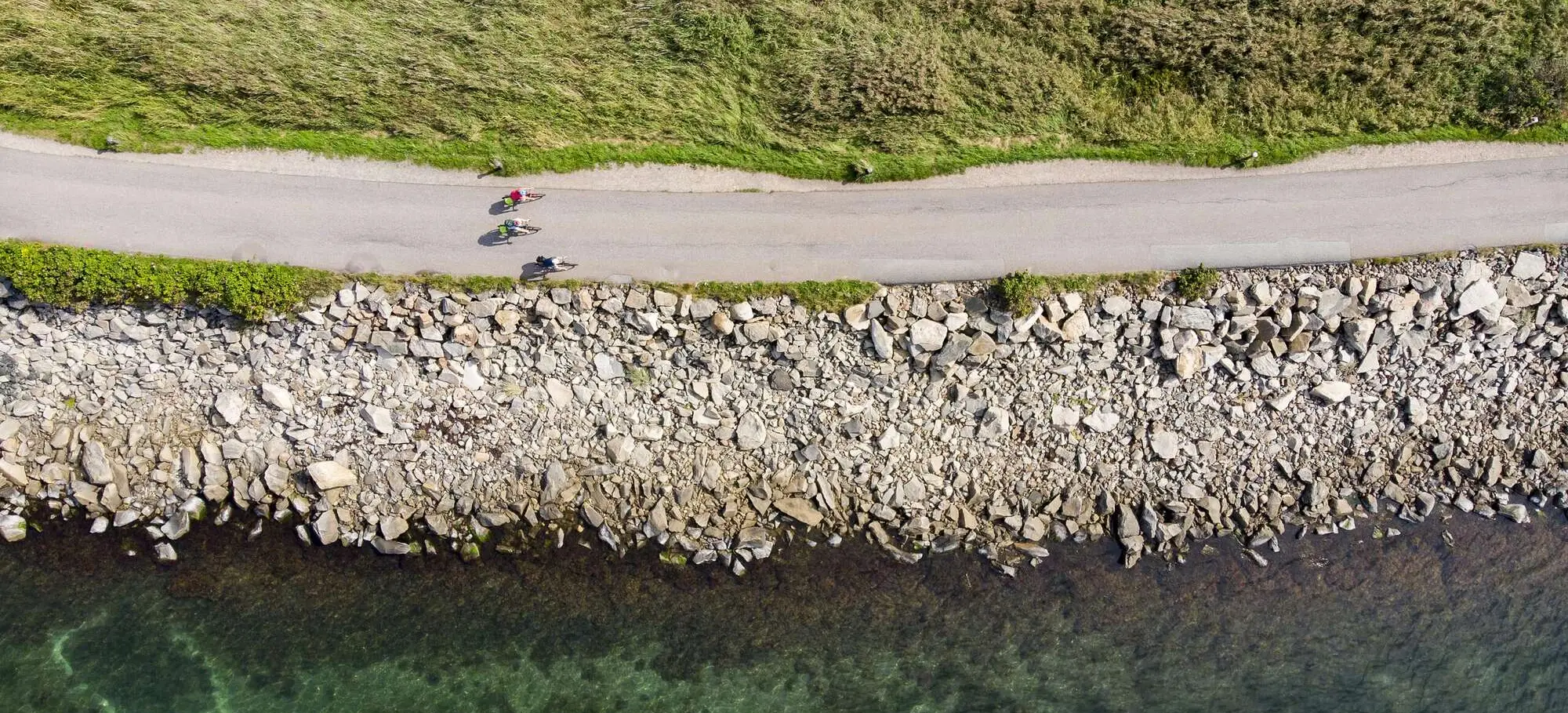
Today, you pedal west out of Halmstad and hit the coast once again. The day starts with sandy beaches—Tylösand, Frösakull, and Vilshärad—each one tempting you for a swim or a sunny break. As the trail veers inland, it connects with the scenic Kustvägen, a coastal road dotted with hidden nature reserves and wide-open views.
In the charming village of Steninge, the rocky terrain gives way to greener, softer fields and classic red farmhouses. Take your time enjoying the coastal countryside and perhaps stop for a fika in a local café. Your day ends in Falkenberg, a town that blends history with small-town charm. Walk its cobbled streets or rest your legs with a quiet evening by the river.
Elevation: +207 m
Day 5: Varberg
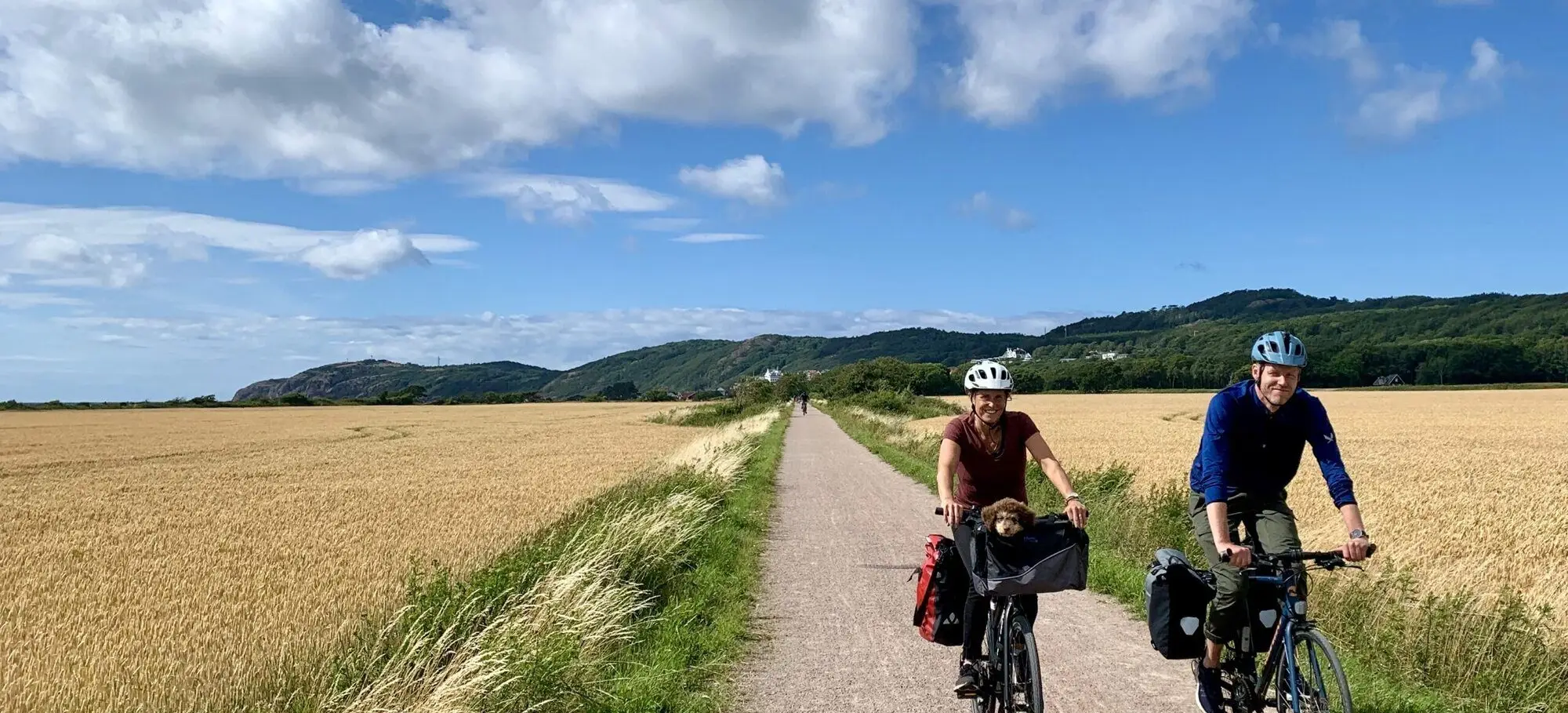
Today’s ride is shorter but filled with vzariety. You’ll roll out of Falkenberg, one of Halland’s oldest medieval towns, and follow the coastal trail north. The route winds past golden beaches, quiet villages, and stretches of countryside where ocean and farmland meet. Just outside Varberg, you’ll pass Apelviken, a hotspot for windsurfing—watch the colorful sails dance across the waves.
As you reach Varberg, its mighty fortress appears on the horizon. You can ride right up to it if you're feeling strong, or instead unwind in Societetsparken, a shady retreat near the sea. Varberg is known for its spa culture, so if you’re in the mood, treat yourself to a Swedish sauna or a dip in the ocean. It’s a relaxing and scenic end to a day packed with coastlines, culture, and clean sea air.
Elevation: +89 m
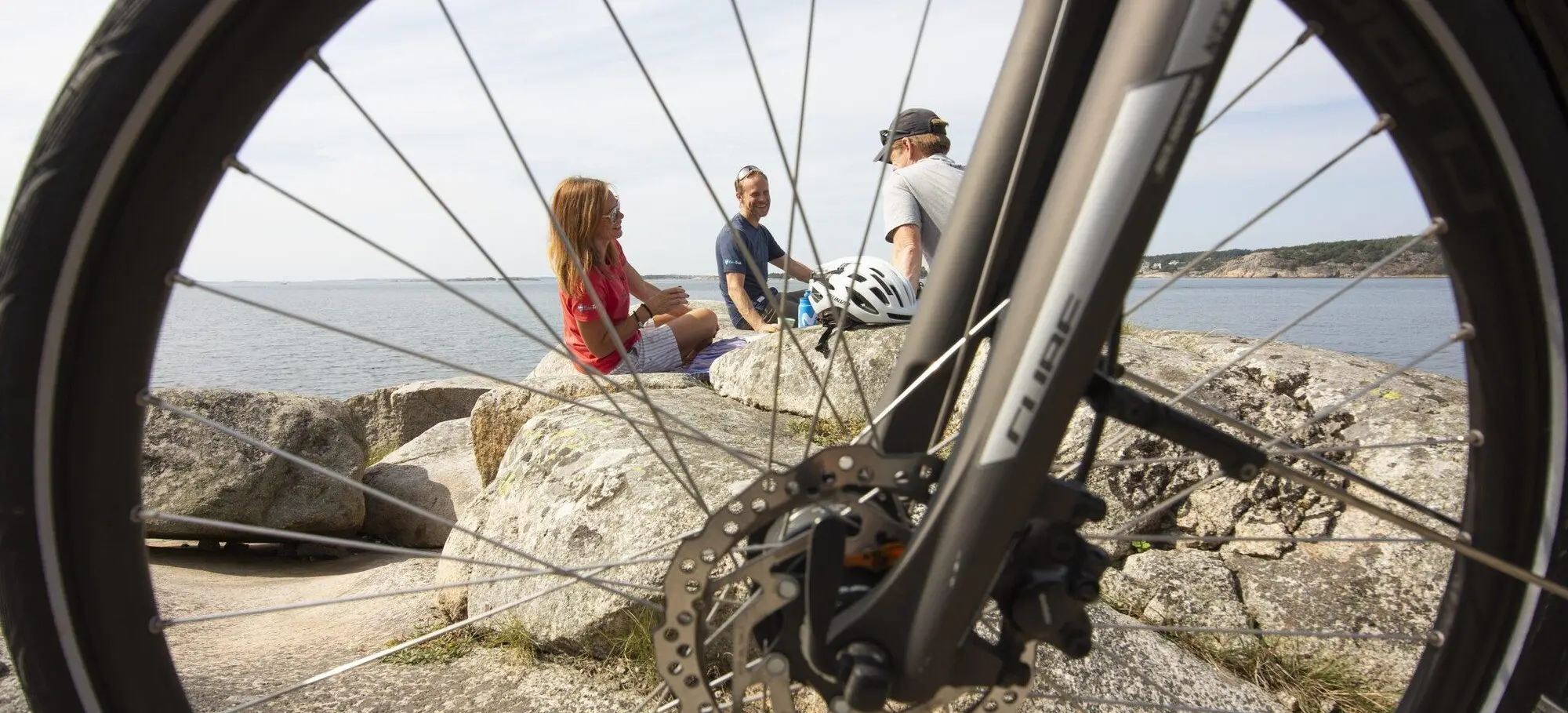
Day 6: Kungsbacka
The terrain shifts today as soft sand gives way to rocky cliffs. You'll notice the landscape change as you pass offshore islands like Getterön and Balgö, with scenic views all around. Quiet roads and coastal breezes guide you to Åsa, where you can take a break on peaceful beaches. If you’re short on time or energy, you can catch a train from Åsa to Kungsbacka. Otherwise, continue cycling through lush countryside and horse farms. Consider a detour to Tjolöholm Castle, a striking Tudor-style estate right by the sea.
If you're up for more adventure, another scenic option takes you through Fjärås Bräcka, known for its ancient standing stones and sweeping views. Whichever route you choose, you’ll end in the welcoming town of Kungsbacka—a mix of tradition and modern shops, cafés, and a historic center perfect for an evening stroll.
Elevation: +358 m
Day 7: Gothenburg
Your final day brings you north, tracing the fjord and weaving through forested coastal paths. After leaving Kungsbacka, you’ll ride toward Särö, once a glamorous getaway for Swedish royalty. The scenery shifts between cliffs, bays, marinas, and tucked-away beaches. It’s easy to stop for a refreshing swim or picnic along the route. As you near Gothenburg, the pace of life picks up, but the trail remains calm and scenic. You'll pass Nya Varvet and the charming Klippan Cultural Reserve before following the Göta Älv river into the heart of the city.
Your final destination is the elegant Göteborg Opera and the harbor at Lilla Bommen. You’ve crossed Sweden’s western coastline, from medieval towns to modern harbors—congratulations! If you want to shorten today’s ride, you can skip the Onsala Peninsula and ride just 41 km.
Elevation: +299 m
Day 8: Departure
After breakfast, your Kattegattleden cycling adventure comes to an end. If you’d like to extend your stay in Gothenburg, there's plenty to explore.
Safe travels!
Ready to plan your adventure? Download a print-ready detailed itinerary.
Map
Dates and Prices
Book with Confidence: For scheduled group departures, your 20% deposit is fully refundable until 60 days before departure. Solo travellers booking 120+ days in advance can avoid a mandatory Single Supplement. See terms & conditions.
Couldn't find a trip with convenient dates?
Open your date as a join-in tour or customize further as a private one.
Essential Info
Inclusions
LODGING
All hotels as mentioned in the tour details or similar (subject to availability).
bike
Immaculately maintained bike with helmet, suited to a terrain.
Luggage Transfer
Transportation of luggage from one hotel to another.
meals
Meals as per itinerary. Guests are given the opportunity to dine on their own so that they discover a location independently.
Exclusions
Beverages
Beverages such as alcohol, tea, coffee, juice at a hotel or restaurant.
Gratuity
Gratuities for your guide team are not included in the trip price.
Bikes
A great ride begins with a great bike. Our tours typically include the models listed below, though in some cases—due to height or availability constraints—we may provide an equivalent alternative.

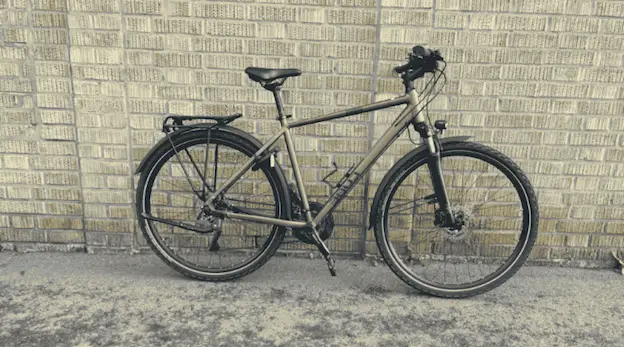
Cube Nature Pro Allroad-Male or similar
Included in your trip price

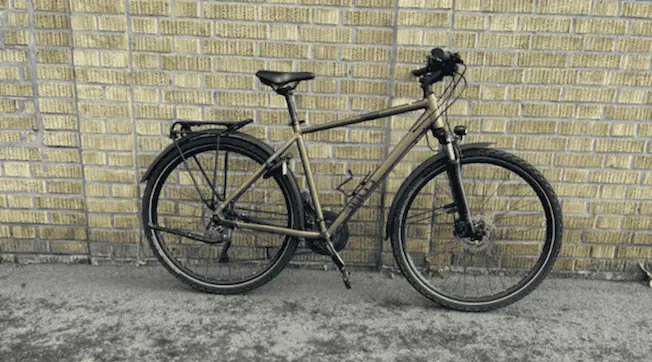
Cube Nature Pro Allroad– Woman/ Unisex or similar
Included in your trip price

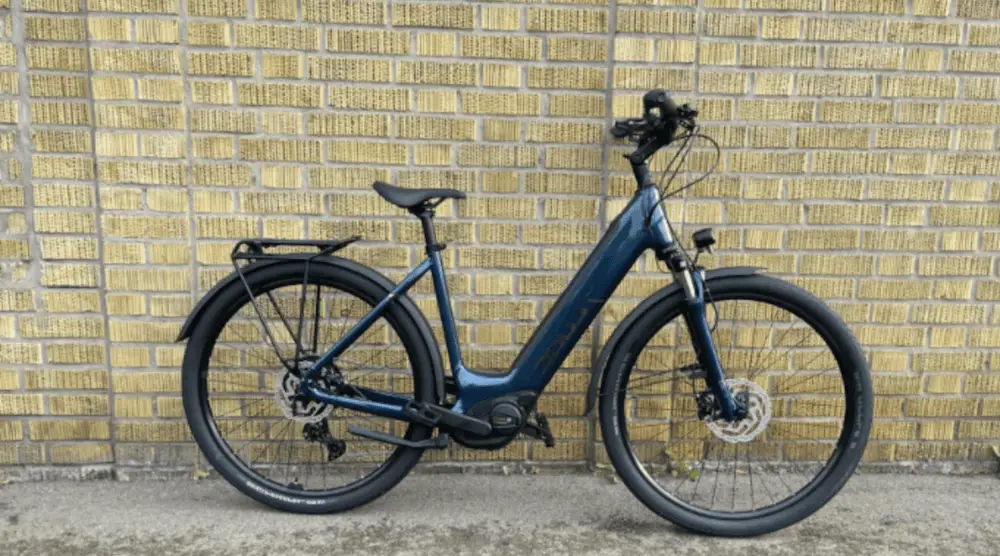
Cube Touring Hybrid One 500 & 625 or similar
Included in your trip price
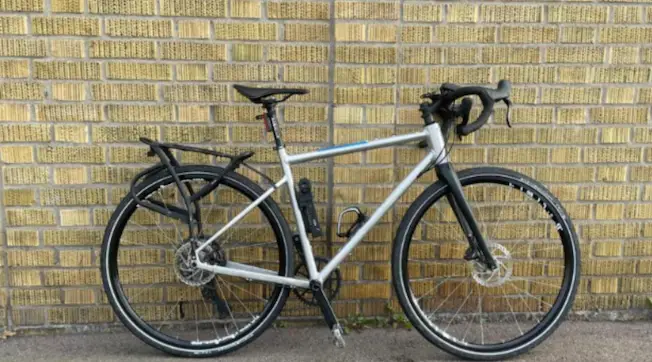
BCF Gravel Alu or similar
Included in your trip price
Arrival & Departure Details
Arrival
Your arrival point is Helsingborg which is served by Copenhagen Airport (CPH). From the airport, you can take the Öresundståg train directly to Helsingborg, which departs directly from the airport station located beneath Terminal 3. Trains run frequently every 20–30 minutes—and the journey takes about 1 to 1.5 hours. Most routes involve a transfer at Malmö Central Station, but some trains go directly to Helsingborg. The other option is to take long-distance buses such as FlixBus or Nettbuss that connect Copenhagen Airport with Helsingborg. These services are less frequent than trains and typically take 2 to 2.5 hours. You'll arrive at Knutpunkten, Helsingborg's central terminal.
Gothenburg Landvetter Airport (GOT), located about 20 km southeast of central Gothenburg, is also a viable option if you are arriving from domestic or select international destinations. Once you land at Landvetter, airport coaches (Flygbussarna) provide frequent transfers to Gothenburg’s Nils Ericson Terminal, located beside the city’s central station. From Gothenburg Central Station, you can take a direct SJ regional train to Helsingborg. The train journey takes around 2.5 to 3 hours.
If you are a domestic traveller, you can consider flying to Ängelholm-Helsingborg Airport (AGH), located just about 30 minutes from central Helsingborg. This airport has direct flights to and from Stockholm, making it ideal for domestic travelers. Once you land, you can easily reach Helsingborg via airport bus, which connects directly to the city’s central station (Knutpunkten).
Another nearby airport is Halmstad Airport (HAD), which also offers flights to and from Stockholm. From here, it’s just a short trip to connect with the Kattegattleden trail. To reach Helsingborg, take a local bus or taxi into Halmstad’s center and then catch an Öresundståg train south.
By train:
One of the most convenient ways to reach Helsingborg is by taking the Öresundståg train. This regional train connects major cities across Denmark and southern Sweden, running from Helsingør (Denmark), via Malmö, all the way to Gothenburg. The line follows much of the Kattegattleden cycling route, and you can hop off at many towns along the way.
By Bus:
You can take a bus from most major cities in Sweden, and Oslo in Norway, to Helsingborg and/or Gothenburg. Swebus and Nettbuss are two express bus companies that drive here.
Departure
Your departure point is Gothenburg. You can fly via Copenhagen Airport (CPH). You can catch a direct Öres undståg train from Gothenburg Central Station to Copenhagen Airport. The journey takes about 3.5 to 4 hours and trains run frequently throughout the day.
Another alternative is Stockholm Arlanda Airport (ARN). From Gothenburg Central, you can take a high-speed SJ train to Stockholm (around 3 hours), and then connect to the airport via the Arlanda Express, which takes an additional 20 minutes.
Gothenburg Landvetter Airport (GOT), located about 20 km southeast of the city. You can reach the airport easily by Flygbussarna airport coaches, which depart every 15–20 minutes from the Nils Ericson Terminal, right next to Gothenburg Central Station. The journey takes around 25–30 minutes.
Gothenburg Central Station offers regular train services across Sweden and to Denmark. You can travel to cities such as Malmö, Stockholm, and Copenhagen.
If you prefer bus travel, long-distance buses operated by companies like FlixBus and Vy/Nettbuss depart from the Nils Ericson Terminal, with routes to major Swedish and Norwegian cities, including Stockholm, Malmö, and Oslo.
Weather
The Kattegattleden route along Sweden’s west coast offers ideal cycling conditions from May to September, with mild temperatures, long daylight hours, and refreshing sea breezes. This stretch from Helsingborg to Göteborg combines coastal beauty with excellent infrastructure—perfect for riders of all levels.
May and June bring crisp air, blooming landscapes, and average daytime highs of 15–20°C (59–68°F). Rain is occasional but rarely intense. These are some of the best months to ride—quiet roads, vibrant wildflowers, and fewer tourists.
July and August are the warmest and busiest months. Temperatures can reach 25°C (77°F), with sunshine lasting up to 17 hours a day. Expect lively beach towns, open cafés, and a buzzing summer vibe. A light jacket and sun protection are essential.
September offers a peaceful close to the season. The air cools to around 15–18°C (59–64°F), with fewer crowds and golden coastal views. It’s ideal for those who enjoy a quieter pace and crisp early autumn light.
Outside the cycling season, October to April can bring rain, wind, and short daylight hours, making the route less suited for casual cycling.
January
Offseason
February
Offseason
March
Mixed
April
Good
May
Best
June
Best
July
Good
August
Good
September
Best
October
Mixed
November
Offseason
December
Offseason
Best
Good
Mixed
Offseason
What to Pack
Packing smart is essential for a safe and enjoyable cycling adventure. From essential biking gear to clothing and travel necessities, this guide ensures you're prepared for any terrain or climate.
Recommended Bicycling Clothes & Gear
- Bicycling shoes or stiff-soled sneakers.
- Padded cycling shorts.
- Short-fingered cycling gloves (personal gloves are ideal).
- Brightly colored cycling jerseys or synthetic T-shirts for visibility.
- Synthetic cycling socks.
- Sunglasses with UV protection.
- Personal helmet (recommended even though provided).
- Personal saddle (optional for added comfort).
- Rain jacket or windbreaker.
- Cycling water bottle (to reduce plastic waste).
Note: Helmets, gloves, and water bottles are personal items, so bringing your own is recommended for maximum comfort and hygiene.
Clothing
- Light, breathable fabrics like cotton or linen.
- Full-sleeved clothing for sun protection.
- Warm layers for chilly mornings and evenings (if traveling in winter).
- Comfortable footwear for non-cycling time.
- Bring a compact rain jacket in case of sudden weather changes.
- Ethnic or modest clothing for exploring towns and temples.
Other Necessities
- Toiletries: Basic hygiene essentials, including insect/mosquito repellent and sunscreen.
- Hand sanitizer and wet wipes.
- Plug socket adaptor.
- Binoculars for wildlife spotting or desert landscapes.
Pro Tips
- Pack light but plan for the varying temperatures: warm days, chilly evenings, and desert winds.
- Use brightly colored clothing for visibility on roads.
- Pack light to leave room for shopping.
Luggage
Please limit your luggage to one medium-sized suitcase and one carry-on bag. Mark your luggage with your name, address, and phone number.
Visa Information
Before venturing on your adventure, make sure you're equipped with essential travel advice, including security updates, local laws, and crucial passport and visa information. Start by visiting the official government website of your home country for accurate and reliable guidance:
- UK Residents: Stay informed by reviewing the Foreign, Commonwealth & Development Office (FCDO) Travel Advice.
- US Residents: Access vital travel tips and updates through the US Department of State Travel Advice.
- Australian Residents: Plan ahead with the latest updates on the Smart Traveller website.
- Canadian Residents: Find comprehensive travel and visa guidance on the Government of Canada's Travel Advice and Advisories.
- New Zealand Residents: Get practical travel advice on the New Zealand SafeTravel website
- Residents of Other Countries: Check with your government or local consulate for tailored travel advice and requirements.
Note: Passport and visa regulations can change at any time. Stay proactive by checking for the latest updates to ensure a smooth and stress-free journey.
Insurance
Medical insurance that covers medical costs in case of an accident during the trip is mandatory to participate in our tours.
We recommend to purchase adequate travel insurance in order to participate in our tours and protect yourself from unforeseen events. Our experience shows that guests who purchase travel insurance—including coverage for all activities on the itinerary, trip cancellation, interruption, delay, baggage damage, loss or theft, personal accident, death and repatriation costs, medical and emergency expenses (including Covid-19), and personal liability—travel with greater peace of mind.
Is proof of medical insurance required?
Yes. You must provide your insurer's name, policy number, and emergency contact via our reservation form. This is mandatory. If you cannot provide proof, you’ll need to purchase insurance before traveling with us.
Can I use my credit card insurance?
Yes, as long as it meets our requirements and provides adequate coverage. Ensure you have an emergency contact number and policy number available.
When should I buy travel insurance?
Purchase travel insurance as soon as you've paid in full or booked your flights.
Does Art of Bicycle Trips sell travel insurance?
We do not sell travel insurance directly, as we believe our customers should have the freedom to choose a policy that best suits their needs. However, we recommend Insured Nomads as a great starting point.
Frequently Asked Questions
A self-guided bike tour allows you to explore independently using our detailed app-based navigation and pre-arranged logistics. We provide route notes via app, luggage transfers, hotel bookings, and emergency phone support. There is no local guide riding with you, so you manage your own navigation and basic bike upkeep.
For self-guided tours, the fitting process is designed to be simple and flexible while ensuring you start with a bike that suits your measurements.
Before Your Tour
When you book, we ask for your height. This allows our local partners to select the correct frame size and prepare the bike in advance so it’s close to your ideal fit when you arrive.
At the Start of the Tour
The setup experience varies by destination:
-
In some locations, you may receive an in-person handover with basic adjustments made by the local partner.
-
In others, especially in more remote regions, you may receive a bike that is pre-set based on the measurements you provided.
All self-guided bikes include basic tools, so you can make simple adjustments such as raising or lowering the saddle yourself.
During the Tour
You can adjust the bike as you ride using the provided tools. If anything feels off and you need assistance, our local partners are reachable and will support you as promptly as the location allows.
What to Expect
The self-guided bike fit is practical and rider-adjustable. It ensures:
- You start with the correct frame size
- You can fine-tune your comfort easily
- You have the flexibility to adjust as needed along the route
It’s not an in-depth professional fitting, but it’s perfectly suited for multi-day touring comfort.
We provide an app-based navigation system that includes all your daily routes, points of interest, and important trip notes. You can download the app to your phone in advance, and we’ll share your login details before your trip.
Yes. Once the routes are downloaded, the app works completely offline, so you don’t need mobile data while riding. You can even use it in airplane mode, which helps conserve your phone’s battery.
To extend battery life further, we recommend reducing screen brightness and carrying a small power bank for longer days on the trail.
A mobile holder is not provided. Since you’ll be using your phone for navigation, we strongly recommend bringing your own sturdy, handlebar-mounted mobile holder to ensure a safe and comfortable riding experience.
We do not provide GPX files separately. All routes are available within our navigation app, which is the most reliable and up-to-date source for your trip. Once you receive the login details for the navigation app — generally shared about one month before your departure — you can explore the routes and, if needed, also download the GPX files directly from the app for use with your personal Garmin or GPS device. We recommend getting familiar with the app and its features before your tour starts to ensure a smooth experience on the road.
For minor issues like punctures, the guests are provided with a self-repair kit, which includes tools to help them fix such minor issues. The exact contents of the kit depend on the type of bike, terrain and other factors, and will be communicated to you closer to your date of departure. However, usually such a kit includes tire levers, a spare tube, a patch kit, and a pump, allowing riders to fix the problem themselves. In some cases, the kit may only include a pump or a repair foam.
Self-guided riders are expected to be independent in handling these minor problems. While there are some bike shops along the route, they are limited. If you are unsure about how to repair a puncture, we recommend considering a guided or van-supported trip instead.
For major mechanical failures, such as a cable break, the guests can contact the emergency support number provided. The support team will help coordinate a solution, which could include dispatching a local mechanic, suggesting a nearby bicycle shop for repairs, or sending a vehicle to pick up the rider. Please note that all support services will be provided on a chargeable basis, and assistance may take time, so we advise being prepared for potential delays.
Yes, each rider will be provided with at least one pannier to carry personal items during the tour. Please note, road bikes do not support panniers.
Yes, we provide helmets. However, we recommend that guests try to bring their own helmets, as these are items of a personal nature.
Your luggage will be picked up at the reception of your hotel every morning by 9.00am.
It will be delivered to the next hotel before 5pm. Most of the time it is delivered in the early afternoon itself.
We recommend that you carry no more than 2 bags together weighing up to 15kgs for this trip. You can have one large bag, which contains all your clothing and gear needed for the trip, and one small bag that contains essential items you will frequently need such as passport etc. Please note that once a bag gets loaded in the luggage transfer vehicle, you may not have access to it till later in the evening when you reach the hotel for the night.
We provide local support by phone for any medical emergencies during the tour. Our local team will assist in coordinating medical care, guiding you to the nearest healthcare facility, and ensuring you receive the necessary support. The national emergency system is reliable and effective, and in the event of a serious accident, contacting them is highly recommended. However, due to our distance from certain areas, response times may be longer. We strongly recommend having appropriate travel insurance, and we will do everything we can to ensure your safety and well-being during an emergency.
Airport transfers are not included unless specifically mentioned in your trip inclusions.
For airport pickup, we recommend booking directly from the airport upon arrival — most airports have reliable taxi, shuttle, or app-based options.
For airport drop, please book a transfer through your last hotel — they can easily arrange it for you.
We focus on delivering exceptional experiences during your tour. For logistical simplicity and flexibility, we do not handle pre- or post-tour hotel bookings. However, we’re happy to share a list of recommended hotels near the starting and ending points of your trip so you can plan your stay independently.
We are happy to pass on your room preference for a twin or double setup, and our hotel partners do their best to accommodate these requests. However, room configurations are always subject to availability at each property.
On some of our trips—especially those that travel through remote regions or small boutique inns—room types may be limited. In such cases, despite our best efforts, you may need to stay in a double room instead of a twin, or twin instead of a double, depending on what is available.
Given the nature of our journeys and the unique places we visit, we kindly ask for your understanding and support if such adjustments are required.
We will always inform you in advance wherever possible and work closely with our partners to ensure the most comfortable arrangement for your stay.
The fitness level required for each trip is indicated by the "level" of the tour, which in turn is mentioned on each tour page right next to the price and the trip duration.
Easy: The terrain is mostly flat with a few gentle climbs.
Moderate: The terrain is either mostly flat or consists of rolling hills with a few challenging climbs. There could also be a few days with longer riding distances of up to 75 kms (45 miles)
Difficult: The terrain is mostly hilly with strong elevation gains and/or has long days on the bike. Such trips are recommended for intermediate to advanced cyclists.
Please note that we usually bike around 4-5 hours per day irrespective of the level of the trip.
You can exchange currency at the airport itself, or at ATMs in larger cities. Most commercial establishments will accept international credit cards for payments, though its good to carry some local currency with you at all times.
The meeting time on Day 1 is mentioned in your travel planner shared with you. You can arrive either on the morning of Day 1 depending on the meeting time, or book a pre-tour night to arrive a day earlier.