Guided Kumano Kodo and Ise Hiking and Walking Tour

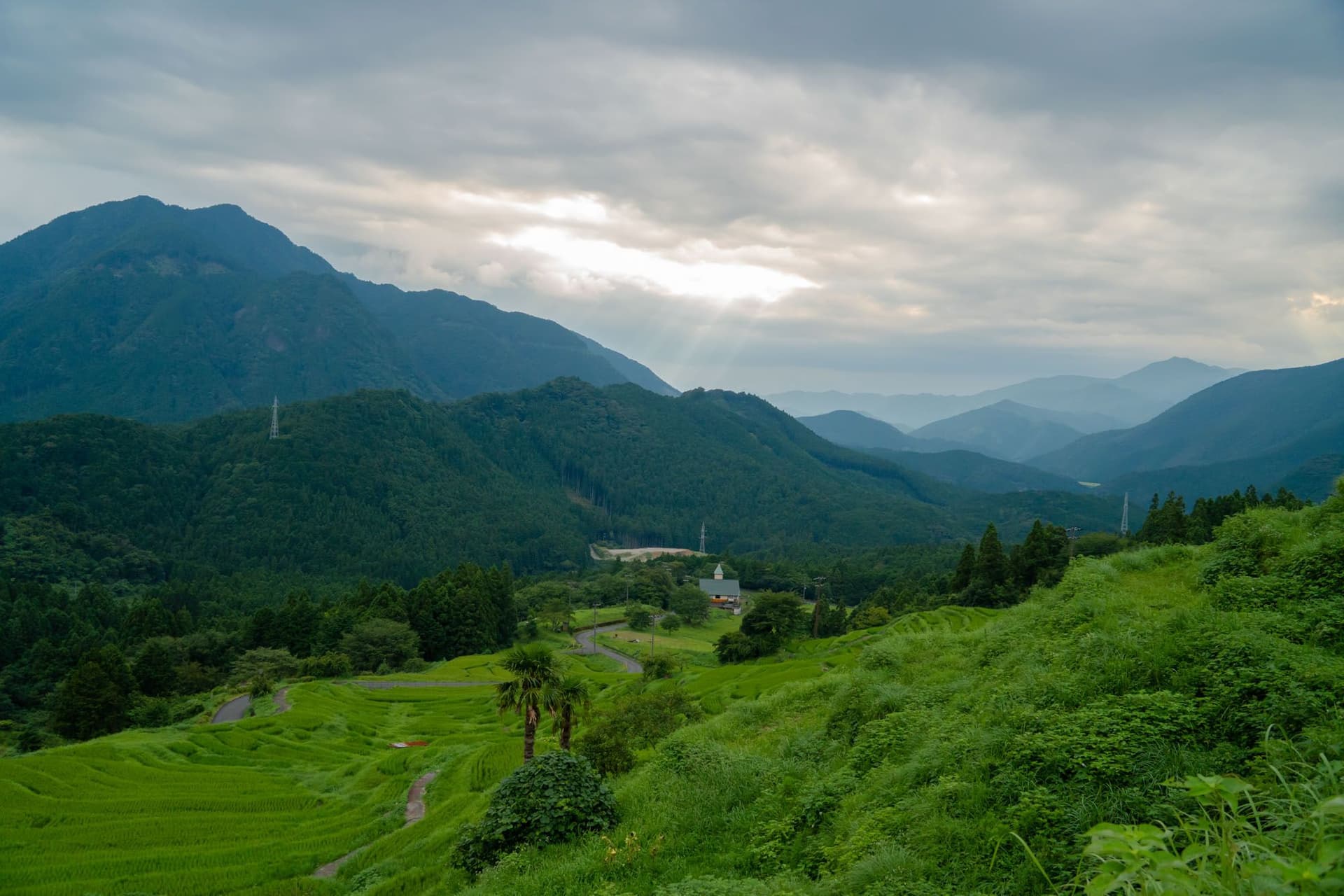
Discover the spiritual heart of Japan on this immersive 9-day journey through the sacred landscapes of the Kumano Kodo and Ise. Beginning in vibrant Osaka, the tour quickly moves into the forested mountains of the Kii Peninsula, where ancient pilgrimage trails lead through peaceful villages, ridgelines, and historic shrine sites.

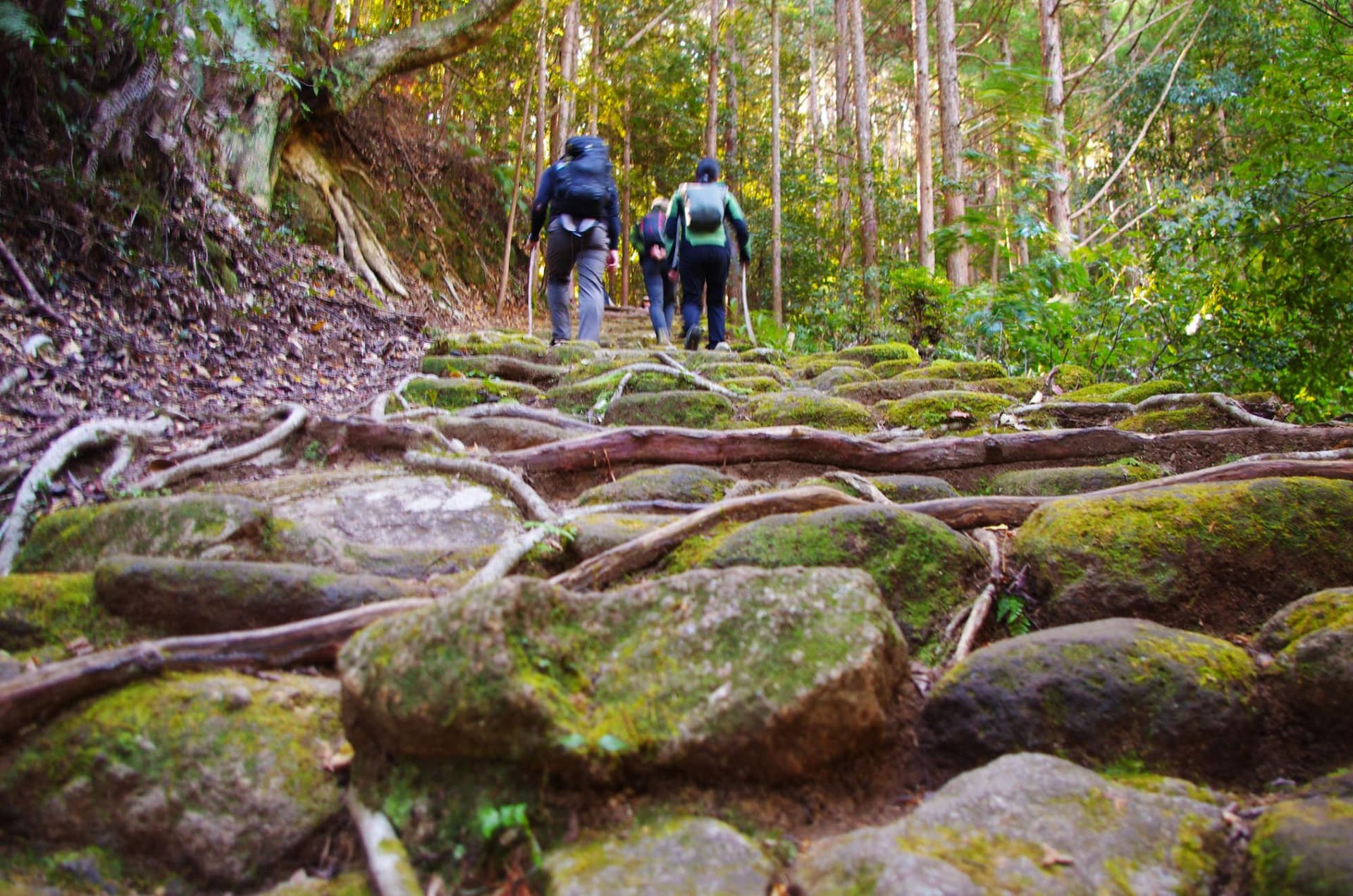
Walk classic sections of the Nakahechi and Iseji routes, including Takijiri to Takahara, Hosshinmon to Hongu, and the iconic Daimonzaka staircase to Nachi Shrine and waterfall. Along the way, enjoy relaxing stays in traditional onsen inns, soothing hot spring baths, and beautifully prepared Japanese meals. A scenic boat ride on the Kumano River, coastal walks near Onigajo and Hana no Iwaya, and visits to remote seaside villages add variety and depth to the experience.

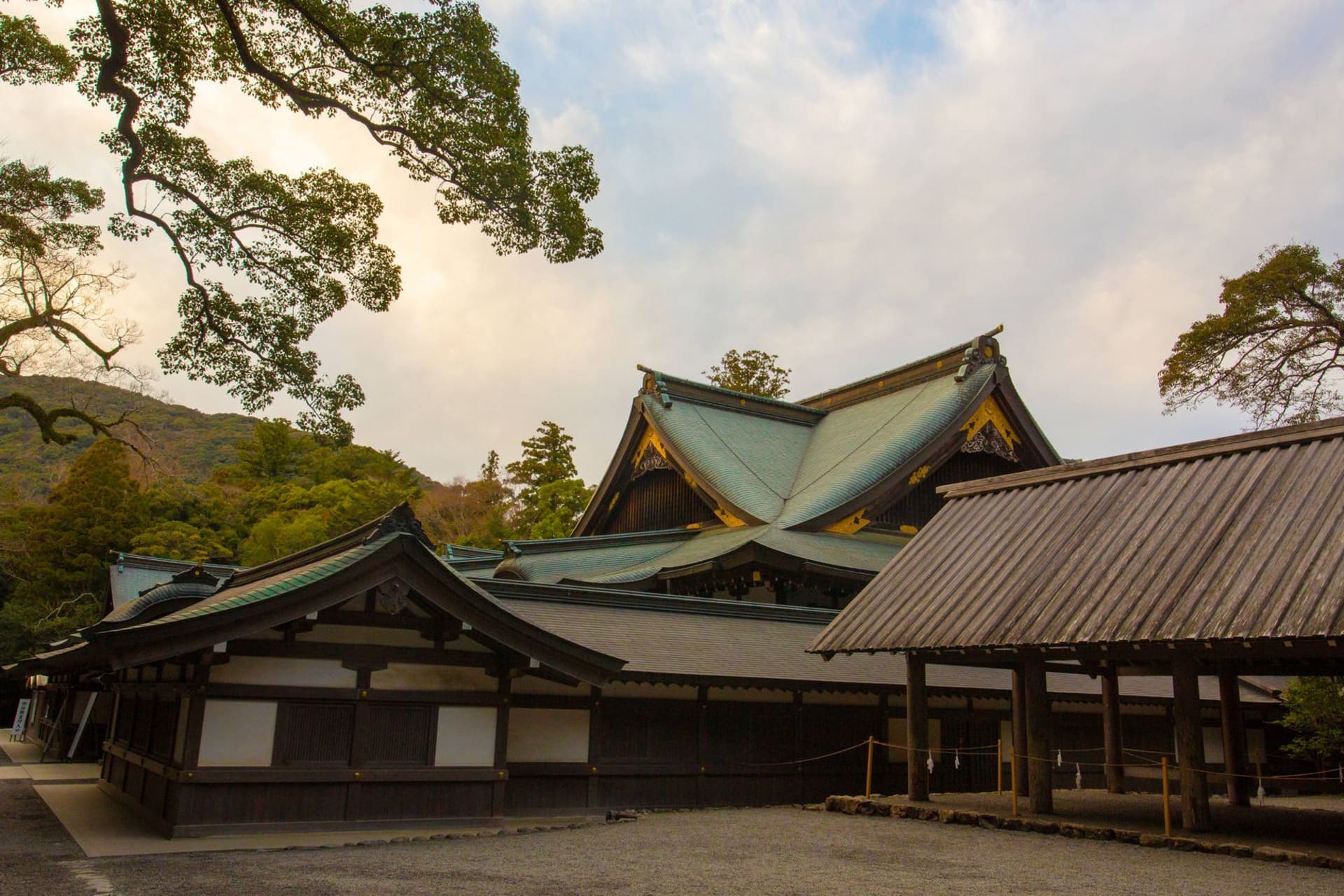
The journey concludes in Ise with a visit to Japan’s most sacred Shinto shrine, offering a meaningful and memorable end to this culturally rich walking adventure.

Tour Type

Guided

Lodging

casual hotels

Start

Osaka

Finish

Ise

Level

moderate to challenging

Avg. Daily Distance

8 km / 5 mi

Hiking Days

0

Group size

Min. 4, Max. 12

Fly-In

Kansai International Airport (KIX)

Fly-Out

Chubu Centrair International Airport (NGO)

Highlights

Highlight Image

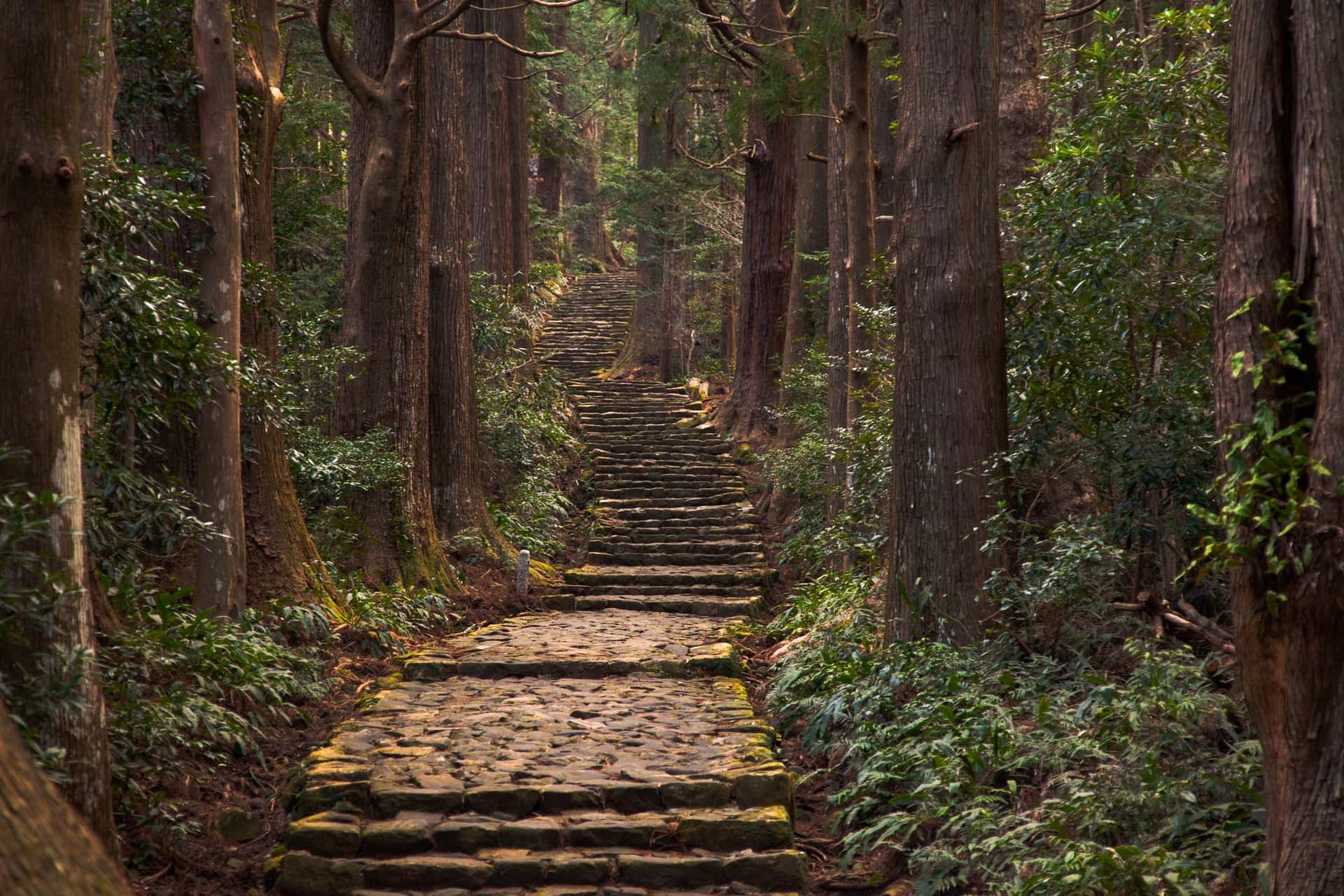
Walk the Legendary Kumano Kodo

Follow ancient pilgrimage trails including the Nakahechi route, Hosshinmon to Hongu, and the iconic Daimonzaka stone staircase through forested mountain landscapes.

Highlight Image

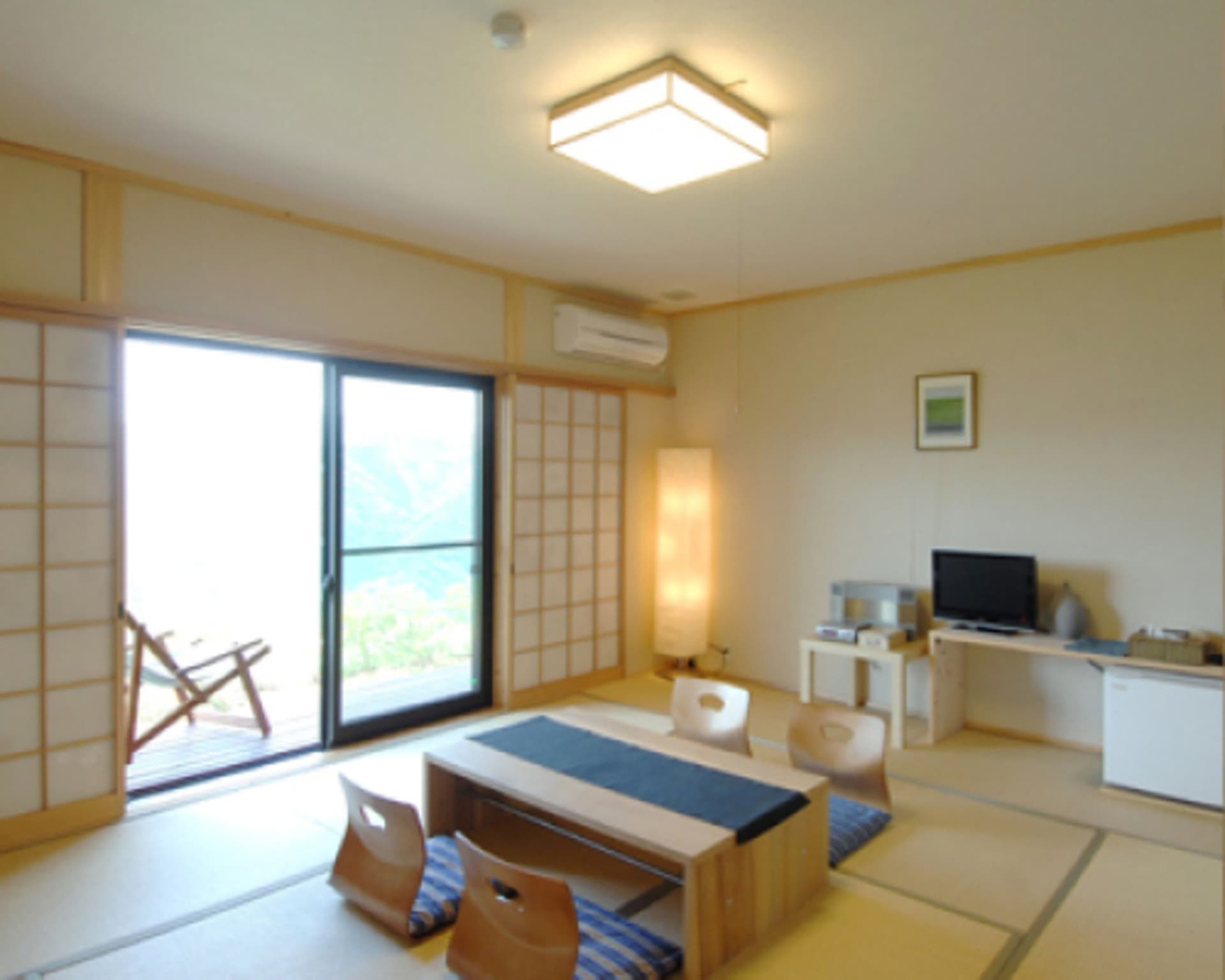
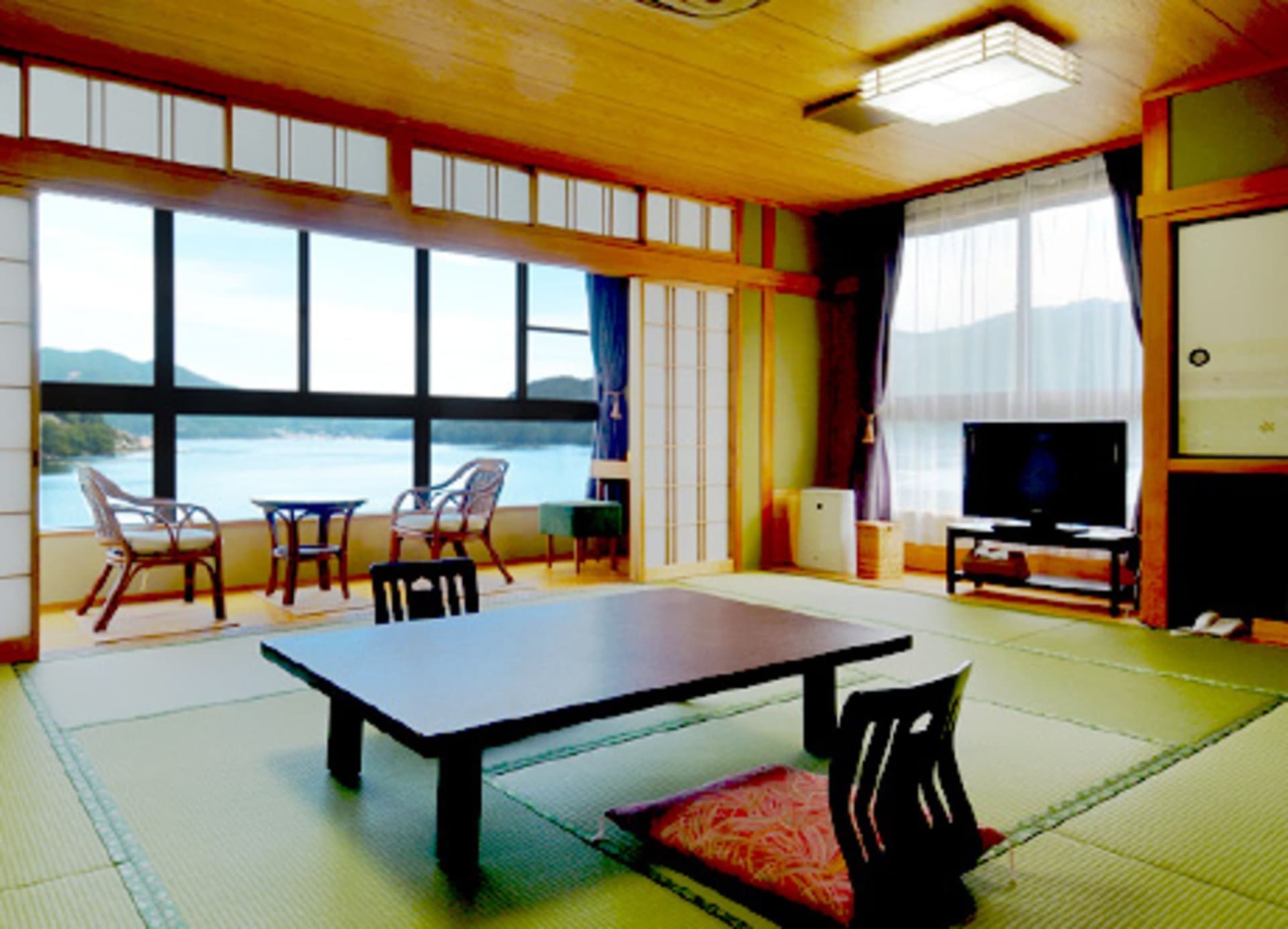
Stay in Traditional Onsen Ryokan

Unwind in authentic Japanese inns with hot spring baths, tatami rooms, and multi-course Japanese dinners for a true cultural experience.

Highlight Image

Visit Ise Grand Shrine

End the journey at Japan’s most sacred Shinto shrine, set among ancient cedar forests and rich spiritual tradition.

Itinerary

Brief Itinerary

Meals are indicated as B = Breakfast, L = Lunch, D = Dinner.

Listed hotels are subject to availability and may be replaced with similar alternatives of equal standard.

Detailed Itinerary

Itinerary Image

Day 1: Osaka

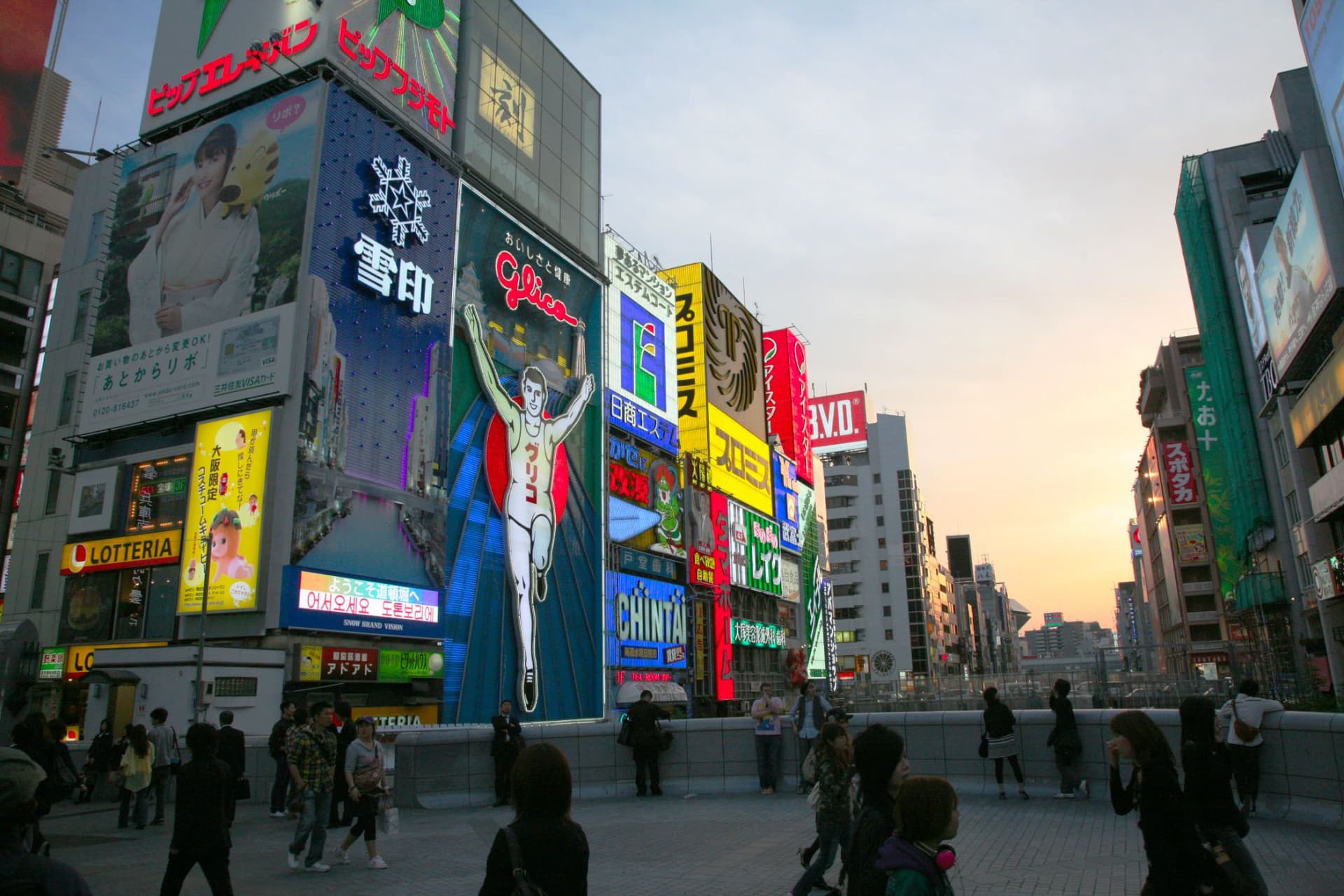
Arrive independently into Osaka and make your way to your hotel in the city. Osaka is known as one of Japan’s most energetic and food-loving cities, offering a lively introduction to the country. Depending on your arrival time, you may wish to explore nearby neighborhoods, enjoy local street food, or rest after your journey.

In the early evening, meet your tour guide and fellow travelers in the hotel lobby for a welcome meeting. You will review the journey ahead, receive practical information, and then head out together for a group welcome dinner. This relaxed evening sets the tone for the pilgrimage and allows the group to get acquainted before heading into the mountains.

Meals: Dinner
Itinerary Image

Day 2: Takahara

This morning, travel south by train and local bus into the rural Kii Peninsula, leaving the city behind as the landscape becomes increasingly mountainous and forested. Arrive at Takijiri, the traditional starting point of the Nakahechi route and an important gateway to the Kumano Kodo pilgrimage network. Begin your first walk with a steady climb through shaded forest paths and quiet countryside.

As you ascend, enjoy views over rural valleys and experience the peaceful atmosphere of the sacred mountains. Arrive in the ridge-top village of Takahara, where traditional houses and sweeping views create a timeless setting. Settle into your lodge and unwind in the cypresswood hot spring baths, followed by a locally inspired Japanese dinner.

Meals: Breakfast, Dinner
Walking Distance: 4 km / 2 mi
Itinerary Image

Day 3: Yunomine Onsen

After breakfast, continue walking deeper into the countryside, passing through quiet hamlets, terraced farmland, and forested trails. Along the way, visit and pass several historic Oji shrines, which once served as spiritual rest points and markers for pilgrims making their way toward Kumano’s Grand Shrines. The trail includes stone-paved sections and gentle climbs before a longer descent toward the village of Chikatsuyu.

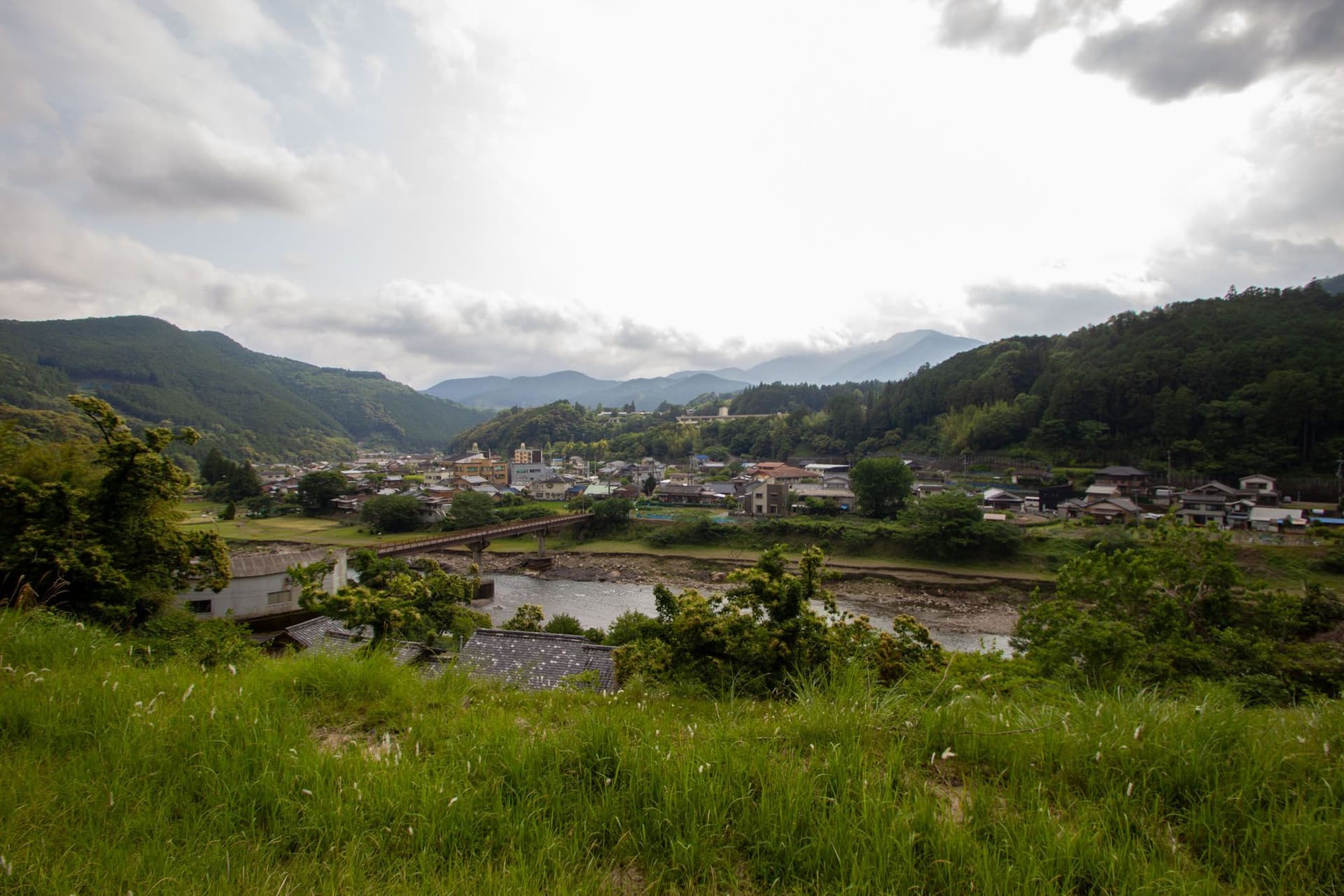
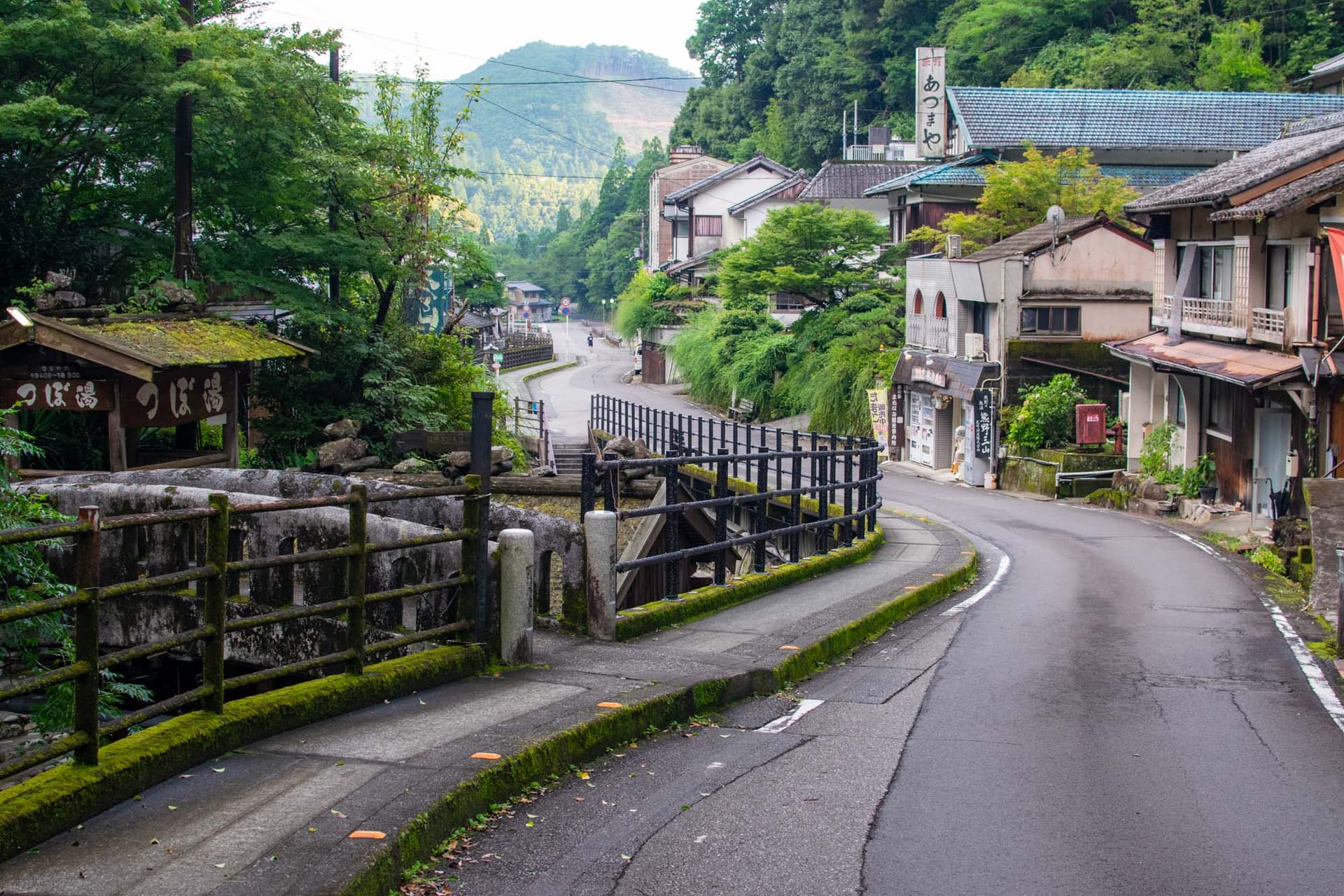
From here, transfer to Yunomine Onsen, one of Japan’s oldest and most atmospheric hot spring villages. The village is built around natural thermal waters bubbling up beside a clear stream. Spend time soaking in the onsen and enjoy a beautifully prepared multi-course Japanese dinner in this historic setting.

(light lunch will be a bento box)

Meals: Breakfast, Dinner
Walking Distance: 10 km / 6 mi
Accommodation: Yunomineso
Itinerary Image

Day 4: Yunomine Onsen

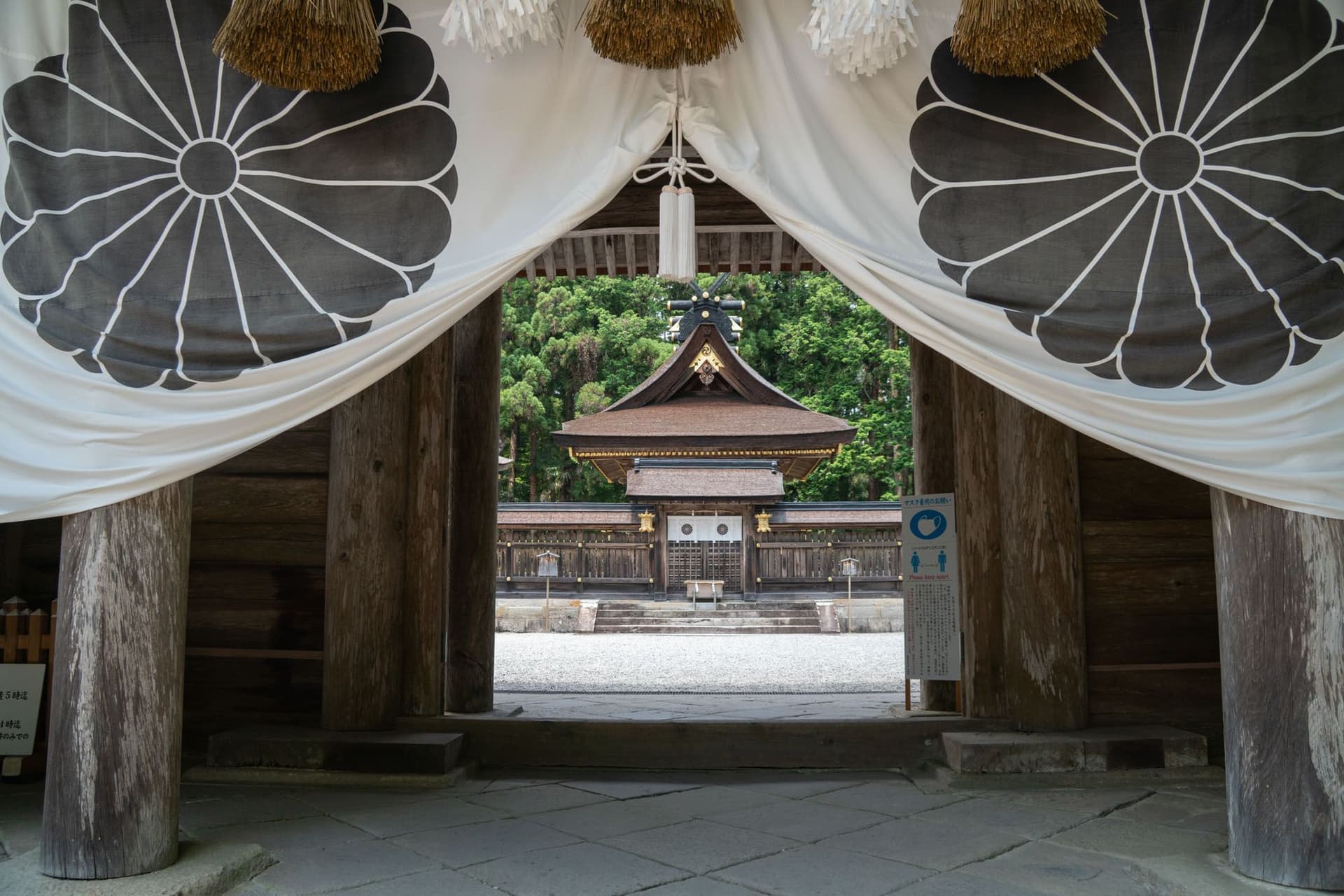
Travel by local bus to Hosshinmon-oji, traditionally considered the spiritual entrance to the sacred heart of Kumano. Begin walking through tranquil forest along a gentle and deeply atmospheric section of trail toward Kumano Hongu Taisha, one of the three Grand Shrines of Kumano. This area has long been associated with spiritual purification and reflection.

Along the way, enjoy time for forest bathing and quiet immersion in nature. After visiting the shrine, continue over the short but steep Dainichigoe pass back to Yunomine Onsen. This rugged section offers a more physical challenge and a strong sense of accomplishment. Return to the onsen village for a well-earned soak and relaxing evening.

(light lunch will be a bento box)

Meals: Breakfast, Dinner
Walking Distance: 9 km / 6 mi
Accommodation: Yunomineso
Itinerary Image

Day 5: Kii-Katsuura

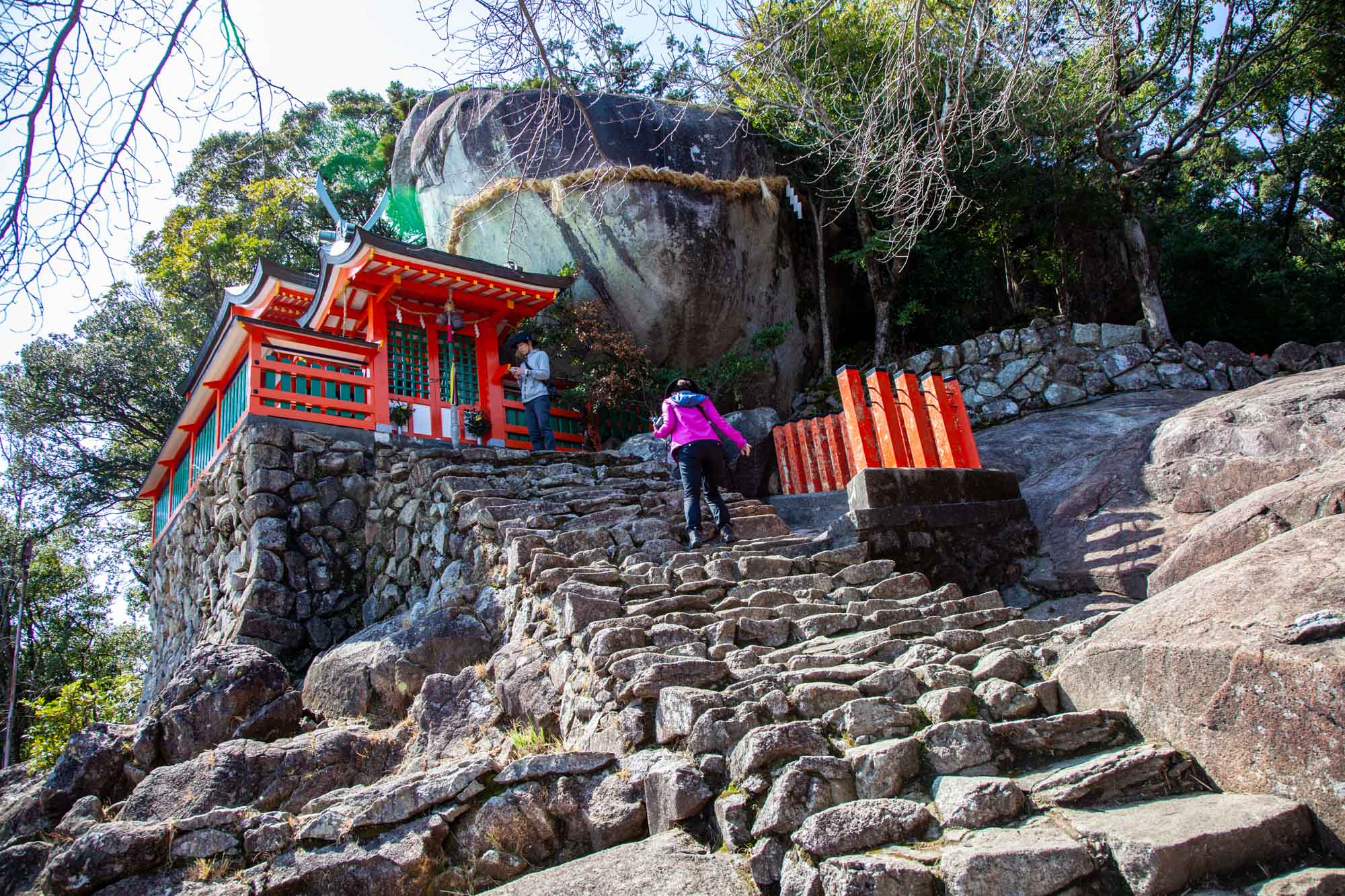
Today offers a change of pace and perspective on the pilgrimage. We will travel to the Kumano River and board a traditional wooden boat for a scenic cruise, retracing the historic water route once used by imperial pilgrims. Gliding through the river valley provides a peaceful and unique way to experience the sacred landscape. After lunch in Shingu, visit Kamikura Shrine, climbing the steep stone steps to a dramatic sacred boulder perched above the town.

The climb is rewarded with sweeping views over Shingu and the coastline. Continue to the coastal town of Kii-Katsuura, where your seaside hot spring hotel offers ocean views and a relaxing onsen, perfect for unwinding after a full day.

Meals: Breakfast, Dinner
Itinerary Image

Day 6: Kumano City

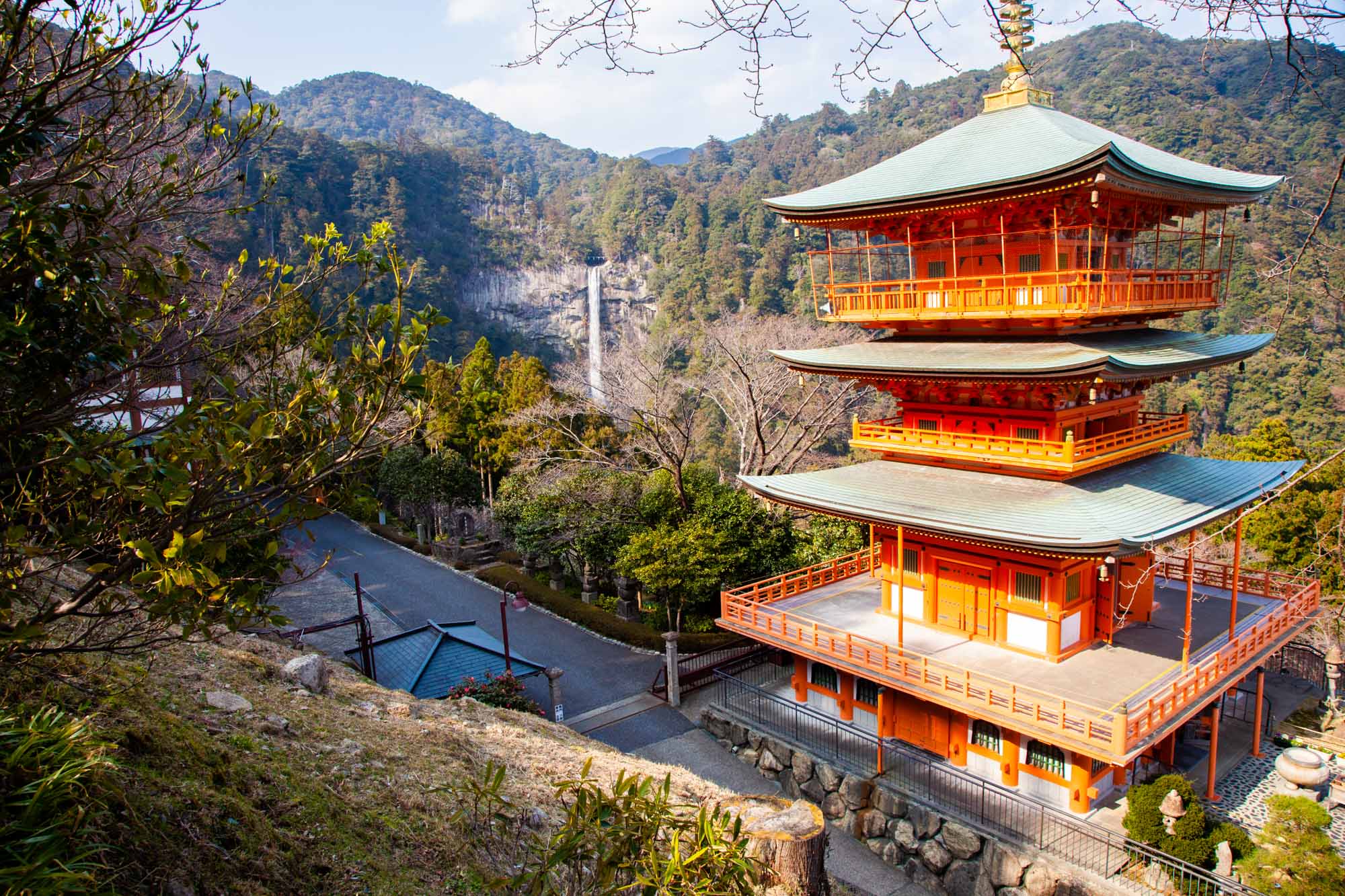
Walk one of the most iconic sections of the Kumano Kodo, the Daimonzaka stone staircase, leading through towering cedar forest to Kumano Nachi Grand Shrine. Visit the shrine complex and admire the spectacular Nachi Waterfall, long revered as a sacred natural site. This area represents a powerful blend of nature worship and Shinto tradition.

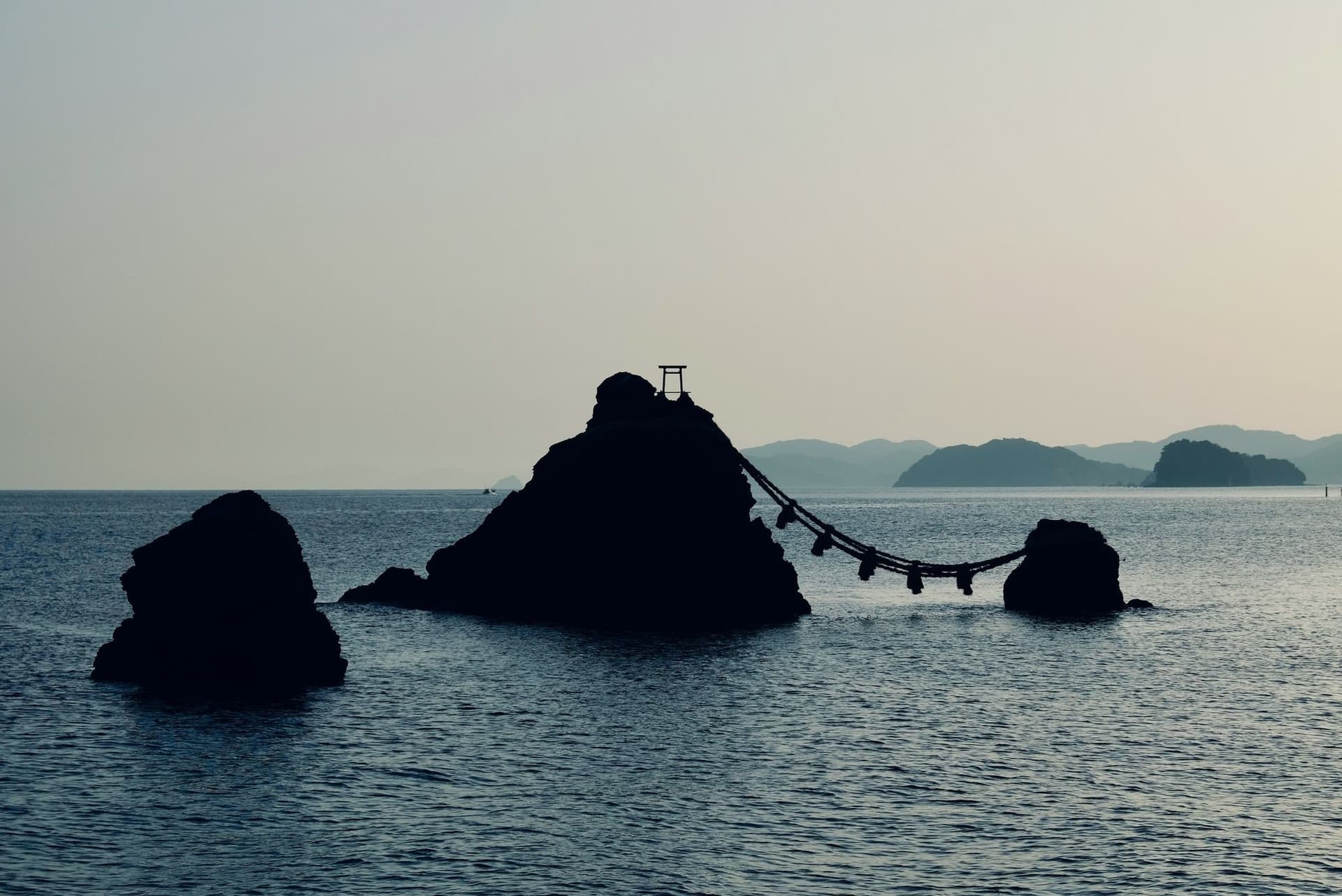
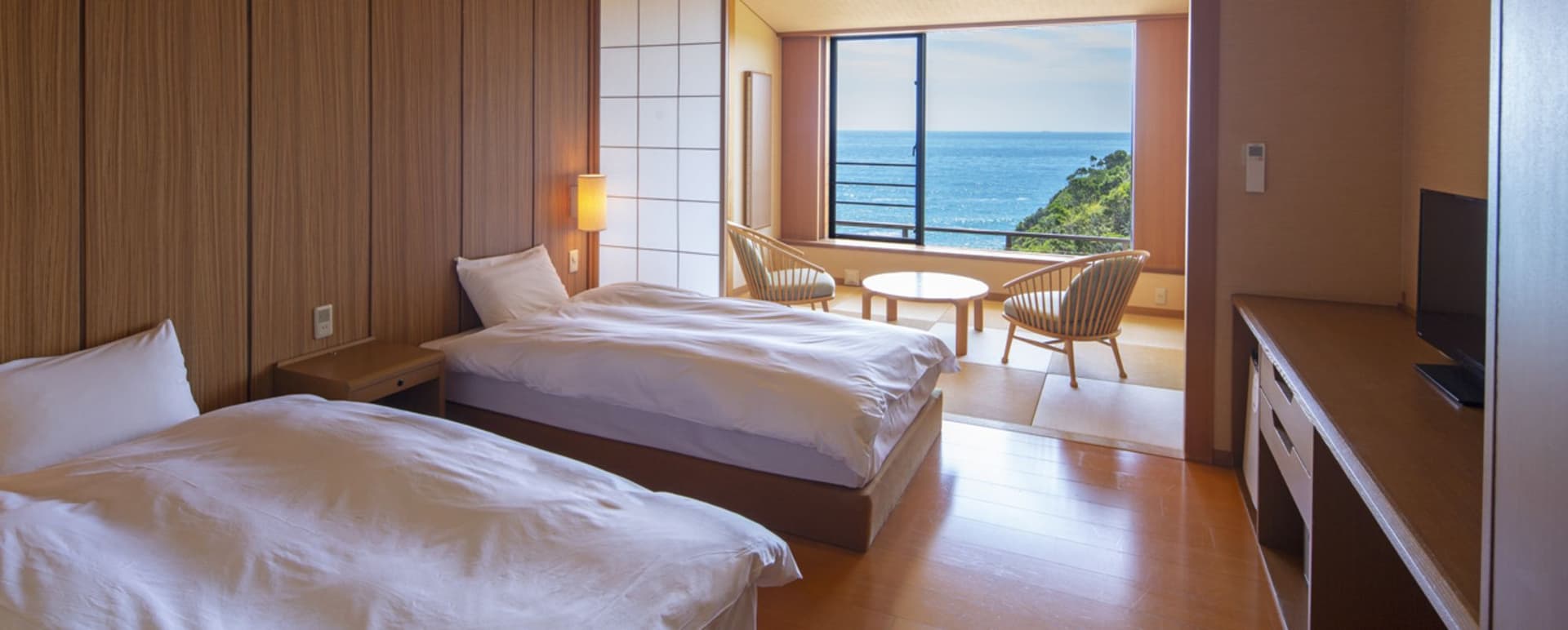
Continue to Kumano City for a coastal experience, walking along the Onigajo Promenade. Here, dramatic rock formations and sea cliffs create constantly changing views over the Pacific Ocean. Visit Hana no Iwaya, one of Japan’s oldest sacred sites, and enjoy a short seaside walk before settling into your traditional ryokan for the night.

(light lunch will be a bento box)

Meals: Breakfast, Dinner
Walking Distance: 4 km / 2 mi
Accommodation: Umihikari ryokan
Itinerary Image

Day 7: Owase

Begin the day with the historic Matsumoto-toge pass, walking through bamboo forest and enjoying occasional views of the Pacific Ocean. This beautifully preserved stone path reflects the long history of pilgrims traveling between mountain and coast. Continue through quiet rural landscapes before climbing the scenic Obuki-toge pass.

After descending, walk coastal sections through the traditional villages of Odomari and Hadasu, where daily life still feels closely connected to the sea and the ancient pilgrimage routes. These villages offer a glimpse into a slower pace of life in the Kumano region. Travel by train to Owase in the late afternoon and enjoy a relaxing evening at your accommodation.

Meals: Breakfast, Dinner
Cycling Distance: 8 km / 5 mi
Accommodation: Owase Seaside View
Itinerary Image

Day 8: Ise

Visit the Mie Prefectural Kumano Kodo Center to deepen your understanding of the pilgrimage routes, their history, and their cultural importance. Take part in a hands-on local craft activity using regional materials, adding a creative and cultural element to the day. Continue your journey by train and local bus to Ise, home to Japan’s most sacred Shinto shrine.

Explore both the Outer Shrine and Inner Shrine of Ise Grand Shrine, dedicated to the sun goddess Amaterasu. Walk through ancient cedar forests and across traditional bridges, experiencing a place that has been a spiritual center for over 2,000 years. Settle into your final overnight in Ise.

Meals: Breakfast, Dinner
Walking Distance: 3 km / 2 mi
Accommodation: Hotel Sennomori
Itinerary Image

Day 9: Departure

After breakfast, the tour comes to an end. Say farewell to your tour leader and fellow travelers, reflecting on a journey that has combined mountain trails, coastal walks, sacred shrines, and deep cultural traditions. Depart independently from the Ise and Toba area, with onward travel typically via Toba Station.

Meals: Breakfast

Ready to plan your adventure? Download a print-ready detailed itinerary.

Map

Accommodation

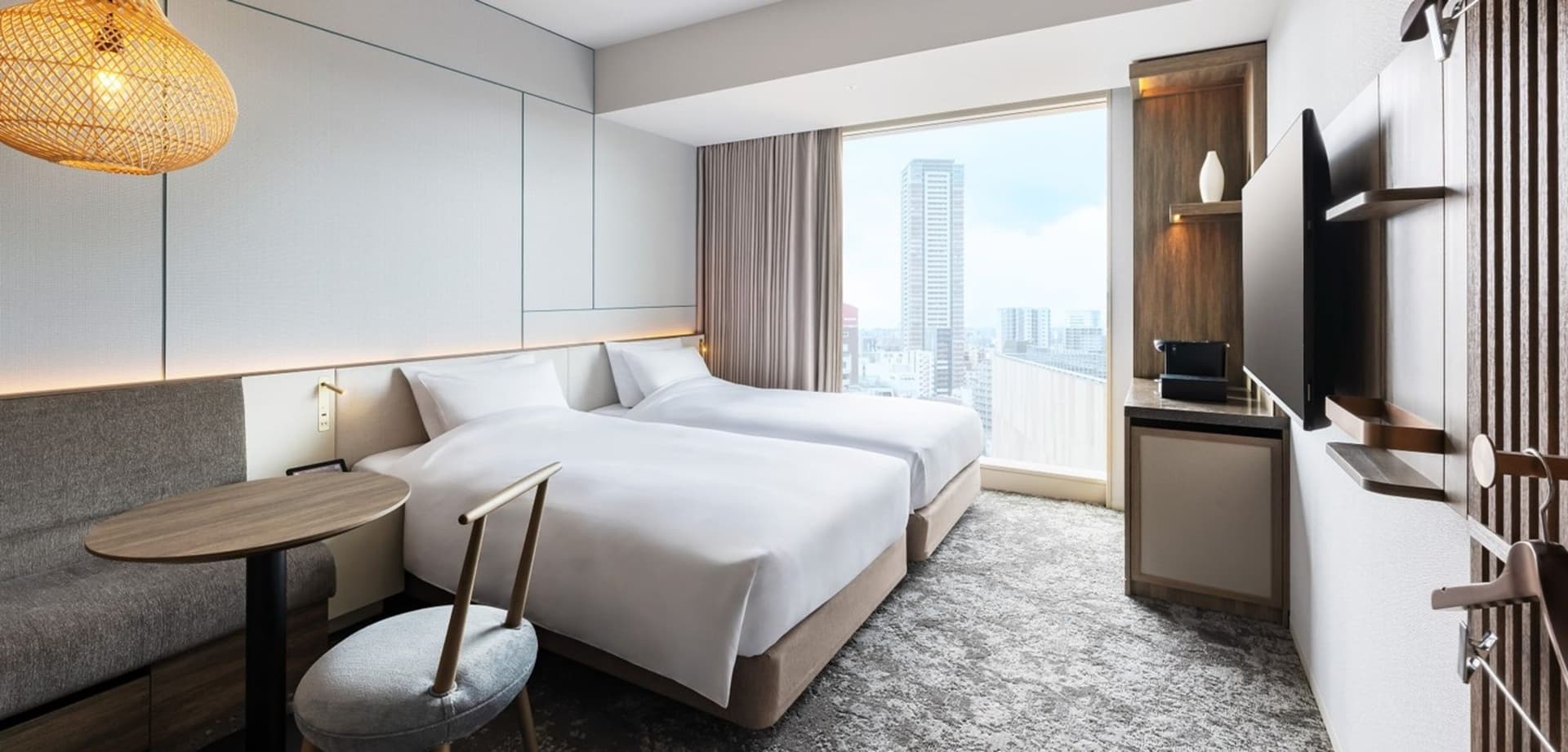
Each hotel has been thoughtfully selected to ensure an exceptional and memorable experience for guests. Should the listed hotel be unavailable, we will ensure an alternative of similar quality.

Highlight Image

Hotel Hankyu Gran Respire Osaka (4 Star)

Highlight Image

Organic Hotel Kirinosato

Highlight Image

Yunomineso

Highlight Image

Kyukamura Nanki-Katsuura

Highlight Image

Umihikari ryokan

Highlight Image

Owase Seaside View

Highlight Image

Hotel Sennomori

Dates and Prices

Book with Confidence: For scheduled group departures, your 20% deposit is fully refundable until 60 days before departure. Solo travellers booking 120+ days in advance can avoid a mandatory Single Supplement. See terms & conditions.


Couldn't find a trip with convenient dates?

Open your date as a join-in tour or customize further as a private one.


Essential Info

Inclusions

LODGING

All hotels as mentioned in the tour details or similar (subject to availability).

trip leader

Expert Trip Leader(s) who look after your every need and add meaning to your vacation.

shuttle

A Van support follows the group of riders and carries all belongings.

Luggage Transfer

Transportation of luggage from one hotel to another.

meals

Meals as per itinerary. Guests are given the opportunity to dine on their own so that they discover a location independently.

entrance

Entrance fees to most of the monuments and temples.

Exclusions

Airport pickup

We recommend to book direclty from airport.

Airport drop

We recommend to book direclty from your last hotel.

Beverages

Beverages such as alcohol, tea, coffee, juice at a hotel or restaurant.

Gratuity

Gratuities for your guide team are not included in the trip price.

Arrival & Departure Details

ARRIVAL

Your tour starts in Osaka. We recommend flying into Kansai International Airport (KIX), which is the main international gateway for the region. From the airport, guests should make their own way to the tour hotel in central Osaka. The most convenient options are airport limousine bus, JR train services, or licensed airport taxis, all available in the arrivals area.

Travel time to central Osaka typically ranges from 45 to 70 minutes depending on transport choice and traffic. Please ensure you arrive in Osaka in time for the evening welcome meeting and dinner at the hotel.

DEPARTURE

Your tour ends in Ise, with departure after breakfast and onward travel from Toba Station. For international departures, we recommend traveling by train to Chubu Centrair International Airport (NGO) in Nagoya, which offers the most convenient onward flight connections. Your tour guide will be available to assist with train and transfer advice.

Guests should allow sufficient time for rail travel from the Ise or Toba area to Nagoya Airport when planning flights.

Weather

The best weather for walking and hiking on the Kumano Kodo and Ise routes is in spring and autumn, when temperatures are mild, humidity is lower, and trail conditions are most comfortable. April, May, October, and November typically offer daytime temperatures of 15 to 22°C or 59 to 72°F, ideal for long hiking days.

Summer is hot and very humid, with temperatures often reaching 28 to 35°C or 82 to 95°F, making mountain walks more demanding. June brings frequent rain, while late summer can see typhoons. Winter is cooler at 5 to 12°C or 41 to 54°F, suitable for fit hikers but less comfortable overall.

January

Offseason

February

Offseason

March

Mixed

April

Best

May

Best

June

Mixed

July

Offseason

August

Offseason

September

Offseason

October

Best

November

Best

December

Mixed

Best

Good

Mixed

Offseason

What to Pack

Packing wisely ensures comfort and safety on your hiking adventure. This list covers essential hiking gear, clothing, and travel items to help you handle varied terrain and weather conditions.

Recommended Hiking Clothes & Gear

  • Lightweight hiking shoes or boots with good traction.
  • Moisture-wicking base layers and breathable hiking shirts.
  • Quick-dry hiking pants or shorts.
  • Light fleece or down jacket for cooler temperatures.
  • Waterproof and windproof shell jacket.
  • Sun hat and sunglasses with UV protection.
  • Hiking poles (optional but recommended on uneven terrain).
  • Small daypack with hydration system or water bottles.
  • Headlamp or small flashlight.
  • Light gloves and beanie for early mornings or high altitudes.

Clothing

  • Layered clothing for temperature changes throughout the day.
  • Full-sleeved tops for sun and insect protection.
  • Comfortable evening wear for lodges or inns.
  • Compact rain jacket for unpredictable weather.
  • Extra socks (preferably synthetic or wool).

Other Necessities

  • Basic first-aid kit with personal medication.
  • Sunscreen, lip balm, and insect repellent.
  • Reusable water bottle or hydration bladder.
  • Snacks like trail mix, nuts, or energy bars.
  • Plug adaptor and power bank for charging devices.

Pro Tips

  • Pack light — you’ll appreciate it on uphill climbs.
  • Break in your shoes before the trip to avoid blisters.
  • Keep rain gear easily accessible in your daypack.

Luggage

Please limit your luggage to one medium-sized suitcase and one daypack. Mark your luggage clearly with your name, address, and phone number.

Visa Information

Before venturing on your adventure, make sure you're equipped with essential travel advice, including security updates, local laws, and crucial passport and visa information. Start by visiting the official government website of your home country for accurate and reliable guidance:

Note: Passport and visa regulations can change at any time. Stay proactive by checking for the latest updates to ensure a smooth and stress-free journey.

Insurance

Medical insurance that covers medical costs in case of an accident during the trip is mandatory to participate in our tours.

We recommend to purchase adequate travel insurance in order to participate in our tours and protect yourself from unforeseen events. Our experience shows that guests who purchase travel insurance—including coverage for all activities on the itinerary, trip cancellation, interruption, delay, baggage damage, loss or theft, personal accident, death and repatriation costs, medical and emergency expenses (including Covid-19), and personal liability—travel with greater peace of mind.

Is proof of medical insurance required?

Yes. You must provide your insurer's name, policy number, and emergency contact via our reservation form. This is mandatory. If you cannot provide proof, you’ll need to purchase insurance before traveling with us.

Can I use my credit card insurance?

Yes, as long as it meets our requirements and provides adequate coverage. Ensure you have an emergency contact number and policy number available.

When should I buy travel insurance?

Purchase travel insurance as soon as you've paid in full or booked your flights.

Does Art of Bicycle Trips sell travel insurance?

We do not sell travel insurance directly, as we believe our customers should have the freedom to choose a policy that best suits their needs. However, we recommend Insured Nomads as a great starting point.

Frequently Asked Questions

A guided bike tour includes a professional local guide who rides with you throughout the trip. The guide handles navigation, manages daily logistics, ensures safety, and shares cultural insights. In addition to the guide, you also have a support vehicle that transfers luggage, provides water/snacks, and offers on-route assistance or a lift whenever needed. You simply follow the guide and enjoy a fully supported experience.

Your guides are local cycling experts, fluent in English, with deep knowledge of the region’s history, culture, and food.

On our guided tours, we ensure you begin your ride feeling comfortable and well-supported. Your guide and local team play an active role in getting your bike properly set up.

Before Your Tour

When you book, we ask for your height. This allows our local partners to select the correct frame size and prepare the bike in advance so it’s close to your ideal fit when you arrive.

At the Start of the Tour

You’ll receive a full in-person bike fitting with your guide or local representative. This typically includes:

  • Adjusting saddle height
  • Moving the saddle fore–aft (small adjustments to move the saddle forward or back for better balance and comfort)
  • Fine-tuning handlebar height and reach (where adjustable)
  • Confirming pedal preference — flat pedals are provided by default. If you bring your own clip-in pedals, our guide will help install and adjust them
  • A short test ride to check comfort

Your guide will ensure everything feels right before the tour begins.

During the Tour

Throughout the trip, your guide will make additional adjustments whenever needed. This is especially helpful if you discover new comfort preferences after a few hours of riding.

What to Expect

Our guided tour bike fitting is hands-on, comfort-focused, and practical, ensuring you ride safely and enjoyably each day. It’s not a detailed workshop-level fit, but it covers all essential adjustments for multi-day touring.

Our support vehicle is always close by to make your ride worry-free. It carries your luggage, water, snacks, and spare parts, and is there if you need a quick lift or just want to rest for a while. You’ll see it at regular intervals along the route and during meal or refreshment stops. The vehicle is also used for scheduled transfers and to ensure safety and comfort along the route.

For guided tours, we do not provide GPX files separately, as navigation is handled by your guide. On certain occasions, if you prefer more independence, we may offer app-based navigation access with the daily routes loaded. However, please understand that this may not always be possible and depends on the specific tour setup.

Airport transfers are not included unless specifically mentioned in your trip inclusions.

For airport pickup, we recommend booking directly from the airport upon arrival — most airports have reliable taxi, shuttle, or app-based options.

For airport drop, please book a transfer through your last hotel — they can easily arrange it for you.

We focus on delivering exceptional experiences during your tour. For logistical simplicity and flexibility, we do not handle pre- or post-tour hotel bookings. However, we’re happy to share a list of recommended hotels near the starting and ending points of your trip so you can plan your stay independently.

The fitness level required for each trip is indicated by the "level" of the tour, which in turn is mentioned on each tour page right next to the price and the trip duration.

Easy: The terrain is mostly flat with a few gentle climbs.

Moderate: The terrain is either mostly flat or consists of rolling hills with a few challenging climbs. There could also be a few days with longer riding distances of up to 75 kms (45 miles)

Difficult: The terrain is mostly hilly with strong elevation gains and/or has long days on the bike. Such trips are recommended for intermediate to advanced cyclists.

Please note that we usually bike around 4-5 hours per day irrespective of the level of the trip.

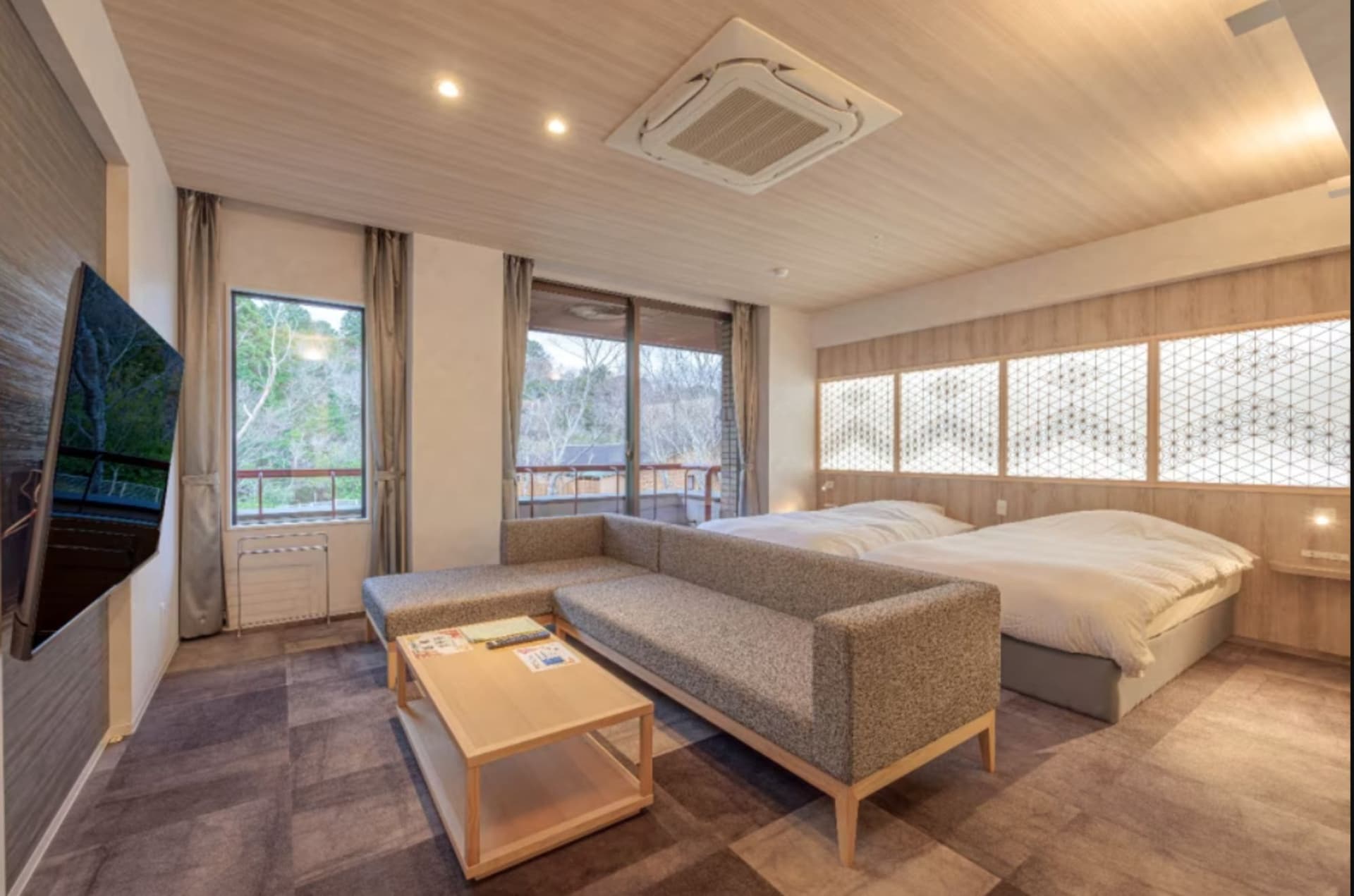
Our tours in Japan feature a mix of traditional Japanese inns (ryokans) and Western-style hotels. Room assignments are subject to availability and may vary from place to place.

Japan’s cultural heritage is beautifully reflected in its onsen (natural hot springs) and ryokans. Staying in a ryokan offers an immersive experience, with tatami-mat rooms, traditional décor, and access to communal or private hot spring baths. Onsens are an important part of Japanese culture, valued for relaxation, healing, and their historical significance.

Please note that:

  • Ryokan rooms often do not have en suite showers or baths. Even in upscale properties, many rooms include only a toilet, with guests expected to use the communal onsen bathing facilities.
  • Double beds are limited in many Japanese hotels. When double rooms are requested, we may only be able to secure twin rooms depending on availability.

Ryokans and onsens add a unique and memorable cultural dimension to your trip, offering an authentic and restorative Japanese experience.

Yes, please communicate your dietary preferences to your trip leader and they'll ensure that the food you eat is as per your requirements.

Yes — we do our best to support all dietary requirements. However, please note that vegan and gluten-free options can be limited in certain regions of Japan, especially in smaller towns. We will make every effort to cater to your needs, but we strongly recommend bringing a few essential vegan or gluten-free staples as a backup.

At the start of your trip, please inform your guide of your dietary preferences. They will be happy to help you identify suitable meals and assist in sourcing appropriate supplies from local grocery stores in larger towns whenever possible.

Most of this trip is on double-lane paved tarmac roads with very less traffic.

We've designed this itinerary such that most of the cycling happens on quieter countryside roads far from busy traffic. The shuttle transfers on this tour have been strategically planned to bypass busy vehicular traffic.

While your tour price covers most common expenses, a few meals not included in the itinerary may require additional spending. As a general guideline, you can budget approximately US $25 per person per day for these extra expenditures.

Tips are not included in your tour price.

As a general rule, you may tip US$ 15-25 per person per day.

This figure is for the entire crew including the trip leader, the driver, and other support staff.

However, you are not obligated to tip, and you can always tip less or more than the above amount depending on the level of service you received on tour.

It is usually the norm to tip the tour guide, who then distributes the amount among the entire crew. However, you can also tip each individual member of the crew if you so desire.

In case you want to tip the staff at a hotel such as porters, you may pay them US $2-3 per day.

You can exchange currency at the currency exchange kiosks in Japanese airports, or you can use your credit card at ATMs at convenience stores such as 7/11 in major Japanese cities to withdraw JPY. Many Japanese commercial establishments still prefer cash, so its good to have some local currency with you when cycling in Japan.

Yes, you may wear riding shorts while riding your bike. When not cycling, it would be advisable to wear comfortable full-length pants. We recommend keeping a pair of comfortable pants handy in you support van.

When visiting temples and monuments, visitors should wear full-length, loose-fitting pants. Holy places of certain religions may also require covering your head. Your guide will inform of the dress etiquette required for visiting specific religious places.

The meeting time on Day 1 is mentioned in your travel planner shared with you. You can arrive either on the morning of Day 1 depending on the meeting time, or book a pre-tour night to arrive a day earlier.

We don't have anything planned for the last day, so you are free to depart at your discretion.

Reviews from our friends

You may also like


Nakasendo Trail Hiking and Walking Tour
Guided

Guided Nakasendo Trail Hiking and Walking Tour

casual+  hotelsmoderate level

8 daysfrom

View Details
Temples and Trails of Shikoku Hiking and Walking Tour
Guided
Epic Northern Vietnam Hiking and Walking Tour
Guided

Guided Epic Northern Vietnam Hiking and Walking Tour

casual hotelsmoderate to challenging level

9 daysfrom

View Details