
Overview
Puglia unfolds across Italy’s southeastern heel as a region shaped by light, stone, and slow movement through open landscapes. Here, olive groves stretch to the horizon, dry-stone walls divide fields into quiet geometries, and whitewashed towns rise gently from plains and low hills. For many travelers, hiking Puglia offers a different rhythm from Italy’s alpine north or dramatic coastlines. It is a landscape of continuity, where walking becomes a way to notice subtle shifts in terrain, culture, and daily life.
What defines hiking in Puglia is its closeness to lived landscapes. Trails pass through centuries-old olive orchards, vineyards, wheat fields, and grazing land, often following ancient mule tracks, Roman roads, or shepherd paths. In the Valle d’Itria, footpaths weave between trulli houses and almond trees, while along the coast, limestone cliffs and hidden coves frame turquoise water. Inland routes feel expansive and sunlit, with wide skies and a sense of openness that invites unhurried walking.
History is present at every turn. Many routes connect masserie, fortified farmsteads that once anchored rural life, or pass near medieval watchtowers built to guard against coastal raids. Small chapels, roadside shrines, and low stone bridges appear unexpectedly along the way. Villages like Locorotondo, Ostuni, and Martina Franca feel organically tied to the paths that lead in and out of them, welcoming walkers with shaded piazzas, local bakeries, and meals rooted in regional produce.
Seasonality shapes the experience gently rather than dramatically. Spring brings wildflowers among the olive trees and fresh green growth across the fields. Summer floods the landscape with light, encouraging early morning walks and long midday rests. Autumn is harvest time, when grapes and olives define village life, and winter offers quiet trails, soft colors, and a rare sense of solitude.
Whether you are drawn to rural countryside, historic towns, or understated coastal scenery, hiking Puglia reveals a side of southern Italy that feels grounded and deeply human. It is a place where walking connects landscapes shaped by centuries of agriculture, tradition, and resilience, making every route a calm journey through both land and culture.
DREAMING OF HIKING THE PUGLIA ?
Explore our amazing hiking tours in Puglia now!
Puglia Etymology and History
The name Puglia is believed to derive from the ancient term Apulia, itself linked to the Iapyges, an Indo-European people who settled this part of southern Italy long before Roman rule. For centuries, Puglia has been a threshold region, shaped by its position between land and sea, and by the many civilizations that passed through its plains, ports, and hill towns. Greeks, Romans, Byzantines, Normans, Arabs, and Spaniards all left their imprint here, creating a layered cultural landscape that still unfolds beneath the feet of modern walkers.
Movement has always defined Puglia. Roman roads such as the Via Appia and Via Traiana once crossed the region, linking Rome to the ports of Brindisi and Bari and onward to the eastern Mediterranean. These routes carried soldiers, pilgrims, traders, and olive oil amphorae, shaping settlement patterns that remain visible today. Many of the tracks now used for hiking in Puglia trace older agricultural paths, pilgrimage roads, and shepherd trails that connected inland farms to coastal markets.
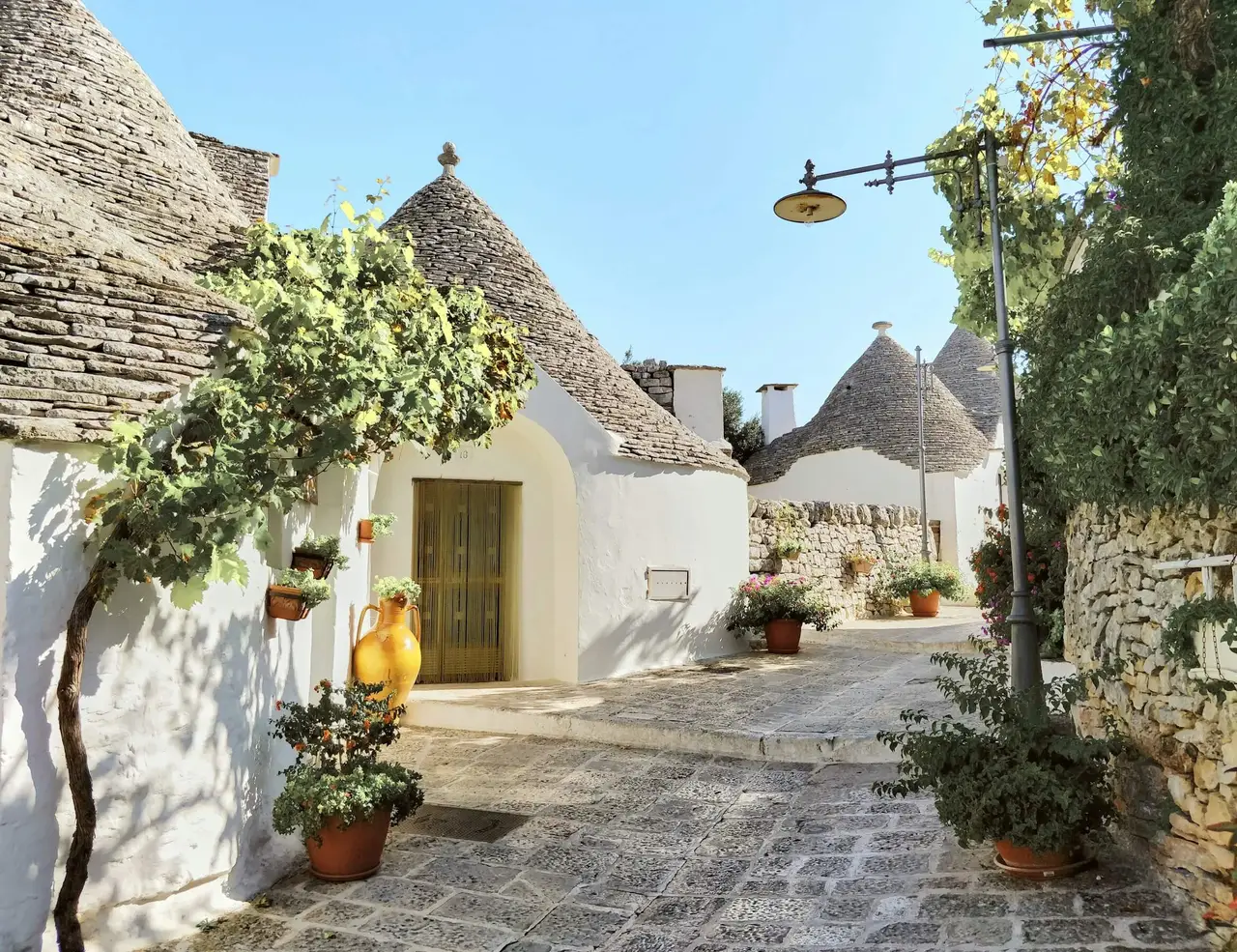
Rural life left especially deep marks on the land. Dry-stone walls, known locally as muretti a secco, divide fields and paths across the countryside, built without mortar using limestone gathered from the soil itself. Trulli, the iconic conical stone houses of the Itria Valley, began as practical shelters for farmers and seasonal workers. Masserie, fortified farm estates scattered across the plains, served as both homes and defensive outposts, reflecting centuries of agricultural labor combined with the need for protection from raids and invasions.
Along the coast, fishing villages and port towns developed in response to maritime trade and exposure. Watchtowers still dot the shoreline, built to warn against Ottoman incursions and pirates. Inland, hill towns like Locorotondo, Ostuni, and Martina Franca rose for safety and control, their whitewashed streets winding along ridgelines that offered both defense and cooling breezes.
In recent decades, renewed interest in slow travel and rural heritage has brought attention back to these historic paths. Old mule tracks, farm roads, and coastal footpaths are being rediscovered as walking routes that reveal the region’s quiet beauty. Rather than dramatic alpine terrain, hiking in Puglia is about continuity, moving through landscapes shaped patiently by hands, seasons, and centuries of everyday life.
Today, hiking in Puglia offers a way to step into this long human story. Each stone wall, olive grove, and coastal trail carries echoes of traders, pilgrims, farmers, and fishermen who walked here long before hiking became a leisure pursuit. Walking through Puglia is not just a journey through scenery, but through the deep historical rhythms of southern Italy.
Best Time for Hiking Puglia
Puglia enjoys a warm Mediterranean climate shaped by long summers, mild winters, and abundant sunshine. Unlike mountainous regions, the experience of hiking in Puglia is defined by open landscapes, coastal breezes, and human-shaped terrain rather than altitude. Olive groves, stone villages, and seaside paths respond gently to the seasons, making much of the year suitable for walking. That said, spring and autumn offer the most comfortable conditions and the richest sensory experience.
Best Season: Spring (March to May) and Autumn (September to November)
Spring
Spring is widely considered the ideal time for hiking in Puglia. From March onward, the countryside wakes slowly from winter. Wildflowers bloom along dry-stone walls, fields turn green between rows of ancient olive trees, and citrus blossoms scent the air. Daytime temperatures usually range between 15°C and 22°C (59°F to 72°F), making long walks comfortable even on exposed paths.
Coastal trails near Polignano a Mare, Monopoli, and the Gargano Peninsula feel especially fresh in spring, with clear seas and cooling breezes. Inland routes through the Itria Valley pass through quiet farmland and whitewashed towns without the heat or crowds of summer. This is also a season of local festivals tied to food, saints, and agriculture, adding cultural texture to walking days.
Autumn
Autumn brings a slower, golden rhythm to Puglia. From September through November, temperatures remain warm but gentle, averaging between 16°C and 24°C (61°F to 75°F). Olive harvest begins in late autumn, and the countryside hums with seasonal activity. Hiking in Puglia during this period feels deeply connected to rural life, as farmers work the groves and villages return to everyday routines after summer tourism.
The sea often stays warm into October, making it easy to combine walking with swims along the Adriatic coast. Trails are quieter, light is softer, and evenings are ideal for long dinners featuring freshly pressed olive oil, vegetables, and seafood. For multi-day walking, autumn offers a balance of comfort, color, and calm.
Shoulder Seasons: Summer (June to August) and Winter (December to February)
Summer
Summer in Puglia is bright, dry, and intense. Daytime temperatures frequently rise above 30°C (86°F), especially inland. Hiking remains possible, but timing becomes essential. Early morning starts and late afternoon walks are key, with long midday breaks in shaded villages or by the sea. Coastal paths benefit from breezes, while inland routes require careful hydration and sun protection.
Summer rewards hikers with long daylight hours, lively towns, and warm evenings. Walking shorter sections paired with cultural visits, beaches, and relaxed pacing works best during this season.
Winter
Winter is the quietest time for hiking in Puglia. Temperatures generally range from 8°C to 15°C (46°F to 59°F), and snow is rare outside the highest parts of the Gargano. Rainfall increases, but many days remain clear and mild. Trails through olive groves, coastal promenades, and rural paths stay walkable, often with complete solitude.
Some accommodations and restaurants may operate on reduced schedules, particularly in smaller villages, but winter appeals to walkers who value stillness, soft light, and an unhurried pace. With layers and flexibility, winter walking reveals a quieter, more introspective side of the region.
Whichever season you choose, hiking in Puglia adapts gracefully to the time of year. The land changes slowly, guided by agriculture, sea, and sun. Each season offers a distinct mood, inviting walkers to experience southern Italy through movement, landscape, and lived tradition.
PLANNING A HIKING HOLIDAY IN PUGLIA ?
Dive into our curated Puglia hiking adventures today!
Which Are the Best Routes for Hiking Puglia?
Puglia is not defined by dramatic elevation or alpine terrain, but by long human histories written into the land. Dry-stone walls, olive groves, coastal paths, pilgrimage roads, and farm tracks shape the walking experience here. Hiking in Puglia is about moving through lived landscapes, where agriculture, sea, and settlement have evolved together over centuries.
Rather than one single long-distance trail, Puglia offers a mosaic of routes that can be combined into multi-day journeys or enjoyed as rewarding day hikes. Below are some of the most memorable routes for hiking Puglia, balancing scenery, culture, and accessibility.
1. Path of the Two Seas (Cammino del Due Mari)
The Cammino del Due Mari is one of southern Italy’s most evocative long-distance walks. It crosses the Salento Peninsula from the Ionian Sea to the Adriatic, linking quiet inland villages, olive groves, vineyards, and coastal viewpoints. The route follows ancient roads, pilgrimage paths, and farm tracks that once connected communities between the two coasts. Walking this route reveals the changing character of Puglia. You move from wide agricultural plains into low limestone hills, then descend toward rocky shores and fishing towns. It is a journey defined by gradual transitions rather than dramatic shifts.
Quick Facts Distance: ~120 km (75 mi) Time Needed: 6 to 8 days Difficulty Level: Easy to Moderate Highlights: Olive groves, inland villages, two coastlines, cultural continuity
2. Gargano National Park Coastal and Forest Trails
The Gargano Peninsula rises abruptly from the Adriatic, forming a rugged promontory often called the spur of Italy’s boot. Trails here offer some of Puglia’s wildest walking, combining limestone cliffs, pine forests, oak woods, and secluded beaches. Routes range from forest paths within the Foresta Umbra to coastal walks near Vieste and Mattinata, where cliffs drop straight into turquoise water. Hiking in Puglia feels more remote here, with fewer settlements and stronger contrasts between forest shade and open sea views.
Quick Facts Distance: Various, from 6 km (4 mi) loops to full-day hikes Time Needed: Half-day to full-day Difficulty Level: Easy to Moderate Highlights: Forest Umbra, sea cliffs, biodiversity, quiet beaches
3. Itria Valley Trulli and Countryside Walks
The Itria Valley is the pastoral heart of central Puglia, known for its rolling hills, vineyards, and trulli houses with conical stone roofs. Walking routes connect towns such as Alberobello, Locorotondo, Martina Franca, and Cisternino through a web of old mule tracks and farm lanes. This is gentle walking, ideal for slower days. Paths wind through olive orchards, dry fields, and small farms, often ending in hilltop towns with sweeping views and long lunches waiting in village trattorias.
Quick Facts Distance: 8 km to 18 km (5 to 11 mi) per route Time Needed: Half-day or full-day Difficulty Level: Easy Highlights: Trulli architecture, vineyard hills, white towns, rural calm
4. Polignano a Mare to Monopoli Coastal Walks
Along the central Adriatic coast, limestone cliffs and small coves define the scenery. Coastal paths between Polignano a Mare and Monopoli follow rocky headlands, seaside promenades, and old tracks used by fishermen and traders. These walks combine sea views with easy access to cafés, swimming spots, and historic centers. Hiking Puglia along this stretch works well as relaxed day hikes, especially in spring and autumn when temperatures are mild and the sea is clear.
Quick Facts Distance: 6 km to 14 km (4 to 9 mi) depending on section Time Needed: 2 to 4 hours Difficulty Level: Easy Highlights: Clifftop views, swimming coves, historic ports, Adriatic light
5. Via Francigena del Sud (Apulian Sections)
The Via Francigena del Sud continues the ancient pilgrimage route toward the port of Brindisi, once a gateway to the eastern Mediterranean. In Puglia, the trail passes through farmland, Roman roads, olive groves, and towns shaped by medieval and classical history. Walking this route connects religious heritage with everyday landscapes. Stone chapels, roadside crosses, and quiet villages mark a rhythm of travel that has persisted for centuries.
Quick Facts Distance: Variable sections across the region Time Needed: 2 to 7 days depending on stages Difficulty Level: Easy to Moderate Highlights: Pilgrimage history, Roman roads, rural villages, cultural depth
6. Salento Coastal Paths
At the southern tip of Puglia, Salento offers some of the most atmospheric coastal walking in the region. Trails trace low cliffs, sandy beaches, and wind-shaped landscapes near towns such as Otranto, Santa Maria di Leuca, and Porto Selvaggio. Here, hiking in Puglia feels open and elemental. The land meets the sea without barriers, and the walking is shaped by light, wind, and water rather than steep climbs.
Quick Facts Distance: 5 km to 15 km (3 to 9 mi) Time Needed: 2 to 5 hours Difficulty Level: Easy Highlights: Sea cliffs, Mediterranean scrub, coastal sunsets, quiet paths
Whether you choose pilgrimage roads, olive-grove countryside, forested headlands, or Adriatic coastlines, hiking in Puglia reveals a region shaped by continuity rather than extremes. Each route offers a different expression of southern Italy’s landscape, inviting walkers to move slowly through history, agriculture, and the enduring relationship between land and sea.
Accommodation Options for Hiking in Puglia
One of the great pleasures of hiking Puglia is how closely the walking routes are woven into everyday life. Instead of remote mountain huts, nights are usually spent in towns, villages, or countryside estates where hospitality is deeply ingrained.
Accommodations range from family run guesthouses and agriturismi to small boutique hotels in historic centers and coastal towns. Meals are often homemade, built around olive oil, vegetables, bread, cheese, seafood, and wine produced just a few kilometers away.
Because hiking in Puglia follows farm tracks, pilgrimage roads, and coastal paths rather than high alpine terrain, walkers rarely feel isolated. Most routes end within reach of a village café, a town square, or a rural property surrounded by olive groves. This makes it easy to combine long walking days with comfort, good food, and a sense of place at the end of each stage. Below are accommodation styles and highlights matched to the main hiking routes in Puglia.
Path of the Two Seas (Cammino del Due Mari)
Along the Cammino del Due Mari, accommodation reflects the rural and cultural heart of Salento. Walkers often stay in small inland towns where guesthouses occupy restored stone homes or former farm buildings. These stays are simple but welcoming, with generous breakfasts and hosts who understand the needs of long distance walkers. Many agriturismi along the route offer dinners made from garden produce and local olive oil, creating evenings that feel deeply connected to the land.
Accommodation Highlights: Rural guesthouses in inland Salento towns Agriturismi surrounded by olive groves and vineyards Small family inns offering pilgrim friendly services
Gargano National Park Coastal and Forest Trails
In the Gargano Peninsula, accommodation options vary between forested interiors and lively coastal towns. Walkers exploring the Foresta Umbra often base themselves in towns like Vieste or Monte Sant’Angelo, where small hotels and B&Bs provide easy access to trailheads. Near the coast, simple seaside hotels and pensions allow hikers to combine forest walks with swims and evening strolls along the waterfront. Inland stays tend to be quieter and more rustic, often set among woodland or farmland.
Accommodation Highlights: Small hotels in Vieste and Mattinata Guesthouses near Monte Sant’Angelo Countryside stays close to Foresta Umbra trails
Itria Valley Trulli and Countryside Walks
The Itria Valley offers some of the most atmospheric accommodation in Puglia. Many walkers stay in restored trulli, masserie, or rural guesthouses scattered among rolling hills. These properties emphasize calm, comfort, and regional character, often featuring stone walls, shaded courtyards, and long breakfasts. Staying overnight in towns like Locorotondo, Martina Franca, or Cisternino also works well, allowing you to walk between villages by day and enjoy lively town centers by night.
Accommodation Highlights: Trulli style guesthouses in the countryside Masserie offering farm to table meals Small hotels in historic hill towns
Polignano a Mare to Monopoli Coastal Walks
This coastal stretch offers some of the widest accommodation choices. Walkers often stay in boutique hotels, B&Bs, or apartments in Polignano a Mare or Monopoli, both of which have charming old towns and excellent dining scenes. Staying overnight allows you to walk early or late in the day, avoiding crowds and enjoying quieter coastal moments. Many accommodations are within walking distance of the sea, making post hike swims easy.
Accommodation Highlights: Boutique hotels in Polignano a Mare’s old town Guesthouses and small hotels in Monopoli Seaside apartments ideal for relaxed pacing
Via Francigena del Sud (Apulian Sections)
Along the Via Francigena del Sud, accommodation mirrors the pilgrimage tradition. Walkers find small inns, convent guesthouses, rural B&Bs, and family run hotels that welcome pilgrims and hikers alike. These stays are usually modest but warm, often offering early breakfasts and flexible check in times. Towns such as Brindisi and inland villages along the route provide comfortable bases for walking multiple stages without changing accommodation every night.
Accommodation Highlights: Pilgrim friendly guesthouses Small town hotels along historic routes Rural B&Bs near Roman roads and chapels
Salento Coastal Paths
In southern Salento, accommodation often centers around seaside towns and beach areas. Walkers can choose between relaxed coastal hotels, guesthouses overlooking the sea, or inland stays surrounded by farmland. Many people enjoy combining a few nights in one coastal base with day hikes along different sections of shoreline. Evenings here are social and lively, with long dinners, sea air, and local wine shaping the rhythm of rest days.
Accommodation Highlights: Seaside hotels near Otranto and Santa Maria di Leuca Guesthouses close to coastal trails Inland stays offering quieter nights after walking
Wherever you stay while hiking Puglia, the experience remains rooted in hospitality and human connection. Days unfold across olive groves, coastlines, and villages, while nights bring warmth, conversation, and food shaped by local traditions. Accommodation here is not just a place to sleep, but an extension of the walking journey itself.
Frequently Asked Questions
Is hiking in Puglia suitable for beginners or casual walkers?
Yes. Hiking in Puglia is generally very accessible and well suited to beginners and casual walkers. The region is mostly low-lying, with gentle hills rather than steep mountains, and many routes follow ancient farm tracks, coastal footpaths, and countryside lanes. Walks through olive groves, along dry stone walls, and beside the sea are typically moderate in length and elevation.
That said, some coastal paths and rocky sections in areas like the Gargano Peninsula or along limestone cliffs can be uneven underfoot. Good walking shoes and steady pacing are enough for most routes. Puglia is an excellent destination if you want scenic hiking without technical terrain or sustained climbs.
Can I combine coastal and countryside hikes in one trip?
Absolutely. One of the pleasures of hiking in Puglia is how easily coastal and inland landscapes connect. You might spend one day walking cliff-top paths along the Adriatic, then the next moving through olive groves, vineyards, or rural villages just a short drive or train ride away.
Popular itineraries often combine coastal walks near Polignano a Mare, Monopoli, or the Gargano coast with inland routes through the Valle d’Itria, where trulli houses, orchards, and quiet farm roads dominate the scenery. Distances are short, which makes it easy to base yourself in one town and explore multiple environments without constantly changing accommodation.
What should I pack for hiking in Puglia’s climate?
The main consideration when hiking in Puglia is sun exposure rather than cold or altitude. Many trails are open, with little shade, especially in olive-growing regions and along the coast. A wide-brimmed hat, sunscreen, and sunglasses are essential for most of the year. Carry more water than you think you need, as fountains and cafés can be spaced far apart on rural routes.
Lightweight hiking shoes with good grip are usually sufficient, as terrain is often rocky or dusty rather than muddy. In spring and autumn, a light windproof or waterproof layer is useful, particularly near the sea. Summer hiking requires early starts and slower pacing, while winter walkers should bring layers for cool mornings and breezy coastal conditions.
Is wild camping allowed while hiking in Puglia?
Wild camping is generally not permitted in Puglia, especially along the coast and in protected areas. Much of the land is privately owned farmland, and coastal zones are regulated to protect fragile ecosystems. For this reason, hiking in Puglia is best planned as village-to-village or base-based walking.
Fortunately, accommodation options are plentiful. Masserie, small guesthouses, agriturismi, and family-run B&Bs are widespread and well suited to walkers. Staying in these places is part of the experience, offering local food, regional wine, and a deeper connection to everyday life in southern Italy.
READY TO HIKE PUGLIA ?
Get started with your Hiking adventure now!
Plan Your Active Adventure
Create a private trip or join a small-group departure.
