
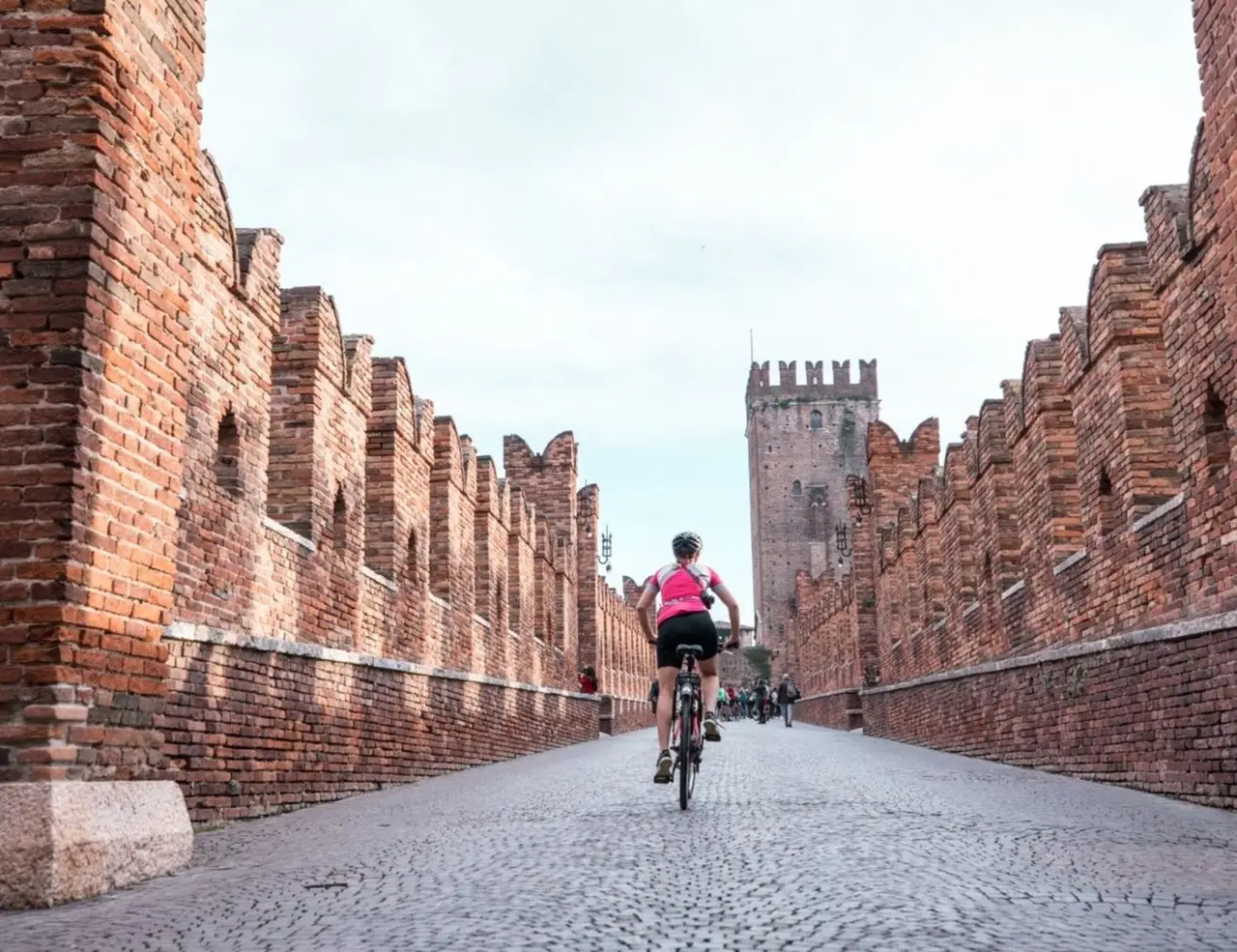
Understanding Verona
Verona sits at a meeting point of history, art, and scenic countryside, where Roman architecture blends seamlessly with Renaissance façades and medieval streets. The city curves around the Adige River, its old town enclosed by bridges, bell towers, and stone alleys that hold centuries of craftsmanship.
The Verona Arena remains the city’s grand emblem, a first-century amphitheatre that once hosted gladiators and today stages opera, concerts, and open-air performances beneath summer skies. The city is also inseparable from literature, forever linked to the romance of Romeo and Juliet, where balconies, arches, and courtyards feel lifted directly from narrative memory. Cycling in Verona opens the region in a way that feels fluid and sensory. You begin in a UNESCO-listed urban core, riding past elegant squares, Venetian-influenced streets, and waterfront promenades, then ease into surrounding landscapes where vineyards rise toward hilltop churches and countryside lanes lead into quieter villages. The journey shifts gently between culture and open scenery, giving riders access to a region shaped by hospitality, artistic heritage, and historical continuity.
Topography
The region surrounding Verona unfolds through river valleys, vineyard-covered hills, and low-rising mountain ridges that create a landscape suited to varied riding. The city rests along the Adige River, where roads are generally level and easy to navigate, making the immediate approach into the countryside smooth and comfortable. From here, the land rises gently toward the wine hills of Valpolicella, where terraces, ridgelines, and stone-built villages shape more immersive and scenic riding.
Toward the west, routes lead into the broad shoreline landscapes of Lake Garda, where open views, lakeside promenades, and olive groves create relaxed momentum along the water’s edge. South and east of the city, the terrain stretches into wider plains shaped by the Po Valley, offering longer, steady-distance riding on quieter roads. For those seeking elevation and wider panoramas, the foothills of the Lessinia Plateau lie just north of the urban core. Here, the roads climb steadily into cooler, mountain-tinged air, revealing far-reaching views across vineyards, tiled towns, and distant Alpine silhouettes.
These shifts in terrain give cycling in Verona a natural progression, from urban river paths to countryside lanes and onward to the uplands. Every route offers a new texture, ensuring variety whether choosing leisurely days, hilly climbs, or full-distance touring.
Climate
Verona experiences a predominantly temperate northern Italian climate, influenced by river valleys, surrounding hills, and its proximity to Lake Garda. This makes cycling conditions comfortable for much of the year, with gentle seasonal variation that shapes the rhythm of the landscape.
Spring and autumn are the most favorable periods for riding, especially from April to June and again between September and October. Temperatures typically sit between 18 and 25 °C (64 and 77 °F), offering ideal conditions for longer touring stages toward the lake or through the wine-growing hills. Vineyards leaf out bright green in spring, while autumn brings shades of amber, burgundy, and gold across Valpolicella slopes, adding strong visual appeal to every route.
Summer is warmer, with daytime averages between 27 and 32 °C (80 and 89 °F). The city can feel noticeably hot during midday, though cyclists often find relief along Lake Garda, where breezes soften the heat and shaded promenades make afternoon rides pleasant. Early mornings and late evenings are popular riding windows in July and August, particularly when heading into the foothills, where elevation brings cooler air.
Winters are mild across the plains and around the lake, while the northern hills and Lessinia Plateau see colder conditions and occasional snowfall. Even so, cycling is still accessible around lower terrain, and the quieter atmosphere in the countryside appeals to riders who enjoy slower, scenic winter days.
Overall, Verona’s climate supports a long cycling season, with each time of year offering its own character, whether that means flowering orchards, vineyard harvests, or crisp views across open rural landscapes.
Flora and Fauna
The natural environments around Verona reveal a blend of river landscapes, vineyard corridors, orchard-lined hills, and cool upland zones shaped by the nearby plateau. Along the Adige River, poplars, willows, and riparian shrubs line the banks, giving shade to cycle paths and softening the edges of bridges and promenades. Just beyond the city, the hills of Valpolicella are quilted with vineyards, olive groves, and cherry orchards that shift in color and scent as seasons change. Spring brings pale blossoms across orchards, wild fennel and mint along roadside verges, and fields dotted with daisies and red poppies, creating a lively atmosphere for early-season rides.
By autumn, the vineyards deepen into warm tones, especially across wine-producing areas where harvest marks seasonal transitions. Olives ripen in small terraced groves, and hazelnut trees in pockets of countryside add texture to rural landscapes. Further north, the foothills of Lessinia host a cooler ecosystem, with beech and fir forests, grassy meadows, and stretches of limestone highlands that support distinctive wild herbs through late summer.
Wildlife reflects these shifting environments. Birds such as hoopoes, swallows, herons, and small raptors appear along lower terrain, especially near riverbanks and open plains. In the highland areas, deer and foxes move through woodland edges, while meadow butterflies, bees, and songbirds animate the countryside during warmer months. Cycling through these environments reveals subtle layers of biodiversity, whether gliding along river paths, passing through vineyards, or reaching upland areas where views extend across the plains.
The combination of agricultural land, river ecosystems, and upland biodiversity makes riding around Verona a distinctly sensory experience. Scenery changes gradually with elevation, and every route brings new textures of color, vegetation, and movement that deepen the connection to the region’s natural landscape.
Economy
The economy around Verona is shaped by a blend of agriculture, wine culture, tourism, small-scale production, and regional services that support both the city and its surrounding countryside. Vineyards remain central to local identity, especially in Valpolicella, where wines such as Amarone, Ripasso, and Valpolicella Classico are produced across terraced slopes and family-run estates. Olive groves, cherry orchards, maize fields, and vegetable farming contribute to local markets, reflecting an agricultural tradition closely tied to the land’s microclimates and soils.
Tourism holds strong economic weight due to Verona’s UNESCO-listed heritage and cultural significance. Opera performances at the Arena, historic fairs, theater seasons, and literary associations attract visitors from Europe and beyond, giving the city a calendar that remains busy through late spring, summer, and early autumn. The proximity to Lake Garda also strengthens the tourism network, since many travelers move between lakeside towns and the historic city center. Alongside these traditional strengths, Verona benefits from regional manufacturing, logistics, and artisanal sectors. Food production, winemaking, and small-scale processing have deep roots here, and towns beyond the city continue to support family-run businesses that operate vineyards, cellars, dairies, and mills. Lower plains toward the south contain larger agricultural estates, while upland areas hold smaller pastoral farms and seasonal activities. Economically, the city balances an international cultural presence with a strong attachment to its surrounding farmland. For those experiencing cycling in Verona, this contrast becomes visible, as rides often move from lively urban squares and historic gateways to rural stretches where wine cellars, farm terraces, and weekly markets shape local life.
DREAMING OF CYCLING IN VERONA ?
Explore our amazing bike tours in Verona now !
Why Go Cycling Verona?
1. UNESCO Heritage and Roman Landmarks
Cycling Verona places you inside a living museum. The historic core holds one of Europe’s richest collections of Roman and medieval structures: the Arena amphitheatre, the ancient gates of Porta Borsari and Porta Leoni, the stone arcades of Piazza delle Erbe, and bridges rebuilt using original Roman foundations. Riding into the old town reveals streets, arches, and piazzas unchanged in form for centuries. So much of the urban layout echoes the Roman grid, making the city exceptionally intuitive to navigate by bike. Exploring Verona by bicycle turns cultural observation into motion, where every short ride passes remnants of the fortified town, quiet chapels, Renaissance façades and market squares full of everyday life.
2. River Paths, Hills, and Cycling Culture
Verona has become a city shaped by cyclists, with growing networks of paths and weekly car-free stretches along the Adige. Morning rides often begin along the riverbanks, moving against the current toward green stretches, orchards, and quiet residential districts. These flat scenic corridors create gentle openings into countryside roads and hill climbs. On weekends, local residents cycle routes like the Torricelle ascent, a steep, scenic hill used twice in the World Road Cycling Championships. Pause halfway in Colombare Park or continue to the viewpoints overlooking the old city. Cycling in Verona reveals a rhythm of leisure, fitness, tradition, and community, where the outdoors plays a central role in urban life.
3. Vineyard Landscapes and Countryside Rides
Just outside the city, vineyards take over the landscape. Cycling Verona into Valpolicella or toward Soave reveals rolling lanes flanked by stone farmhouses, terraced vines, medieval churches, and cellar towns known for Amarone and Ripasso wines. Roads thread between rows of vines, gradually rising toward viewpoints where ridgelines open toward the Alps. These are ideal full-day routes for steady elevation and scenic reward, suited to both touring cyclists and riders looking for immersive countryside terrain. Rural roads here rarely feel rushed; instead they carry you through a region deeply tied to agricultural identity, taste, and seasonal harvest.
4. Gateway to Lake Garda, the Alps, and Long-Distance Trails
Verona sits at a crossroads of longer touring routes. The Alps-to-Lake Garda journey moves through mountain foothills before dropping into lakeside panoramas and water-side promenades ideal for relaxed riding. Lake Garda to Venice routes follow riverside corridors and plains, linking historic towns in a long scenic arc eastward. Southward, the Eurovelo-aligned Verona-to-Bologna Sun Route provides a full touring transition across the plains. These journeys make cycling in Verona feel expansive; you begin in a UNESCO-listed historic core, then ride toward lake horizons, vineyard terrain, or gentle plains that lead into new cities and regions.
5. Opera Nights at the Arena
Experiencing an opera performance at the Arena after a day of cycling brings Verona to life in a way that feels immediate and personal. The staging, lighting, and open-air acoustics transform the amphitheatre from a historical monument into a living cultural space. Many cyclists align their travel plans around the summer programme, letting daytime rides through vineyard hills and river paths culminate in evenings filled with music. It becomes part of the rhythm of the journey, where rest days or lighter rides coincide with performances, turning the city into a stage of shared celebration.
6. Markets Beneath Historic Arches
Instead of simply viewing historic piazzas, cycling Verona allows you to interact with them. Seasonal markets fill the squares with regional treats, handmade crafts, and tasting stalls showcasing wines and olive products from the surrounding countryside. These gatherings often begin in the late morning, which makes them ideal for mid-ride pauses. Riders frequently stop for local fruit, artisanal cheese, or fresh bread before continuing onward toward the hills. The markets introduce a sense of local routine, showing how historic backdrops become lived spaces, animated by vendors, conversations, and everyday movement.
Which Are the Best Places for Cycling in Verona?
1. From the Alps to Lake Garda
Cycling from the foothills of the Alps toward Lake Garda is one of the most rewarding ways to begin experiencing Verona’s wider landscape. The route often starts in Alpine towns where clear river valleys and quiet farm roads lead downward through forests, vineyards, and small stone villages.
As you descend toward Lake Garda, the terrain softens and the scenery changes dramatically. Snow-lined ridges slowly give way to Mediterranean light, and the approach into the lake basin begins to feel almost coastal. Towns like Riva, Torbole, and Malcesine reveal tranquil promenades, waterfront gardens, and long lakeside stretches perfect for relaxed pedaling or evening strolls.
Arriving by bike makes the transformation feel earned, as if you are journeying across two different climates in a single continuous progression. The southern lakeshore opens wider, inviting long rolling rides along olive groves, sandy boardwalks, and small harbors. Cycling this section gives the impression of crossing a threshold from Alpine quiet into Italian leisure, combining nature, beauty, and soft-glowing water horizons.
2. Lake Garda to Venice
A classic route from the lake continues eastward into Veneto through river corridors, agricultural plains, and Renaissance towns that each add texture to the ride. Leaving towns like Desenzano or Peschiera, cyclists follow gentle country roads lined with orchards and Italian farmhouses, eventually reaching villages like Borghetto and Valeggio sul Mincio, where stone bridges, mills, and flower-lined streets create postcard scenes.
As the ride continues, the countryside opens into cultivated expanses that shimmer under afternoon light and the journey slowly moves toward the edges of the Venetian lagoon. Approaches into Venice are taken through flat, peaceful areas where canal paths, tree lines, and quiet agricultural roads guide the ride forward.
The gradual shift from lakefront openness into one of Italy’s great historical centers makes the journey feel layered, as if riding across stories of trade, navigation, wine, and ancient river routes. For cyclists who enjoy long, elegant transitions between landscapes, this route is deeply rewarding.
3. The Sun Route from Verona to Bologna
One of the most immersive multi-day experiences is the section of EuroVelo 7 leading from Verona to Bologna. This route crosses provinces shaped by Roman foundations, Renaissance courts, and medieval fortifications, and nearly the entire stretch is designed for fluid, uninterrupted cycling.
Leaving Verona, the route follows riverside paths out of the city, where farmhouses, orchards, and irrigation canals make the terrain gentle and inviting. Mantua appears almost unexpectedly, rising above its protective lakes with magnificent palaces and frescoed courtyards, offering one of the most magical cycling arrivals in Northern Italy.
Beyond Mantua, the landscape widens into the plains of Emilia-Romagna, where long straight roads run past wheat fields, grazing lands, small chapels, and quiet market squares. Approaching Bologna, terracotta rooftops begin to fill the skyline and ecclesiastical towers signal entry into one of Italy’s most charismatic cities. Piazza Maggiore feels like a stage set for completion, surrounded by porticoes, basilicas, markets, and cafés, making this route ideal for those who love emotional beginnings and celebratory endings.
4. Valpolicella and the Hills Behind Verona
Close to the city, the hills of Valpolicella offer some of the most atmospheric day rides for those who prefer shorter distances with rich encounters. The roads rise gently through tiers of vineyards, moving past stone villas, aging cellars, and hillside estates that produce Amarone and other local reds.
The cycling is scenic and steady, never rushed, and often shaded by oak groves or lined with low stone walls. Villages at the hilltops reveal panoramic views of the Adige valley, and the descent back toward Verona often brings glimpses of the city walls in the distance.
A ride through Valpolicella carries more than scenery; it reveals the union of landscape and tradition, where vineyards remain part of everyday life and country trattorias welcome riders for long lunches that extend into afternoon light.
5. Cycling Within Verona
Within Verona itself, cycling becomes a way of inhabiting the city rather than merely passing through it. River paths follow the bends of the Adige, looping around bridges, embankments, and leafy promenades.
Historic quarters reveal themselves in sequence: the arena appearing after a narrow street, Juliet’s courtyard unfolding beneath a stone archway, Castel San Pietro visible from the far bank before a slow climb reveals the city’s rooftops below. These routes turn sightseeing into movement, making cultural landmarks feel naturally placed along the flow of the ride.
PLANNING A CYCLING HOLIDAY IN VERONA?
Dive into our curated Verona cycling adventures today!
When Is the Best Time for Cycling Verona?
Best Season: April to June and September to October
Spring and early autumn are the most rewarding times for cycling Verona, particularly for those combining cultural visits with scenic riding. From April to June, the hills behind Verona begin to bloom, vineyards in Valpolicella fill with early sprouting leaves, and the riverbanks along the Adige come alive with greenery. The city is warm but comfortable during these months, with typical daytime temperatures between 16 and 25°C (61 and 77°F), ideal for both lakeside stretches toward Garda and urban explorations of Verona’s historic center. Spring is also when the Arena season begins, and planning rides around opera evenings becomes a meaningful part of the experience. Market squares fill with seasonal fruit, local cheeses, and regional pastries, making mid-ride stops especially appealing.
September and October provide an equally rewarding window. Vineyards shift into harvest, and the countryside between Verona, Mantua, and Bologna fills with autumn color. Riding the EuroVelo Sun Route in early autumn offers quiet paths, softer light, and long, cool mornings that stretch into sunlit afternoons. Temperatures settle around 18 to 24°C (64 to 75°F), and small towns celebrate wine, olive oil, mushrooms, and early truffle season. Cycling Verona at this time feels particularly atmospheric, with fewer crowds around major monuments, clearer views across the hills, and a culinary calendar perfectly aligned with the cool-weather ride.
Shoulder Season: March and November
March marks the beginning of spring awakening. Almond blossoms and early orchards appear along river paths, and longer daylight gently brings cyclists back onto the roads. Temperatures between 10 and 16°C (50 and 61°F) make this a pleasant but quieter time to explore, ideal for riders who prefer slower tourism and uncluttered piazzas. The lakefront around Garda remains peaceful before summer crowds arrive, and the mild weather allows for comfortable day trips into Valpolicella and the plains leading toward Mantua.
November offers a different emotional tone. Vineyards turn copper and gold, olive presses begin operating in rural estates, and trattorias start serving deep, warming dishes after harvest. The cooler temperatures make steady flat rides appealing, especially along river corridors and canal paths where the scenery reflects autumn’s softer palette. Roads remain open, and traffic thins, creating a reflective and atmospheric cycling setting.
Off-Season: December to February
Winter in and around Verona is cool but not severe, particularly at lower altitudes and near the lakes. Daytime temperatures typically range from 5 to 12°C (41 to 54°F). Rides during this period are shorter, often centered around the riverfront or through historic quarters where cultural life continues regardless of season. Christmas markets illuminate Piazza Bra and Piazza delle Erbe, while Carnival festivities animate towns further south. Cycling in Verona during winter means fewer tourists, clear morning skies, and quiet museum visits paired with warm meals of risotto, seasonal cheeses, and rich stews.
For cyclists who enjoy stillness and slow exploration, winter holds its own charm. The routes may not stretch as far into the hills, yet the intimacy of the city and its calm seasonal rhythm create an experience that is peaceful, architectural, and distinctly local.
Enjoying Food in Verona
1. Risotto all’Amarone
This dish is one of Verona’s culinary signatures. Amarone della Valpolicella, a deep, velvety wine made from dried grapes, gives the risotto its rich plum-colored hue and slow-building warmth. The cooking style is simple, yet the result feels indulgent, especially after long rides through vineyard country. Served in historic trattorias across Verona and in villages north of the city, risotto all’Amarone reflects both the rhythms of wine production and the craft of slow cooking. For cyclists, it is often enjoyed at day’s end, paired with a glass of the same Amarone that flavors the dish.
2. Pastissada de Caval
Pastissada de Caval is an ancient Veronese stew that dates back to Roman times. Traditionally slow-braised horse meat cooked with red wine, spices, and vegetables, it represents Verona’s deep culinary continuity. Today it appears on menus alongside creamy polenta or fresh bread and is especially satisfying after rides through the Adige Valley or the hills toward Lessinia. Its flavor is rich, aromatic, and unmistakably tied to the city’s past, offering cyclists a way to taste living history in a single dish.
3. Tortellini di Valeggio
Just south of Verona, Valeggio sul Mincio is known worldwide for its delicate hand-made tortellini. Paper-thin pasta envelopes a soft filling of meat and herbs, often served with sage butter or light broth. Cyclists following routes toward Lake Garda often pause in local trattorias to try them, where handmade bundles are folded fresh each morning. Tasting tortellini here connects you to a craft passed through generations and to the small riverfront mills that once shaped life in the valley.
4. Pandoro di Verona
Pandoro was born in Verona in the late nineteenth century, and the city still claims it with pride. Tall, golden, and lightly dusted with vanilla sugar, it is traditionally enjoyed during winter but appears year-round in artisanal pastry shops. Pandoro is particularly comforting after cold-weather rides, paired with espresso or zabaglione cream. Its airy crumb and subtle sweetness make it a unique pleasure tied closely to Verona’s baking heritage.
5. Bigoli con L’Arna
A classic pasta dish of the Veneto countryside, bigoli con l’arna features thick strands of fresh pasta topped with a slow-cooked duck ragù. The sauce is tender, savory, and deeply aromatic, often finished with local olive oil. Many cyclists encounter this dish in small agriturismi on the river plains or in villages along the Sun Route toward Mantua. It captures the flavors of working farms and freshwater landscapes, offering warmth and depth after long stretches of pedaling.
6. Monte Veronese Cheese
Uplands north of Verona produce Monte Veronese, a DOP-protected cheese made from cow’s milk. Younger versions are smooth and fresh, while aged styles develop nutty, buttery tones. Local osterias serve it with honey, radicchio, or rustic bread, and cyclists touring Lessinia often stop at alpine dairies to taste it directly where it is produced. Sampling Monte Veronese connects riders to the mountain pastures, clear air, and pastoral traditions that define Verona’s highlands.
7. Valpolicella Wines
The Valpolicella hills, just beyond the city, are one of Italy’s most celebrated wine regions. Amarone stands at the top, but Ripasso and Recioto wines offer their own layered profiles, ranging from deep and structured to softly sweet. Vineyard tastings are easy to reach by bike, and mid-ride pauses often blend views of terraced hills with a guided tasting. For cyclists, wine becomes part of the narrative of cycling in Verona, linking landscape, flavor, and cultural heritage in every glass.
Explore the Romance and Heritage of Cycling Verona
Discover cycling in Verona through routes that blend heritage, scenery, and effortless movement between city and countryside. Riding here means tracing riverside paths along the Adige, rolling through Valpolicella vineyards, and pausing at historic squares where markets unfold beneath centuries-old architecture. Each day brings its own rhythm, whether stopping for a glass of Amarone after a vineyard climb or walking into the Roman Arena before an evening performance.
Art of Bicycle Trips curates tours that bring these landscapes together with comfort and ease. The Alps to Lake Garda route offers a journey from Alpine foothills to gentle lakeside stretches, while our Verona to Bologna Sun Route links three of northern Italy’s cultural hubs along accessible paths. The itineraries weaving toward Venice introduce riders to quiet waterways, rural towns, and coastal light.
With handpicked stays, detailed route navigation, and dependable support always close by, you can focus entirely on the ride. Cycling Verona becomes a way of experiencing history, scenery, and local flavors at a pace that feels relaxed, meaningful, and deeply memorable.
READY TO CYCLE VERONA ?
Get started with your cycling adventure now!
Plan Your Active Adventure
Create a private trip or join a small-group departure.
