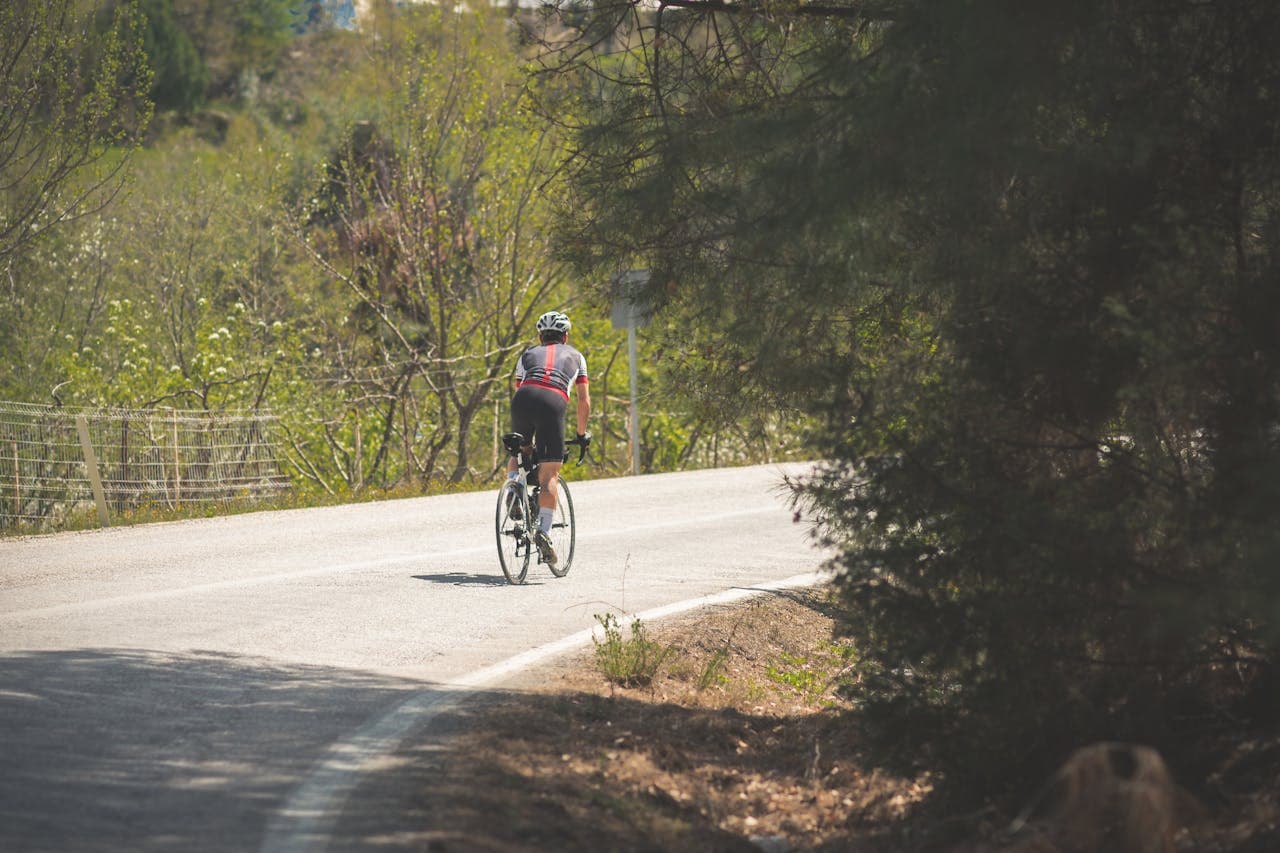
Turkey is a country of remarkable scale and contrasts. Roughly 97% of its territory lies in Anatolia, the large peninsula forming the westernmost extension of Asia, while the remaining 3% occupies a small triangle of Thrace in southeastern Europe, separated from the Asian landmass by the Bosphorus strait and the city of Istanbul. This geographic position at the crossroads of Europe and the Middle East has made Turkey a meeting point for civilizations for millennia, and that layered history is one of the defining experiences of cycling in Turkey.
The country's population of around 85 million is concentrated along the western coast, in Istanbul, and in the capital Ankara. The interior and eastern regions are predominantly rural, less visited by international tourists, and often far more rewarding for independent cyclists who want genuine engagement with Turkish village life. Turkish hospitality, known as misafirperde, is one of the most consistent experiences cyclists report: invitations for tea, fresh fruit offered from roadside gardens, and farmers curious about where a loaded bike has come from are routine outside the main tourist corridors.
Turkey cycling sits at an interesting moment. The country has long been a popular transit point for round-the-world cyclists moving east from Europe toward Central Asia and beyond. What has changed in recent years is the growth of destination cycling: international visitors who come specifically to ride the Turquoise Coast, explore Cappadocia's valleys, or take on the Black Sea roads and Kackar trails. The country's culture routes program, which created the Lycian Way and several other long-distance paths from the early 2000s onward, has expanded cyclist and hiker infrastructure in the southwestern regions and increased awareness of Turkey as a cycling destination among European and international adventure travelers.
Unlike countries with deep cycling cultures, Turkey does not have a tradition of recreational road cycling or a large domestic touring community. The bicycle remains primarily a utilitarian object in rural areas rather than a sport or leisure vehicle. This means cyclists will rarely encounter dedicated cycling infrastructure outside of a handful of urban municipal projects and the EuroVelo 8 extension around Izmir. The absence of cycling culture is, for many visitors, part of the appeal: roads are shared with light traffic, locals treat cyclists as curiosities worthy of friendly attention, and routes that would be crowded elsewhere remain quiet and uncrowded.
Explore our amazing bike tours in Turkey now!
Turkey's western and southern coastal margins are where most touring cyclists begin. The Aegean coast, stretching from the city of Canakkale in the north down to Bodrum, is characterized by rolling hills, olive groves, vineyards, and a network of rural roads that run through former Greek and ancient Ionian settlements. Elevations are moderate, rarely exceeding 500 m (1,640 ft), and the road surfaces are generally good. This region suits cyclists seeking a mix of cultural history, coastal scenery, and manageable climbing.
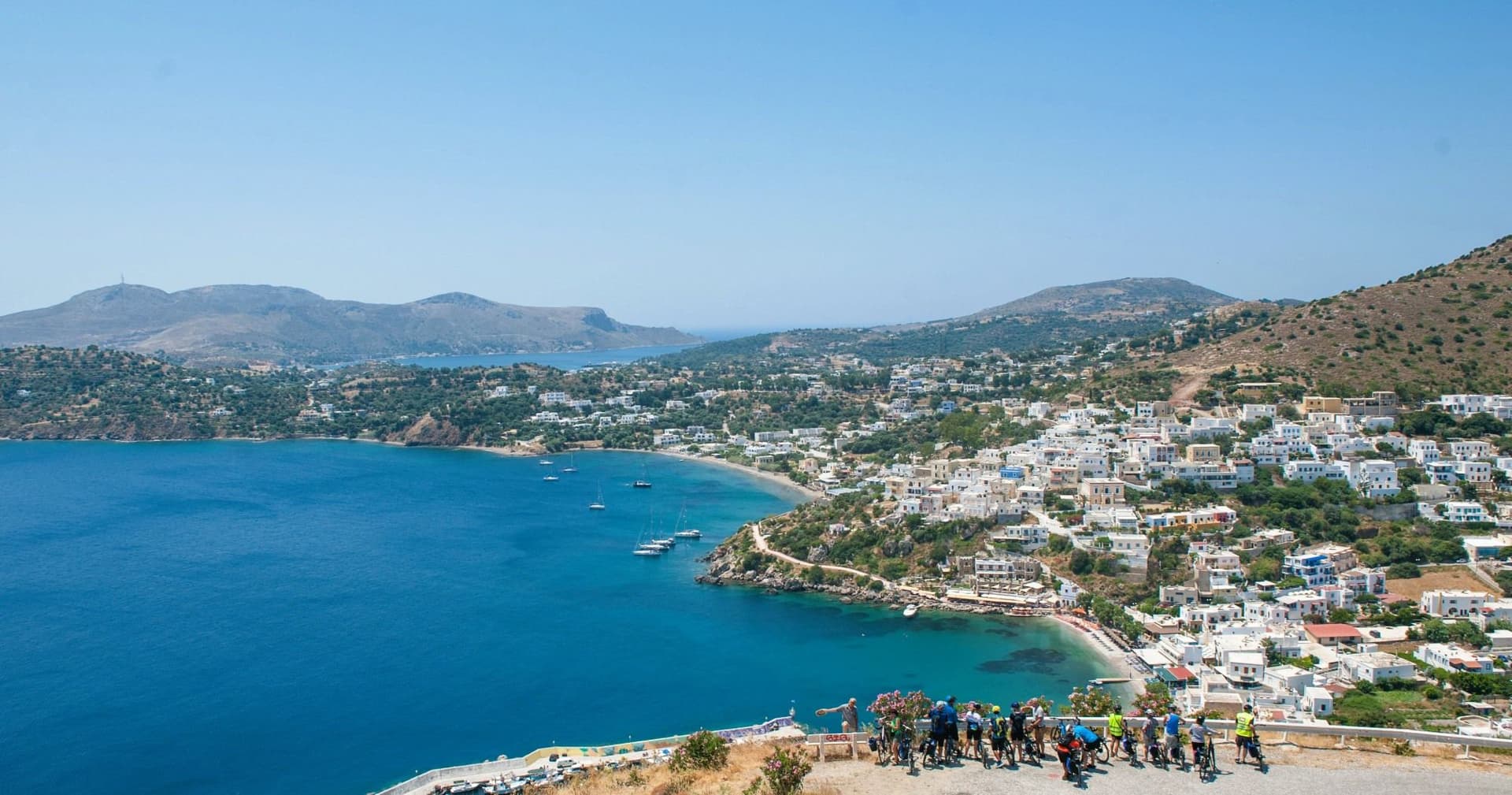
South of Bodrum the coast turns eastward and enters ancient Lycia, where the landscape becomes dramatically more rugged. Mountains rise sharply from the sea, the coastal plain narrows or disappears entirely, and the roads cut through limestone massifs with frequent climbs and descents of 200 to 400 m (656 to 1,312 ft). The D400 coastal highway from Fethiye to Antalya is the spine of this region, running at various distances from the sea with sections of stunning cliff-top road. The stretch between Kalkan and Finike, approximately 110 kms (68 mi), is widely regarded as one of the finest coastal road rides anywhere in the Mediterranean.
Central Anatolia sits at an average elevation of around 1,000 to 1,200 m (3,280 to 3,937 ft) and is dominated by open, semi-arid plateau dotted with volcanic formations. The Cappadocia region, centered on Goreme and the Nevsehir province, is defined by its extraordinary tufa rock formations, underground cities, and cave churches. Cycling here involves relatively flat to gently rolling terrain within the valleys, with more significant climbs approaching the surrounding uplands. The volcanic cone of Mount Erciyes near Kayseri reaches 3,917 m (12,851 ft) and provides a dramatic backdrop to the plateau.
The Black Sea coast is the wettest, greenest, and most topographically intense coastal region in Turkey. Hills covered in dense beech, alder, and chestnut forest drop steeply to the water, and the roads along the coast involve frequent short but sharp climbs. Tea plantations carpet the hillsides of Rize province, harvested by hand in a landscape that resembles parts of Georgia and northern Japan more than the Turkey most visitors know. The Kackar Mountains, rising behind this coast to a high point of 3,937 m (12,917 ft) at Kackar Dagi, form the highest part of the Pontic Alps and offer serious mountain terrain for adventurous riders.
The small European portion of Turkey, Thrace, offers a different character entirely: rolling forested hills, vineyards, and the magnificent city of Edirne with its Selimiye Mosque. This is also the entry point for cyclists crossing from Bulgaria or Greece, and routes through Thrace toward Istanbul pass through landscapes of mature mixed forest and open agricultural land. Istanbul itself is not well suited to cycling, but the ferries across the Sea of Marmara to Yalova or Bandirma provide a practical and scenic way to bypass the city and reach the Aegean coast.
The Lycian Coast between Fethiye and Antalya is the definitive cycling Turkey experience for most international visitors. The region takes its name from ancient Lycia, a confederacy of city-states whose people developed a distinctive culture and a striking architectural tradition of rock-cut tombs that still dot the cliffs and hillsides throughout the region. Cycling the Lycian Coast means threading through this ancient landscape on coastal roads that alternate between sea-level harbors, cliff-top switchbacks, and long descents to hidden bays.
The full route from Fethiye to Antalya covers approximately 500 kms (310 mi) along the D400 and connecting secondary roads. Total elevation gain over the full route is substantial, with numerous climbs in the 300 to 500 m (984 to 1,640 ft) range. The route is not a continuous coastal path but a series of sections that approach and retreat from the sea, with inland detours to archaeological sites and mountain villages. Most cyclists allow 7 to 10 days for the full route depending on pace, with daily distances of 50 to 80 kms (31 to 50 mi).
Distance: 170 kms (106 mi) | Terrain: Coastal, rolling to mountainous | Duration: 3-4 days | Difficulty: Moderate to Challenging
The first major section begins in Fethiye, a harbor town backed by Lycian tombs carved directly into the cliff face above the city. From Fethiye the route passes through Oludeniz, where a blue lagoon separates from the open sea behind a sand spit, before climbing into the hills above. The road to Kalkan involves a significant climb of around 250 m (820 ft) before descending to the small, upmarket harbor town. Kas, approximately 30 kms (19 mi) further along one of the finest stretches of coastal road on the route, is a more relaxed and authentically textured town built on a slope above the harbor, with a Hellenistic theatre, Lycian tombs, and a strong local dive culture. The beach at Kaputas, a narrow sand strip at the base of a steep gorge between Kalkan and Kas, is a highlight of this section.
Distance: 110 kms (68 mi) | Terrain: Coastal cliff road | Duration: 2-3 days | Difficulty: Moderate
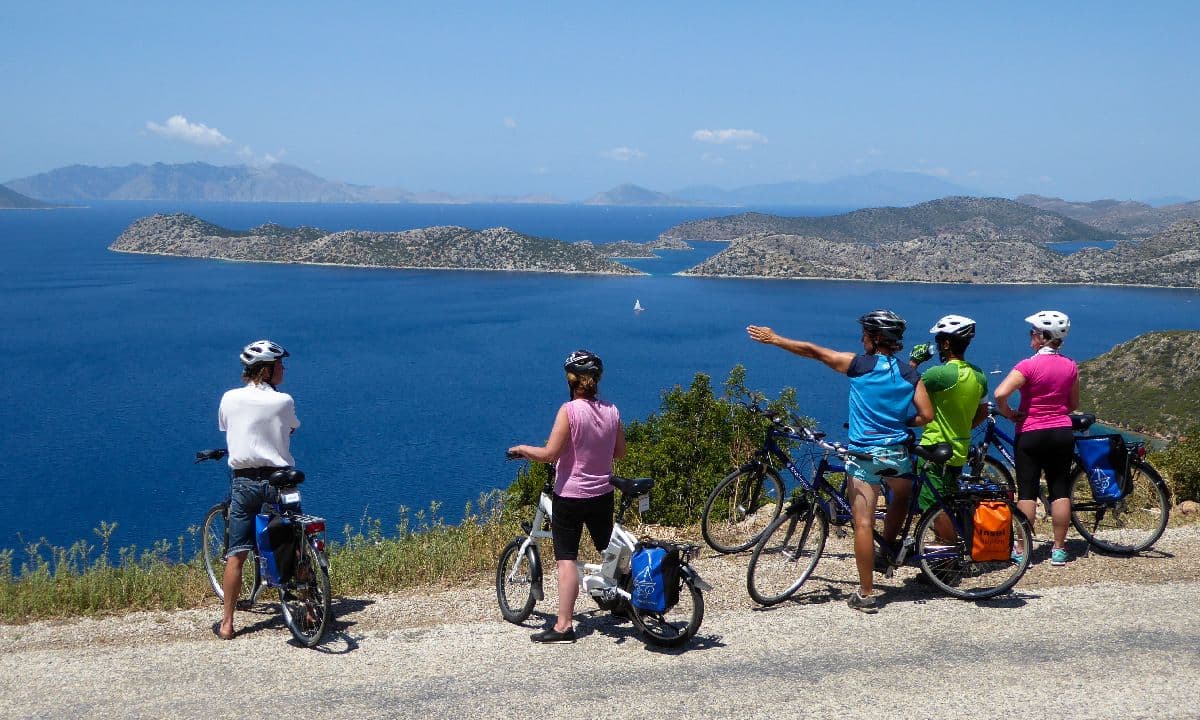
The stretch from Kas to Finike is the most celebrated section of Lycian Coast cycling and is frequently cited as one of the great Mediterranean coastal rides. The road clings to cliffsides above turquoise water for long sections, with views across to the Greek island of Kastellorizo and the open sea. Demre, the ancient city of Myra, sits roughly midway along this section and contains the Byzantine church of St Nicholas, the historical figure behind the Santa Claus legend. The nearby ruins at Andriake, including Hadrian's enormous granary, add further archaeological depth to a section already rich with Lycian tombs and scattered ancient remains.
Distance: 120 kms (75 mi) | Terrain: Coastal to urban | Duration: 2 days | Difficulty: Easy to Moderate
The final section from Finike to Antalya passes through the Olympos National Park, where the ancient Lycian city of Olympos sits half-buried in vegetation at the mouth of a canyon, and the eternal flames of Chimaera, natural methane vents that have burned continuously on a hillside since antiquity. The road climbs over the Tahtalidagi massif before descending to the broad coastal plain that precedes Antalya. The city itself marks the eastern limit of the Lycian Coast and offers good transport connections for riders finishing the route.
Distance: 80-100 kms (50-62 mi) circuit | Terrain: Flat to gently rolling valley floors, moderate climbs | Duration: 2-3 days | Difficulty: Easy to Moderate
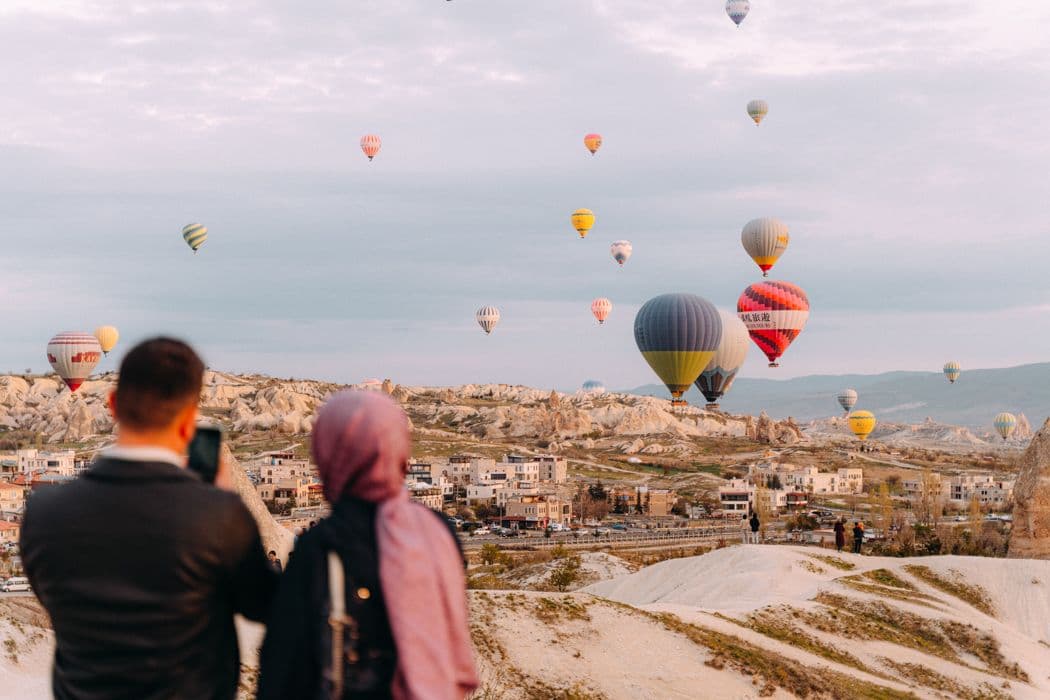
Cappadocia's cycling centers on the interconnected valleys around Goreme, Urgup, and Avanos, where roads and tracks pass through formations of tufa rock sculpted by erosion into columns, cones, and pinnacles that the region's residents have historically used as homes, churches, and storage spaces. The Rose Valley, Love Valley, and Pigeon Valley can be linked into loop rides of 30 to 40 kms (19 to 25 mi) per day, with additional routes toward the underground cities of Derinkuyu and Kaymakli adding distance and historical depth. The terrain within the valleys is flat to gently rolling, with short climbs to rim viewpoints. Hot air balloons lifting from Goreme at dawn are a regular backdrop to early morning rides. Cappadocia is best combined with a road ride from Kayseri or Nevsehir for cyclists wanting more distance.
Distance: 130 kms (81 mi) one-way | Terrain: Rolling hills, olive country | Duration: 2-3 days | Difficulty: Easy to Moderate
The Izmir region is Turkey's most developed zone for day-ride and touring cyclists. The Izmir metro network connects to regional train lines that allow cyclists to move bikes easily north to Menemen and Aliaga or south to Selcuk and Ephesus, making it practical to base in Izmir and explore different directions each day. Selcuk, the gateway town for the ruins of Ephesus, sits at the end of a long agricultural valley and can be reached on a mostly flat 70 km (43 mi) ride through olive groves and smaller archaeological sites. The dense network of rural roads around Selcuk and Kusadasi allows for extensive off-the-beaten-track exploration even close to one of Turkey's most visited sites. EuroVelo 8 passes through Izmir connecting Pergamon to the north with Ephesus to the south, giving a framework route through ancient Ionian history.
Distance: Approx. 450 kms (280 mi) | Terrain: Varied, plateau and hills | Duration: 6-8 days | Difficulty: Moderate
For cyclists wanting to cross the Bosphorus and ride into the Turkish heartland, the route from the ferry terminal at Yalova toward Bursa, Eskisehir, and Ankara passes through the Ottoman heartland and the industrial and agricultural landscape of northwestern Anatolia. Bursa, the first Ottoman capital, sits beneath the snow-capped Uludag mountain and rewards a rest day. From there the plateau opens up, the traffic thins on secondary roads, and the riding becomes a true traverse of Anatolia at a pace that reveals the scale and diversity of the country's interior. This route suits bikepacking cyclists and is best combined with a ferry bypass of Istanbul rather than a city transit.
Distance: Variable, 200+ kms (125+ mi) with transfers | Terrain: Alpine, high-gradient dirt roads | Duration: 5-9 days | Difficulty: Challenging to Very Challenging
The Kackar Mountains in northeastern Turkey are the country's most remote and rewarding mountain cycling environment. The range separates the Black Sea from the Anatolian interior and contains Turkey's largest surviving glaciers. Access is from the Black Sea coast around Rize and Artvin, or from Erzurum to the south. Road cycling options include the extraordinary descent from the Devedagi Pass at 2,570 m (8,432 ft) through pine forest to the Coruh valley, and the route along the Coruh valley itself through a dramatic landscape of fortress ruins, Georgian churches, and deep river gorges. Mountain biking in the Kackar valley side roads is demanding, with some routes requiring portaging on the steepest sections.
Distance: Approx. 240 kms (149 mi) | Terrain: Rolling hills, forested | Duration: 3-4 days | Difficulty: Easy to Moderate
The Thrace route is the natural entry point for cyclists arriving from Bulgaria or Greece. Starting in Edirne, a city whose Selimiye Mosque is considered by its architect Mimar Sinan to be his masterpiece, the route winds east through the mixed forests and vineyards of Iğneada National Forest Park toward Istanbul. The riding is relatively gentle, the roads quiet, and the landscapes shift from open plains near the border to forested hills approaching the city. The recommended approach to Istanbul avoids the D100 highway in favor of ferries across the Sea of Marmara.
The Turquoise Coast is Turkey's premier cycling region for international visitors and combines the highest concentration of ancient sites, the finest coastal roads, and the most developed tourist infrastructure in the country. The section between Fethiye and Antalya offers consistent riding quality with a good spread of accommodation in harbor towns and villages. Suitable for: cyclists seeking a combination of coastal scenery, archaeological depth, and reliable road surfaces. A moderate fitness level is sufficient for the main coastal route, though the mountainous interior sections require stronger legs.
Cappadocia offers cycling unlike anywhere else in the world. The volcanic landscape creates a surreal environment for riding, with accessible valley loops suitable for casual cyclists and longer plateau routes demanding more endurance. The region is well established as a tourist destination, meaning accommodation, cafes, and bike rental infrastructure are available. Early morning rides before the tourist rush and the daily balloon launch provide the most atmospheric experience. Suitable for: riders of all levels. Valley circuits suit beginners; longer routes toward Derinkuyu and beyond suit intermediate cyclists.
The Izmir region is Turkey's most practical cycling base for day rides and short tours. The combination of accessible rail connections, a dense rural road network, and proximity to major sites like Ephesus, Pergamon, and Pamukkale makes this the best region for cyclists who want flexibility and the ability to mix history with riding. The terrain is more forgiving than the Lycian Coast, with rolling hills rather than dramatic mountain ascents. Suitable for: intermediate cyclists and those combining cultural sightseeing with riding. Also practical for those with limited time who want quality day rides.
The Black Sea coast from Samsun west to Sinop or east toward the Georgian border offers a completely different Turkey: wet, lushly green, steep, and far from the tourist mainstream. The D010 coast road runs through small fishing villages and lonely beaches with relatively light traffic. Expect frequent rain, significant humidity, and hillier terrain than the Aegean. The tea fields and hazelnut groves of Rize province give this region a character entirely its own. Suitable for: experienced cyclists comfortable with challenging terrain, variable weather, and limited tourist infrastructure. Not recommended as a first Turkey cycling destination.
The Kackar range is Turkey's most demanding and most rewarding cycling environment. The mountain roads, high passes, and remoteness make this a destination for serious cyclists and bikepackers willing to accept that roads may be unpaved, distances between services are long, and weather at altitude can change rapidly. The rewards are extraordinary: alpine meadows, glacial lakes, Georgian monasteries, and some of the most genuinely remote landscape in the country. Suitable for: experienced mountain cyclists and bikepackers with strong fitness and self-sufficiency. The best window is late June through September.
Thrace is Turkey's European face: forested, gently rolling, and in many ways more culturally connected to the Balkans than to Anatolia. For cyclists arriving overland from Europe, it is a logical and rewarding entry point. For those flying in specifically for this region, it is best combined with an Aegean or Istanbul extension. The riding is accessible, the roads quiet on secondary routes, and Edirne alone justifies a diversion. Suitable for: all levels, including those on longer Europe-to-Asia touring routes.
The high plateau of central Anatolia is vast, demanding, and largely overlooked by cycling itineraries focused on the coast. This is wild, open riding at elevation, through landscapes of volcanic upland, Seljuk caravanserais, and salt lakes. The riding requires self-sufficiency and comfort with long stretches between services. Cappadocia sits within this region and provides a natural anchor for rides in either direction. Suitable for: experienced touring cyclists and bikepackers looking for an alternative to the coastal routes.
Turkey's climate is highly regionalized, and the best time to visit depends entirely on which region you plan to ride. No single month is optimal for the entire country simultaneously.
Spring is the best all-around season for cycling Turkey, particularly on the Aegean and Turquoise Coast. Temperatures along the coast average 18 to 24 degrees C (64 to 75 degrees F) in April and May, wildflowers are abundant in the coastal hills, and the tourist crowds have not yet peaked. The Cappadocia plateau is cycling-ready from late April, with cool mornings and warm afternoons. The Black Sea coast and Kackar high routes remain wet and partly snow-covered until late May or June. For the Lycian Coast specifically, April and May offer the finest combination of temperature, light, and manageable traffic on the D400. June sees temperatures beginning to climb on the coast, with afternoon heat becoming a factor on exposed southern sections.
Summer is viable only for high-altitude routes. The Kackar Mountains are at their best in late July and August, when snowmelt has opened the passes and alpine meadows are in full bloom. On the Turquoise Coast and in Cappadocia, July and August bring heat of 35 to 40 degrees C (95 to 104 degrees F) that makes full-day riding inadvisable. Coastal cyclists who choose summer must start before 7am and stop by midday. Traffic on the D400 and the resort roads around Bodrum and Marmaris reaches its peak in these months. The Black Sea coast stays cooler in summer, around 25 degrees C (77 degrees F), but rainfall remains high.
Autumn is the second optimal season and, for many destinations, the preferred one. September on the Turquoise Coast sees temperatures dropping to 26 to 30 degrees C (79 to 86 degrees F), with long daylight hours and significantly reduced tourist traffic compared to August. The sea remains warm for swimming. Cappadocia in September and early October is at its best: the harvest is underway, morning light is exceptional, and the balloons launch over a landscape touched by autumn color. October brings cooler temperatures to the coast and is excellent for the Aegean region. The Kackar passes begin to close with snow from October onward. November can still be pleasant on the Turquoise Coast but weather becomes less reliable.
Winter cycling is possible on the Turquoise Coast and parts of the Aegean, where December temperatures sit around 12 to 16 degrees C (54 to 61 degrees F). Many small hotels and restaurants in resort towns close between November and March, so services are limited. The central plateau and eastern Turkey see serious winter conditions, with sub-zero temperatures, snow, and roads that may be impassable at altitude. Istanbul and Thrace have cold, wet winters but are rarely truly inhospitable. For cyclists specifically seeking the Lycian Coast, a winter ride is quiet and often beautiful in clear weather, but accommodation planning requires more care.
Dive into our curated Turkey cycling adventures today!
The Lycian Coast cycling route passes through vegetation zones that shift from Mediterranean maquis at sea level, dominated by kermes oak, strawberry tree, rock rose, and wild sage, to pine and cedar forest on the higher slopes above 800 m (2,625 ft). Spring riding brings the hillsides alive with orchids, poppies, and asphodels. The scent of wild thyme along the cliff-top sections between Kas and Finike is one of the distinctive sensory experiences of this route. In the Olympos National Park, Liquidambar trees, a relict species also found in parts of Asia and North America, grow in the canyon behind the ancient city.
The turquoise waters along the Lycian Coast harbor loggerhead sea turtles, known locally as Caretta caretta, which nest on beaches including Patara, Dalyan, and Iztuzu. Dolphins, particularly common bottlenose and striped dolphins, are regularly seen from clifftop roads and harbor walls. The sea caves and rocky coves between Kas and Ucagiz shelter monk seals, one of the most endangered marine mammals in the Mediterranean, in small populations.
Turkey lies on a major migratory flyway between Africa and Europe, and spring cycling on the Aegean and Mediterranean coasts coincides with some of the most active migration periods. White storks are visible in large numbers on the western plains during April and May. Bee-eaters, rollers, and hoopoes are regular roadside sightings in spring and early summer on the coastal routes. The Kackar Mountains host lammergeier vultures, golden eagles, and, at higher elevations, snow buntings and alpine choughs. The marshes around Goksu Delta on the Cilician Plain east of Antalya are an important wintering ground for greater flamingos.
The Kackar Mountains are one of Europe and western Asia's most biodiverse mountain ranges, supporting brown bears, wolves, lynx, wild boar, and the Caucasian chamois. Ibex are occasionally seen on the upper slopes above the Coruh valley. The wildflower displays in late June and early July, when snowmelt exposes newly thawed alpine meadows, are exceptional: anemones, gentians, primulas, and numerous orchid species create dense carpeted blooms at elevations between 2,000 and 3,000 m (6,562 and 9,843 ft).
Turkey does not have a cycling culture in the sense that Belgium or the Netherlands does. The bicycle arrived late as a recreational vehicle, and mass-participation road cycling remains a minority pursuit. What Turkey does have, profoundly, is a culture of hospitality toward travelers, and cyclists occupy an unusual and privileged position in that dynamic. In a country where the touring cyclist is still a novelty outside the main tourist corridors, the arrival of a loaded bike in a small village triggers genuine curiosity and remarkable generosity.
The country does maintain a professional cycling event with international standing: the Tour of Turkey, officially the Presidential Cycling Tour of Turkey, which has been held annually since 2008 and carries UCI 2.1 ProSeries status. The race typically runs in April and covers the coastal regions of the western country, with stages along the same D400 that touring cyclists ride. Its route brings professional pelotons through some of Turkey's most scenic terrain, and the event has done much to raise the visibility of cycling as a sport within the country.
Historically, the regions that cyclists now travel through were traversed by traders, pilgrims, and armies for thousands of years. The Silk Road crossed Anatolia, leaving behind a network of hans and caravanserais, some still standing, that served as rest points for caravans at roughly day-journey intervals. Cyclists following Anatolian routes pass through this infrastructure still visible in the landscape. The culture routes program launched by the Culture Routes Society of Turkey in 1999, with the opening of the Lycian Way, has reimagined some of these historical pathways as recreational routes and given Turkey a framework for adventure tourism that continues to expand.
The intersection of Christian, Ottoman, and ancient Greek and Roman heritage that defines the western and southern coasts creates a cycling environment of unusual historical density. The Temple of Artemis at Ephesus, one of the Seven Wonders of the Ancient World, stands a short detour from the Aegean cycling route. Cappadocia's rock-cut churches, decorated with Byzantine frescoes, were in use from the 4th century through the 13th century and now sit accessible from valley cycling tracks. The Georgian monasteries of the Kackar range, built between the 9th and 12th centuries, occupy remote hillsides accessed by the mountain roads cyclists use. This accumulation of history, visible from the saddle at every turn, is one of the defining characteristics of cycling Turkey.
Get started with your Cycling adventure now!
The Turkish breakfast, known as kahvalti, is among the most celebrated morning meals in the world and the ideal fuel for a day's riding. Served as a communal spread, it typically includes fresh bread, white cheese (beyaz peynir), cucumbers, tomatoes, olives, hard-boiled eggs, honey, clotted cream (kaymak), jams, and simit, the sesame-encrusted circular bread that is also sold from street carts across the country. Tea, brewed strong in a double stacked kettle and served in small tulip-shaped glasses, accompanies every breakfast without exception. Hotels throughout the Turquoise Coast and Aegean serve this spread as standard, making it one of the genuinely practical advantages of cycling this region compared to destinations with more limited morning options.
Meze, the Turkish system of small shared plates served before a main course, is one of the great pleasures of evenings on the road. A well-composed meze spread might include haydari, a thick strained yogurt mixed with garlic and herbs; ezme, a finely chopped spiced tomato and pepper paste; stuffed vine leaves (dolma) prepared with rice, pine nuts, and currants; and cold eggplant dishes, the most celebrated of which is imam bayildi, slow-cooked eggplant with onion, tomato, and olive oil. On the Aegean coast, where olive oil is the dominant fat and fresh vegetables are abundant, meze reaches its most refined expression. These dishes are best eaten with a glass of raki, the anise-flavored grape spirit that is Turkey's national drink, though cold Efes beer and local wines from Cappadocia and the Aegean are equally common.
Kebab in Turkey encompasses far more than the rotating spit version exported worldwide. The Adana kebab, named for the southeastern city, is a long grilled patty of hand-minced lamb and beef packed with red pepper and spices, served on flatbread with sumac-dressed onions. Sis kebab is cubed marinated meat skewered and grilled over charcoal. Urfa kebab is similar to Adana but milder and darker in flavor. The testi kebab of Cappadocia is cooked in a sealed clay pot that is cracked open at the table, releasing steam and a concentrated braise of lamb, vegetables, and spices. All of these make excellent post-ride meals: protein-dense, warming, and available at every lokanta and roadside restaurant across the country.
Gozleme is a hand-rolled flatbread cooked on a griddle and filled with cheese, spinach, potato, or minced meat. It is one of Turkey's great road foods: cheap, filling, freshly made, and widely available at village cafes and market stalls along cycling routes. Simit, the sesame bread ring, functions as Turkey's version of a cycling snack and can be found at every small town and most villages. Fresh fruit, particularly figs, peaches, and watermelon in summer, and pomegranates and citrus in autumn and winter, is sold from roadside stalls throughout the western and southern coastal regions and provides an excellent source of immediate energy.
Turkish desserts are substantial and regionally varied. Baklava, layers of filo pastry with finely crushed pistachios or walnuts soaked in sugar syrup, is Turkey's most internationally recognized sweet. The Gaziantep version, which has earned European Protected Geographical Indication status, is the most celebrated: pistachio-dense, not oversweet, and made by specialists using techniques that have changed little in centuries. Kunefe, shredded wheat pastry with a filling of fresh cheese, baked until crisp and served hot with syrup and pistachio crumble, is the dessert of the Hatay and southeastern regions and worth seeking out. Turkish delight, known locally as lokum, is made from sugar, starch, and flavorings including rosewater, lemon, and pistachio, and is sold in every tourist area and most sweet shops throughout the country.
Turkish tea and Turkish coffee are the twin pillars of the country's hospitality culture and the most consistent refreshment a cyclist will encounter on any route. Tea is offered at virtually every interaction: in carpet shops, at petrol stations, by farmers encountered on the road, and in every lokanta and cafe. Refusing is possible but unusual. Turkish coffee is brewed unfiltered in a small copper pot called a cezve and served in a small cup with the grounds at the bottom. It is thick, often sweet, and typically followed by a glass of water. The tea houses of Turkish towns and villages, where men gather over multiple glasses throughout the day, are the social infrastructure of rural Turkey and a natural rest stop for cycling travelers.
Turkey's cycling terrain varies from genuinely flat valley floors in Cappadocia to demanding coastal mountain roads on the Lycian Coast with consecutive climbs of 400 to 600 m (1,312 to 1,969 ft) over short distances. Riders planning the Turquoise Coast route should be comfortable with multi-day cycling that includes 1,000 to 2,000 m (3,281 to 6,562 ft) of climbing per day on the hillier sections. Those tackling the Kackar Mountains should be experienced mountain cyclists with strong fitness and the ability to sustain effort at altitude. Cappadocia valley circuits are accessible to recreational cyclists. For the Aegean coast and Thrace, a reasonable base fitness level is sufficient for most itineraries.
Heat management is a critical aspect of preparing for summer riding on the coast. Starting riding by 6am and resting through the hottest midday hours, roughly 12pm to 3pm, is not just advisable but necessary in July and August. Carrying a minimum of two liters of water is recommended at all times on inland routes, where sources may be scarce. Sunscreen, lip protection, and eye protection are essential equipment on the exposed coastal and plateau roads.
A gravel or touring bike with 35 mm or wider tires is the most versatile choice for Turkey. The main coastal roads are well-surfaced asphalt, but secondary roads range from smooth tarmac to rough, potholed surfaces that benefit from additional tire volume. The Kackar mountain routes are predominantly dirt, and some sections require narrow tires to be abandoned in favor of wider rubber. Road bikes with 28 mm tires are workable on the Turquoise Coast and the Aegean but will limit access to quieter back roads. Mountain bikes with appropriate gearing handle the mountain terrain well but are slower on the long coastal transfers.
Panniers and a rack system suit long-distance touring, where daily distances are manageable and accommodation is available. Bikepacking bags suit the Kackar routes and any Anatolian crossing where lighter weight and ground clearance matter. Spare tubes, a multi-tool, and basic repair materials are essential across all regions: bike shops exist in Izmir, Istanbul, Ankara, and Antalya, but are rare or nonexistent in rural areas and mountain regions.
Bike rental infrastructure for touring cyclists in Turkey is limited compared to established cycling destinations in Europe. Cappadocia has the most developed rental scene, with multiple operators in Goreme and Urgup offering hybrid and mountain bikes for valley day rides. Coastal resort areas around Bodrum, Marmaris, and Antalya have rental options primarily oriented toward leisure riding. For any serious touring itinerary, bringing your own bike or renting through a guided tour operator who supplies quality equipment is strongly recommended. Turkish airlines generally allow bikes as checked luggage with appropriate packaging, and most hotels and pensions will find secure storage for bikes.
Istanbul Ataturk and Istanbul Sabiha Gokcen airports are the main international gateways, with connections to most major European hubs and a growing number of intercontinental routes. For cyclists targeting the Turquoise Coast, Dalaman Airport serves the Fethiye area and Antalya Airport serves the eastern Lycian Coast and the city of Antalya. Izmir Adnan Menderes Airport serves the Aegean region. All four airports accept bikes as checked luggage on most airlines, though fees and packing requirements vary. Confirming the airline's specific bike policy and fee structure before booking is strongly recommended.
Turkey's intercity bus network is extensive, affordable, and generally reliable. Most intercity buses will accept bicycles in the luggage hold for a small fee, though this varies by operator and the willingness of the driver. Confirming bike acceptance at the time of booking is advisable. Ferry services across the Sea of Marmara from Yalova and Bandirma to Istanbul's Yenikapi terminal are a practical and scenic way to approach or exit Istanbul, and bikes are accepted on these ferries. The Izmir metro and suburban rail network accepts bikes and allows cyclists to extend their range significantly. Long-distance train services between major cities accept bikes as registered luggage.
Turkish roads from a cyclist's perspective are a mixed environment. Major D-prefix roads (designated with a D followed by three digits) generally have broad shoulders where cyclists can ride safely, even where traffic is moderate. O-prefix toll roads are motorways from which cyclists are prohibited: if you accidentally enter one, pull over and you will be escorted to the nearest exit. Tunnels are a feature of the coastal roads and range from short, well-lit passages to longer tunnels where visibility and ventilation matter: wearing a high-visibility vest when entering tunnels is strongly recommended. Dogs are a consistent hazard on rural roads, particularly the Kangal sheepdog, which can be aggressive: carrying a small pump or a stick within reach is practical. Glass from roadside littering is a puncture hazard on road shoulders, so riding slightly away from the extreme edge is advisable.
Citizens of most Western European countries, the United States, Canada, and Australia require an e-Visa to enter Turkey. The e-Visa is obtained online through the official Turkish government portal before travel and typically costs around $50 to $60. It is valid for 90 days within a 180-day period and allows multiple entries. Citizens of some EU countries can enter Turkey with a national identity card rather than a passport. Passport validity of at least six months beyond the intended departure date is recommended. Visa requirements can change, so checking the current requirements through your country's foreign affairs ministry before travel is important.
Turkey's currency is the Turkish Lira (TRY). The lira has experienced significant inflation and devaluation over recent years, which has made Turkey increasingly affordable for visitors holding euros, dollars, or pounds. ATMs are widely available in towns and cities throughout the western and southern regions, but sparse in rural areas and the eastern interior: carrying sufficient cash before entering remote stretches is important. Credit cards are accepted in hotels, restaurants, and larger shops in tourist areas, but cash is the primary payment method in village cafes, small markets, and rural accommodation. Tipping of 10 to 15% is customary in restaurants.
Turkish is the official language. English proficiency in tourist areas, hotels, and larger towns along the Turquoise Coast and in Istanbul is generally adequate for cycling logistics. In rural areas and smaller villages, English is rarely spoken: learning basic Turkish words including merhaba (hello), tesekkur ederim (thank you), su (water), kamp (camp), and the numbers proves immediately practical. Most young people in urban areas have some English from school. Google Translate's offline mode with Turkish downloaded is a reliable communication tool in areas with limited connectivity.
Turkey has good 4G coverage along the western and southern coasts and in major cities. Coverage thins significantly in rural inland areas and the eastern regions, including parts of the Kackar Mountains. A local SIM card from Turkcell or Vodafone Turkey can be purchased at airports and phone shops in major cities for around $15 to $25 including a data allowance, and is strongly recommended for navigation purposes. Downloading offline maps, particularly through OsmAnd or Maps.me, before departing any town is a practical precaution for remote routes.
Turkey operates on Turkey Time (TRT), which is UTC+3 year-round. Turkey does not observe daylight saving time. In summer, this provides extremely long riding days: sunrise in Antalya in late June is around 5:30am and sunset around 8:15pm, giving over 14 hours of daylight. In April and May, useful daylight runs from around 6am to 7:30pm, ideal for morning-heavy riding schedules that avoid peak afternoon heat.
Turkey's accommodation landscape along cycling routes ranges from luxury boutique hotels and cave hotels in Cappadocia to basic village pensions and family-run guesthouses throughout the Lycian and Aegean regions. The pension, known locally as pansiyon, is the backbone of independent cycling accommodation: small, family-run, inexpensive, and usually willing to accommodate a bicycle in a storage room or courtyard. Many pensions serve a simple dinner as well as breakfast, making them entirely self-contained for a tired cyclist.
Cave hotels in Cappadocia are rooms or suites carved directly into the tufa rock, often centuries old in their basic form and fitted with modern amenities. Staying in a cave hotel in Goreme or Urgup is one of the distinctive accommodation experiences of cycling Turkey and need not be expensive: the range runs from budget cave rooms to elaborate boutique properties with valley views and private terraces. The experience of sleeping in rock that has been inhabited since the Byzantine period is genuinely unlike anything available in western cycling destinations.
Along the Lycian Coast and Aegean, small boutique hotels in harbor towns like Kas, Kalkan, and Selcuk offer comfortable rooms, roof terraces, and good local food at prices considerably below equivalent European resort hotels. Booking ahead for July and August is essential in the coastal resort towns, where demand from domestic tourism is high. In April, May, September, and October, most accommodation can be found on arrival or with short-notice booking. Wild camping is technically possible in Turkey's rural areas and is generally accepted in remote regions, but agricultural land is usually someone's property and asking permission is both courteous and usually successful.
Jeremy Seal's A Fez of the Heart (1995) remains one of the most illuminating travel books about Turkey, following the journey of the fez hat as a lens for understanding Ottoman and modern Turkish identity. It is not a cycling book, but its engagement with the Anatolian interior and the country's layers of history rewards reading before any extended trip. Kate Clow's The Lycian Way (2005) is the guidebook that launched Turkey's culture routes program and remains the definitive reference for the walking route that shares much of its territory with the coastal cycling roads. Tim Mackintosh-Smith's Travels with a Tangerine traces a medieval journey through the Islamic world that passes through Turkey and provides extraordinary depth on the historical landscape cyclists move through.
Nuri Bilge Ceylan's films, particularly Once Upon a Time in Anatolia (2011) and Winter Sleep (2014), provide the most cinematically serious engagement with the Anatolian landscape and the internal life of Turkey's provincial towns and villages. Both films were shot in the central and western plateau landscape that cycle tourers cross, and watching either before a trip provides a powerful visual and psychological grounding in the terrain. The documentary series Turkey: Tales from the Roof of the World covers the eastern highlands and the Kackar region and is useful preparation for riders planning northeast Turkey routes.
The Presidential Cycling Tour of Turkey (Tour of Turkey) takes place annually in April and brings professional cycling to the coastal roads of western Turkey. Watching a stage finish or following a stage from the roadside gives a different perspective on roads you may be riding yourself days later, and the atmosphere in finish-town cafes on race day is lively and welcoming. The whirling dervish ceremonies of the Mevlevi Sufi order, held in Konya and Cappadocia throughout the year, are one of Turkey's most distinctive and moving cultural experiences. The hot air balloon launch over Cappadocia at dawn, timed with an early morning ride through the Rose Valley, is a coordination worth planning: being on the bike in the valley as dozens of balloons ascend around you is one of the most visually extraordinary experiences available in cycling Turkey.
Get started with your cycling adventure now!
Turkey rewards the cyclist who arrives with a clear plan for a specific region and the flexibility to let the route develop beyond it. The Lycian Coast, Cappadocia, the Aegean, the Kackar Mountains, and the approaches from Thrace are each distinct enough to constitute a full trip in their own right, and each has the depth to bring you back for a second or third visit.
Art of Bicycle Trips has extensive experience designing cycling journeys across diverse and demanding destinations, and Turkey's combination of ancient history, extraordinary landscape, and exceptional food culture makes it one of the most complete cycling destinations anywhere in the world. Whether your priority is the cliff-top coastal roads of Lycia, the volcanic valleys of Cappadocia, or the alpine remoteness of the Kackar range, a well-planned itinerary makes the difference between a good trip and an exceptional one.
If you are thinking about cycling Turkey and want help designing a route, selecting accommodation, or understanding the logistics of getting a bike into the country and around its regions, get in touch with Art of Bicycle Trips. Visit artofbicycletrips.com or reach out directly to begin the planning conversation. Turkey is a country that rewards the cyclist who arrives prepared, and the team at Art of Bicycle Trips is ready to help you arrive exactly that way.
Dive into our curated Turkey cycling adventures today!
Create a private trip or join a small-group departure.