
Cycling Guides | Last updated:
The Complete Guide to Cycling the Shimanami Kaido
By Shivangi Vaswani •
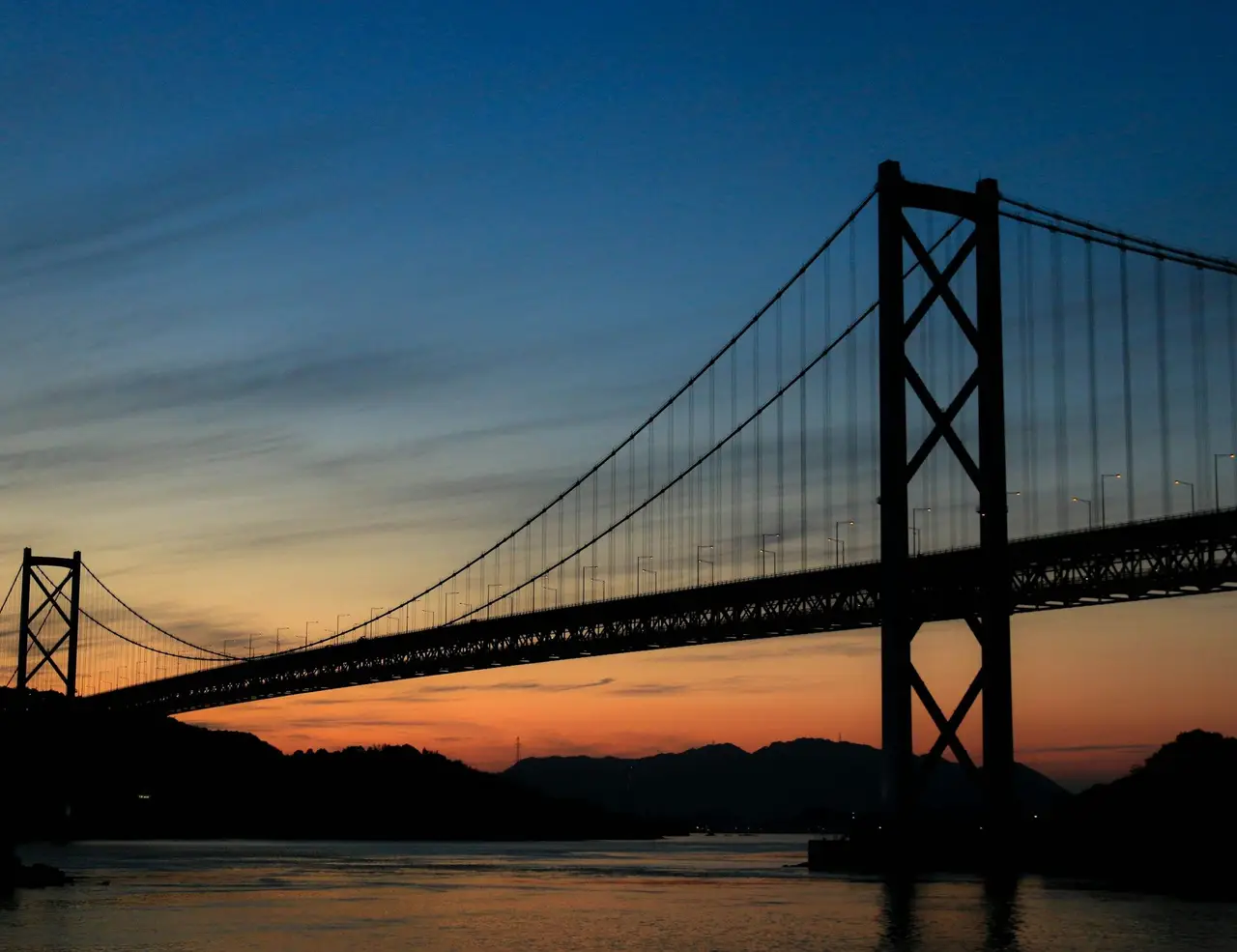
Table of Contents
- 1. What is the Shimanami Kaido?
- 2. The Six Islands
- 3. The Route: Distance, Difficulty, and Directions
- 4. Cycling the Shimanami Kaido: Infrastructure and Bike Rentals
- 5. How Long to Spend: One Day vs. Multi-Day
- 6. When to Go: Best Seasons for Cycling Shimanami Kaido
- 7. Wildlife and Nature Along the Route
- 8. The Wider Setouchi Region: Context and Culture
- 9. Why Go Cycling the Shimanami Kaido?
- 10. Key Stops Along the Shimanami Kaido
- 11. What to Eat Along the Route
- 12. Accommodation Options on the Shimanami Kaido
- 13. Practical Information for Cyclists
- 14. Before You Go: What to Read, Watch, and Experience
- 15. Plan Your Shimanami Kaido Cycling Trip with Art of Bicycle Trips
What is the Shimanami Kaido?
The Shimanami Kaido, officially known as the Nishiseto Expressway, is a toll road and cycling route connecting Onomichi in Hiroshima Prefecture to Imabari in Ehime Prefecture. Opened in 1999, it spans approximately 70 kms (44 mi) for cyclists, though the total network of island roads and optional routes extends to well over 200 kms (124 mi) for those who want to explore each island more thoroughly.
The route crosses six main islands in sequence: Mukaishima, Innoshima, and Ikuchijima in Hiroshima Prefecture, then Omishima, Hakatajima, and Oshima in Ehime Prefecture. These islands are linked by seven bridges, including the Tatara Bridge, one of the longest cable-stayed bridges in the world with a main span of 890 m (2,920 ft), and the Kurushima Kaikyo Bridge, the world's first triple suspension bridge at approximately 4,100 m (13,451 ft) total length.
The cycling infrastructure is purpose-built. Each bridge has a separate bike lane running parallel to the car expressway, accessed by ramps designed at a gentle 3% gradient to make the climbs manageable. On the islands themselves, cyclists follow public roads marked with the blue line. The result is a route that is both technically impressive to ride and genuinely safe, with very little vehicle interaction on the cycling-specific sections.
More than 300,000 cyclists visit the Shimanami Kaido each year, making it one of the most visited cycling routes in Asia. That said, outside of major Japanese public holidays and peak autumn weekends, the islands retain a relaxed, unhurried atmosphere that is central to the appeal of cycling here.
DREAMING OF CYCLING IN SHIMANAMI KAIDO ?
Explore our amazing bike tours in Shimanami Kaido valley now!
The Six Islands
Mukaishima: The First Island
Mukaishima is the closest island to Onomichi, reached by a short ferry crossing from Onomichi Port (about 5 minutes, 110 yen with bicycle). Most cyclists begin here rather than using the road bridge, which is narrow and less suitable for bikes. The terrain is relatively flat, making it a comfortable warm-up before the main route begins. The island is known for orchid cultivation and has a quiet, rural character. Once you cross the Innoshima Bridge to the next island, you begin to get a real sense of the scale of the engineering involved: the bridge deck sits around 40 m (131 ft) above the water.
Innoshima: Pirate History and Hassaku Citrus
Innoshima is the birthplace of the hassaku citrus fruit, a large, tangy variety developed here in the late 19th century. Look for hassaku daifuku, mochi cakes stuffed with the fruit, at Hassaku-ya near Ohamasaki Park. The island has a strong connection to the Murakami Suigun, the naval clan that controlled these waters between the 14th and 16th centuries. Their story is told at the Innoshima Suigun Castle, a museum housed in a reimagined hilltop castle in the center of the island. The main Shimanami Kaido cycling route covers around 10 kms (6 mi) through Innoshima. A full loop of the island is about 40 kms (25 mi) and takes in more challenging coastal roads along with better sea views.
Ikuchijima: Lemon Island and Art
Ikuchijima is nicknamed Lemon Island. It produces more than a quarter of all lemons grown in Japan, and citrus orchards line the hillsides in every direction. The town of Setoda, roughly at the halfway point of the Shimanami Kaido from Onomichi, is the most developed stop along the route, with good cafes, accommodation, and places to explore. The Kosanji Temple complex is the island's most visited site: founded in 1935 by a wealthy businessman in tribute to his mother, it contains replicas of Japan's most famous architectural landmarks alongside a striking marble sculpture garden called the Hill of Hope. The Hirayama Ikuo Museum of Art, dedicated to one of Japan's most celebrated postwar painters who was born on the island, is worth a visit for those with more time. For cyclists looking for a refreshment stop, the Dolce ice cream shop in Setoda serves gelato made with local citrus.
Omishima: The Island of the Gods
Omishima is the largest of the six main islands and is often called the Island of the Gods. Oyamazumi Shrine, in the center of the island, is one of Japan's most important Shinto shrines and has been visited by warriors and sailors for more than 1,000 years. The shrine's treasure hall holds the largest collection of samurai armor and weaponry in Japan, including pieces donated by prominent historical figures over the centuries. The camphor trees within the shrine grounds are estimated to be around 3,000 years old. Omishima is also home to the Tatara Shimanami Park, the largest rest area on the route, located next to the remarkable Tatara Bridge with views of the span from a seaside terrace. For those interested in contemporary architecture and art, the Toyo Ito Museum of Architecture, designed by the Pritzker Prize-winning Japanese architect, is nearby. Omishima makes an excellent overnight base for cyclists doing the route over two days.
Hakatajima: Salt and Seafood
Hakatajima is a smaller, quieter island known for its salt production. The Hakata salt produced here is used in local cooking and sold as a specialty product along the route. The island has a couple of good beaches, including Hakata Beach, which offers a natural swimming stop in summer. The section of the Shimanami Kaido cycling route through Hakatajima is short, but the island rewards those who explore beyond the blue line. Michelin has even awarded a star to a sushi restaurant on the island, Akakichi Sushi, a somewhat surprising distinction for such a remote location and an indicator of the quality of local seafood.
Oshima: Longest Climbs and the Final Bridge
Oshima is the last island before Imabari and is known for having the longest climbs on the main Shimanami Kaido route. The Kirosan Observatory Park on Mt. Kiro is one of the best viewpoints on the entire route, with panoramic views of the Kurushima Straits and the islands beyond. The Kurushima Kaikyo Bridge, which connects Oshima to Imabari, is the route's most dramatic engineering achievement: three consecutive suspension bridges totaling approximately 4,100 m (13,451 ft) span a section of sea where strong tidal currents create natural whirlpools visible from the bridge deck. The Yoshiumi Rose Garden on Oshima, with over 3,500 roses from 400 varieties, is worth a stop between mid-May and late autumn.
The Route: Distance, Difficulty, and Directions
The Full Route: Onomichi to Imabari
The standard Shimanami Kaido cycling route is approximately 70 kms (44 mi) from Onomichi to Imabari. Experienced cyclists can complete it in around four hours of riding time; a leisurely pace with stops at key sights and lunch takes most visitors between 7 and 10 hours. The terrain is largely flat on the islands, with the main elevation changes occurring on the bridge approach ramps. Each bridge rises to approximately 40 m (131 ft) above sea level, and the Kurushima Kaikyo Bridge on Oshima is higher at around 65 m (213 ft). Cumulatively, the total elevation gain on the full route is manageable for most fitness levels.
The entire route is marked with the blue line, supplemented by directional signs at major intersections. Navigation is straightforward even without a GPS device.
Onomichi to Imabari or Imabari to Onomichi?
Most cyclists start from Onomichi, mainly because it is easier to reach by train from Hiroshima, Osaka, and Tokyo. Starting from Onomichi also means the prevailing southwest wind is more likely to be at your back for the majority of the ride. That said, starting from Imabari has some advantages: the Kurushima Kaikyo Bridge and the Oshima climbs come early in the ride when energy levels are highest, and access from Matsuyama and other parts of Shikoku is straightforward.
Shorter Options: Partial Route Sections
The Shimanami Kaido does not have to be ridden in full to be worthwhile. The most popular partial sections are Onomichi to Innoshima (approximately 25 kms / 16 mi, 2 to 3 hours), which includes the ferry crossing and two bridges; Onomichi to Ikuchijima and Setoda (approximately 40 kms / 25 mi, 3 to 4 hours), which adds the Lemon Island stop at the route's halfway point; and the Omishima to Imabari section (approximately 35 kms / 22 mi), which includes the most dramatic bridges. Bike rental terminals on each island make it possible to ride any section and return by bus or ferry.
Island Exploration Courses
Beyond the main blue line, each island has its own additional cycling routes marked with different colored lines. These exploration courses take riders along the island coastlines and interior roads, adding distance and elevation but giving access to beaches, viewpoints, and villages that the main route skips. A full loop of Innoshima, for example, is around 40 kms (25 mi); a loop of Omishima is longer and includes the southern coast, which has more climbing. Riders planning a multi-day trip should consider at least one island loop to get a fuller sense of island life beyond the bridge corridor.
Cycling the Shimanami Kaido: Infrastructure and Bike Rentals
The infrastructure supporting Shimanami Kaido cycling is one of the reasons the route is accessible to such a wide range of riders. Rental terminals are located at Onomichi Port, Imabari Station, and at or near the ferry terminals on each island, around 14 terminals in total. The two main rental systems are the standard Shimanami Japan system, which operates the majority of terminals and allows one-way rentals, and the Giant bicycle stores in both Onomichi and Imabari, which offer higher-quality sports bikes for more experienced riders.
Standard bike rental costs approximately 1,000 to 2,000 yen per day for a regular bicycle, and 1,500 to 3,000 yen for an electric bike, plus a refundable deposit. One-way rental is available with the standard system, meaning you can start in Onomichi, finish in Imabari, and return by bus. For those bringing their own bikes, there is no restriction on using the cycling paths with personal bicycles.
Luggage forwarding is available through Sagawa Express between selected hotels in Onomichi and Imabari, allowing cyclists to send bags ahead and ride with just a day pack. This service runs on the same day for most bookings made before a set morning deadline and makes multi-day touring considerably more comfortable.
Bridge tolls for cyclists total approximately 500 yen for the full route, covering the six main bridges. Until March 2026, these tolls have been waived as a tourism promotion measure. The short ferry from Onomichi to Mukaishima is separate, costing around 110 yen with a bicycle.
The infrastructure supporting Shimanami Kaido cycling is one of the reasons the route is accessible to such a wide range of riders. Rental terminals are located at Onomichi Port, Imabari Station, and at or near the ferry terminals on each island, around 14 terminals in total. The two main rental systems are the standard Shimanami Japan system, which operates the majority of terminals and allows one-way rentals, and the Giant bicycle stores in both Onomichi and Imabari, which offer higher-quality sports bikes for more experienced riders.
Standard bike rental costs approximately 1,000 to 2,000 yen per day for a regular bicycle, and 1,500 to 3,000 yen for an electric bike, plus a refundable deposit. One-way rental is available with the standard system, meaning you can start in Onomichi, finish in Imabari, and return by bus. For those bringing their own bikes, there is no restriction on using the cycling paths with personal bicycles.
Luggage forwarding is available through Sagawa Express between selected hotels in Onomichi and Imabari, allowing cyclists to send bags ahead and ride with just a day pack. This service runs on the same day for most bookings made before a set morning deadline and makes multi-day touring considerably more comfortable.
Bridge tolls for cyclists total approximately 500 yen for the full route, covering the six main bridges. Until March 2026, these tolls have been waived as a tourism promotion measure. The short ferry from Onomichi to Mukaishima is separate, costing around 110 yen with a bicycle.
How Long to Spend: One Day vs. Multi-Day
One Day: The Classic Shimanami Kaido Ride
Cycling the Shimanami Kaido in one day is entirely feasible and is how many visitors experience the route. Start from Onomichi early in the morning, take the ferry to Mukaishima, and follow the blue line through each island to Imabari, arriving by late afternoon or early evening. Allow time for at least one or two stops along the way: a citrus gelato in Setoda, a walk through Oyamazumi Shrine on Omishima, or a pause at the Tatara Bridge viewpoint. The return to Onomichi is by highway bus, which takes approximately 90 minutes.
Two Days: The Recommended Approach
Spending two days allows for a much richer experience. A typical two-day itinerary starts in Onomichi on the afternoon of arrival, with time to walk the temple trail and explore the town before the ride begins the next morning. The first riding day covers Onomichi to Omishima or Setoda (Ikuchijima), with an overnight stay at one of the island's guesthouses or ryokans. The second day continues from Omishima or Setoda to Imabari, with more time for the Kurushima Straits viewpoints and a proper lunch stop. This pace allows riders to explore island roads beyond the blue line without feeling rushed.
Three Days or More: Island Exploration
Three or more days opens up the island exploration courses and allows proper time on each island. Riders can loop Innoshima, spend an afternoon at a beach on Hakatajima, or explore the art museums of Omishima and Ikuchijima at a genuine pace. Multi-day riders frequently comment that slowing down and spending a night or two on the islands transforms the experience from a cycling achievement into a genuine immersion in Seto Inland Sea island life.
When to Go: Best Seasons for Cycling Shimanami Kaido
The Seto Inland Sea climate is mild and relatively dry compared to the rest of Japan. The region sees warm, settled weather for most of the year, with the main constraints being the June to early July rainy season (tsuyu) and the summer heat and humidity of July and August.
Spring (April to May): Cherry Blossoms and Fresh Greenery
Spring is one of the best seasons for Shimanami Kaido cycling. Temperatures range from around 14 to 22 degrees C (57 to 72 degrees F), rainfall is moderate, and the landscape is at its most vivid: cherry blossoms in late March and early April, fresh green citrus foliage in May, and citrus flowers in bloom through much of the island. The Japanese school holiday Golden Week in late April and early May brings a surge in domestic visitors; if traveling during this period, book bicycle rentals and accommodation well in advance.
Summer (June to August): Hot but Manageable
Summer is the busiest season for Japanese domestic tourism on the Shimanami Kaido. Temperatures in July and August frequently reach 30 degrees C (86 degrees F) or above, and the combination of heat and humidity makes midday riding uncomfortable. That said, many cyclists visit in summer and manage well by starting early, taking long breaks at the beach swimming spots (Setoda Sunset Beach on Ikuchijima is particularly good), and finishing the day before the afternoon heat peaks. The rainy season runs through most of June, bringing more overcast days and occasional heavy rain.
Autumn (September to November): Peak Cycling Season
Autumn is widely considered the prime season for cycling the Shimanami Kaido. Temperatures drop to a comfortable 15 to 25 degrees C (59 to 77 degrees F), the sky is clear, and the autumn leaves at Kosanji Temple on Ikuchijima and around Oyamazumi Shrine on Omishima add color to the route from late October. Shrine festivals are active in this season, giving riders more chance to encounter local cultural events. September can still be affected by typhoons; late October through November is the most reliable window.
Winter (December to February): Quiet and Clear
Winter on the Shimanami Kaido is colder than the other seasons, with temperatures between 5 and 12 degrees C (41 to 54 degrees F), but snow is extremely rare at sea level and the islands remain accessible year-round. January and February are actually the driest months of the year in this region, and clear winter days offer exceptional visibility across the Inland Sea. The route is much quieter in winter, and this low-key atmosphere appeals to cyclists looking for a more personal experience. Wind tends to be stronger in winter; starting from Imabari gives the best chance of a favorable wind direction.
Wildlife and Nature Along the Route
The Seto Inland Sea region supports a distinctive ecology shaped by the calm, shallow sea and the mild maritime climate. The islands themselves are largely covered in secondary forest and citrus orchards, with more natural vegetation on the steeper slopes and coastal headlands.
The sea around the islands is rich in marine life. The tidal currents between the islands, particularly around the Kurushima Straits, create the nutrients that support local fish populations, including the red sea bream (tai) that is the signature seafood of the region. Octopus is abundant around Ikuchijima and Innoshima, and you will encounter it in various forms at local restaurants. In spring and autumn, migratory seabirds pass through the Seto Inland Sea corridor. Herons and cormorants are common along the shoreline throughout the year.
The citrus cultivation on the islands creates a landscape that changes through the seasons: white blossoms in May, green fruit through summer, and the yellow and orange of ripening lemons and mikan mandarins from autumn through winter. The scent of citrus blossom on a warm May morning, cycling through the orchards of Ikuchijima, is one of the more memorable sensory experiences on the route.
The camphor trees within the grounds of Oyamazumi Shrine on Omishima are among the oldest living trees in Japan, with some estimated at around 3,000 years old. The largest is a designated natural monument.
The Wider Setouchi Region: Context and Culture
The Shimanami Kaido sits within the broader Setouchi (Seto Inland Sea) region, one of Japan's most historically significant maritime corridors. The sea has been a major trading route since ancient times, and the islands along the Shimanami Kaido bear the marks of this history in their architecture, food culture, and the stories still told about the Murakami Suigun, the naval clan that controlled passage through these waters for over 200 years.
The Murakami Suigun were not straightforward pirates in the European sense. They operated more as maritime administrators, collecting tolls, providing navigational expertise, and guarding the sea lanes. Their influence is commemorated at several points along the route, most prominently at Innoshima Suigun Castle and the Noshima Fortress Island, visible from the Oshima coast. The 2016 designation of the Geiyo Islands as a Japan Heritage site under the theme of the 'Home of Japan's Greatest Pirate' reflects how this history has become central to the region's identity.
The contemporary art scene in the Seto Inland Sea has grown significantly since the launch of the Setouchi International Art Festival (Setouchi Triennale) in 2010. The festival, held every three years across a dozen islands in the Inland Sea, has attracted international artists and brought new life to islands with ageing populations. Several of the Shimanami Kaido islands have permanent art installations and museums connected to this movement, including the Toyo Ito Museum of Architecture and the Tokoro Museum Omishima on Omishima.
Onomichi, the mainland starting point for most cyclists, is worth spending time in before or after the ride. The city has a distinctive layered character: a hillside maze of temple paths and narrow alleys, a working fishing port, a growing coffee and cafe culture, and a strong literary and cinema heritage. The Onomichi U2, a converted waterfront warehouse that functions as a cycling-themed hotel with on-site bike rental, has become a landmark for the cycling community.
PLANNING A CYCLING HOLIDAY IN SHIMANAMI KAIDO?
Dive into our curated Shimanami Kaido cycling adventures today!
Why Go Cycling the Shimanami Kaido?
World-Class Cycling Infrastructure
The Shimanami Kaido was designed with cyclists in mind from the outset, and it shows. Dedicated lanes on every bridge, a clear blue-line route on island roads, rental terminals at both ends and on each island, luggage forwarding, and over 150 partner businesses along the route combine to make this one of the most logistically straightforward long-distance cycling routes anywhere in the world. It is genuinely accessible to first-time cyclists as well as experienced riders looking to explore the island roads beyond the main route.
Island-Hopping Through the Seto Inland Sea
The Seto Inland Sea has been called Japan's Mediterranean, and cycling the Shimanami Kaido gives you an intimate experience of its island geography that no other mode of transport provides. Each island has its own distinct personality, and the pace of cycling, slower than a car but covering enough ground to move through the landscape, is ideal for appreciating the differences between them. The combination of citrus orchards, fishing villages, ancient shrines, and contemporary art is genuinely unusual and specific to this part of Japan.
A Genuine Gateway to Shikoku
For cyclists interested in exploring beyond the Shimanami Kaido itself, the route provides a natural entry point into Shikoku, Japan's least visited major island. Imabari, the end point of the Shimanami Kaido, is only about 40 kms (25 mi) from Matsuyama, Ehime Prefecture's capital city, which is home to Matsuyama Castle (one of Japan's 12 remaining original castles) and Dogo Onsen (said to be the oldest hot spring in Japan). Art of Bicycle Trips' Essence of Shikoku tour begins in Onomichi and covers both the Shimanami Kaido and the wider Shikoku region, combining Shimanami Kaido cycling with the historic cities, sake breweries, and rural landscapes that make Shikoku one of Japan's most rewarding destinations for slower, more immersive travel.
A Route for All Levels
Cycling the Shimanami Kaido is suitable for a wide range of riders. The main route is largely flat with manageable bridge climbs, and electric bikes are available for rental throughout. Children can ride sections of the route comfortably. At the same time, the island exploration courses and optional routes provide enough additional climbing and distance to satisfy experienced riders looking for a more physical challenge. The flexibility to start or finish at any island, ride in either direction, and combine cycling with ferry travel means the route genuinely adapts to different fitness levels and time constraints.
Key Stops Along the Shimanami Kaido
Onomichi: The Starting Point
Onomichi is where most Shimanami Kaido cycling trips begin, and it deserves more than just a quick departure. The city has a distinctive hillside character: a temple trail connects 25 Buddhist temples along the slopes above the harbor, with views across the Onomichi Channel to Mukaishima Island. The narrow backstreets are lined with old townhouses, independent cafes, and cat shrines (Onomichi has a well-known population of stray cats). Onomichi Ramen, a soy sauce-based broth made with chicken and small dried fish, topped with pork fat, is the local food specialty and worth trying before the ride. The Onomichi U2 cycling hotel at the waterfront is the main cycling hub, with on-site bike rental and a well-stocked shop.
Setoda (Ikuchijima): The Halfway Point
The town of Setoda on Ikuchijima is the natural midpoint and rest stop on the Shimanami Kaido. The Kosanji Temple complex is the main attraction, but the town also has good cafes, the Shiomachi Shopping Street with local craft shops, and Setoda Sunset Beach, an 800 m (2,625 ft) white sand beach with clear water. The Dolce ice cream shop near the beach serves citrus gelato made with local lemons and has become something of a pilgrimage stop for cycling visitors. If doing the route over two days, Setoda is a logical overnight base.
Oyamazumi Shrine (Omishima): The Cultural Highlight
Oyamazumi Shrine is the single most significant cultural site on the Shimanami Kaido. The shrine, dedicated to the god of the sea and mountains, has been an object of veneration for warriors and sailors throughout Japanese history, and the treasure hall contains pieces of armor and weaponry that span more than 1,000 years of Japanese history. The shrine grounds, with their ancient camphor trees and quiet stone paths, have a very different atmosphere from the more tourist-oriented stops along the route. Allow at least an hour here.
Kurushima Kaikyo Bridge and Imabari
The final bridge to Imabari is the Shimanami Kaido's most dramatic cycling experience. Three consecutive suspension bridges span the Kurushima Straits over roughly 4,100 m (13,451 ft), with the churning tidal currents and natural whirlpools visible far below. An observation deck at the Imabari end offers a final panoramic view of the sea and islands you have just crossed. Imabari is Japan's center of shipbuilding and towel manufacturing, which sounds prosaic but makes for an interesting final destination. The city's local food specialty is Imabari yakibuta tamago meshi, a rice bowl topped with grilled pork and egg.
What to Eat Along the Route
Food is one of the genuine pleasures of Shimanami Kaido cycling. Each island has its own local specialties, and the density of good eating options relative to the distances involved is well above what you would find on most rural cycling routes.
Citrus in Every Form
The Shimanami islands produce some of Japan's finest citrus, particularly on Ikuchijima (lemons) and Innoshima (hassaku). You will encounter citrus in almost every form along the route: fresh juice, gelato, lemon ramen, lemon cake, salt-pickled lemon peel, citrus-infused sweets, and hassaku daifuku mochi. The Setoda area on Ikuchijima produces more than a quarter of all lemons grown in Japan, and the local lemon products here are particularly good. Look for citrus-based products at roadside stalls and shops on each island.
Sea Bream (Tai) and Seafood
The Seto Inland Sea is particularly rich in red sea bream (tai), which is considered among the best quality in Japan due to the tidal currents in the Kurushima Straits. Tai in various forms, including sashimi over rice (taimeshi), tai ramen, and grilled or braised preparations, appears on menus throughout Oshima and Imabari. Octopus is the specialty of Ikuchijima and Innoshima, served in several local dishes. Hakata salt from Hakatajima adds a distinctive mineral quality to local cooking.
Onomichi Ramen
Onomichi has its own distinct ramen style, a soy sauce broth made with chicken and small dried fish, enriched with pork fat that floats on the surface. It is milder than most ramen styles, with a smooth umami depth. Numerous ramen shops in Onomichi specialize in this recipe, and it is a reliable, inexpensive pre-ride or post-ride meal.
Okonomiyaki and Island Soul Food
Hiroshima-style okonomiyaki, a layered savory pancake with noodles, cabbage, and various toppings, is available throughout the Hiroshima Prefecture islands (Mukaishima, Innoshima, Ikuchijima). On Innoshima, the local version is called inoko and traditionally uses thick udon noodles. In Imabari, the most popular local dish is yakibuta tamago meshi, a rice bowl topped with sliced grilled pork and fried egg.
Citrus Beer and Local Beverages
Several craft breweries and producers in the region have developed products using local citrus. On Omishima, the Minna no Winery ('Winery for All') produces wine from grapes grown on former citrus orchards, a community project sponsored by architect Toyo Ito as part of his island revitalization work. Citrus beer, lemon soda, and fresh-pressed juices are available at various stops along the route.
Accommodation Options on the Shimanami Kaido
Accommodation along the Shimanami Kaido has improved significantly in recent years. Options range from budget guesthouses and hostels aimed at cycling tourists to ryokans (traditional Japanese inns) serving full kaiseki-style seafood dinners and premium glamping facilities on the islands.
In Onomichi, the Onomichi U2 is the most prominent cycling-oriented accommodation, with rooms designed around bike access and an on-site cycle terminal. Several smaller guesthouses and traditional inns in the old town offer more character at lower prices.
On the islands, Setoda (Ikuchijima) has the widest selection of mid-range accommodation, including ryokans with sea views and local seafood dinners. Omishima has become increasingly popular as an overnight base, with several new hotels and guesthouses opening in recent years, including Wakka, a boutique seafront resort on the northern coast offering boat trips, bike rentals, and locally sourced meals. For cyclists on a tighter budget, the I-Link Hostel and Cafe Shimanami is a well-regarded cycling hostel where meeting fellow riders is part of the experience.
Booking accommodation in advance is strongly recommended for weekends and during Golden Week (late April to early May) and the autumn peak season (October and November). Weekday availability is generally easier to find.
Practical Information for Cyclists
Getting to the Shimanami Kaido
Most international visitors start their Shimanami Kaido trip from Onomichi, reached by train from Hiroshima (approximately 90 minutes on the JR Sanyo Line), Osaka (approximately 1 hour 50 minutes including a Shinkansen connection to Fukuyama), or Tokyo (approximately 3 hours 30 minutes on the Shinkansen to Fukuyama, then 20 minutes on the local Sanyo Line). Note that the Shin-Onomichi Shinkansen Station is separate from Onomichi Station and about 1.5 hours away by taxi; use Fukuyama Station as the Shinkansen connection point. For those starting from Imabari, the closest Shinkansen connection is from Okayama via the JR Yosan Line (approximately 3 to 4 hours total from Tokyo). Matsuyama Airport, served by domestic flights from Tokyo and Osaka, is about 35 minutes from Imabari.
Visa and Entry Requirements
Japan operates a visa-free entry arrangement for citizens of many countries for stays of up to 90 days. As of 2025, Japan has introduced a Visit Japan Web registration system for border procedures; check the Japan Ministry of Foreign Affairs website for current visa requirements specific to your nationality.
Currency
Japan uses the yen (JPY). Cash is still widely preferred over cards at many small restaurants, roadside stalls, and older guesthouses along the Shimanami Kaido. Carry sufficient cash for each riding day. ATMs at Japan Post offices and 7-Eleven convenience stores reliably accept international cards.
Language
Japanese is the primary language throughout. English signage on the Shimanami Kaido itself is good, with the blue line and directional signs supplemented by English maps available at rental terminals and tourist offices. Staff at major bike rental terminals and cycling-oriented accommodation generally speak some English. Away from the main route, English is less common; downloading an offline translation app is useful.
Getting Around and Returning
The return from Imabari to Onomichi is by the Shimanami Liner highway bus, which takes approximately 90 minutes and costs around 2,800 yen. Buses run several times daily; the last departure is in the evening. Payment is by cash on board. No advance reservation is required, though buses can fill during busy periods. Ferries also connect the islands and can be used for intermediate returns or island-hopping combinations.
Connectivity and Maps
Mobile connectivity is good throughout the main Shimanami Kaido route. SIM cards and pocket wifi devices are available at major Japanese airports for international visitors. The Shimanami Kaido official website (shimanami-cycle.or.jp) provides downloadable route maps in English. GPX route files are available from several cycling-specific sources. The route is also available on Strava and Komoot.
Before You Go: What to Read, Watch, and Experience
Read
For background on the Seto Inland Sea and its island culture, Donald Richie's The Inland Sea (1971) remains the defining literary account of the region, written during a journey by boat through these waters. Natsume Soseki's Botchan, one of Japan's most beloved novels, is set in Matsuyama on Shikoku, a natural extension of a Shimanami Kaido trip. For contemporary context, the Setouchi Triennale guidebooks document the island art projects that have transformed several islands in the region.
Watch
Numerous cycling documentaries and travel videos cover the Shimanami Kaido on YouTube, including detailed multi-day ride accounts from Japan-based cycling channels. For a broader sense of Shikoku's culture, the documentary The Last Samurai's Archipelago gives context to the island's history and slower pace of life. Onomichi has featured prominently in Japanese cinema, particularly in the films of director Nobuhiko Obayashi, who set several of his most celebrated works in the city.
Eat and Drink
In Onomichi: Ramen at Shukaen or Ittoku, both longtime specialists in Onomichi ramen, or a coffee and pastry at one of the waterfront cafes near U2. On Ikuchijima: Lemon gelato at Dolce and lunch at Shima no Mise Sayo near Kosanji Temple, which serves local set meals at very reasonable prices. On Omishima: A stop at Tatara Shimanami Park for local produce and views of the Tatara Bridge, and dinner at the Wakka resort restaurant if staying overnight. On Oshima: Sea bream dishes at Nojima Suigun near the Murakami Kaizoku Museum.
Experiences Along the Way
The evening light over the Kurushima Straits from the Oshima viewpoints is worth timing a day around. The Oyamazumi Shrine grounds at quiet hours, before tour groups arrive in mid-morning, have a particular stillness that is worth an early start to catch. The ferry crossing between islands at any point on the route provides a pause and a different perspective on the bridges and sea. And if time allows: the bicycle blessing at Oyama Shrine on Innoshima, where road safety amulets are available for cyclists, is a genuinely enjoyable piece of local culture.
READY TO CYCLE SHIMANAMI KAIDO ?
Get started with your cycling adventure now!
Plan Your Shimanami Kaido Cycling Trip with Art of Bicycle Trips
Cycling the Shimanami Kaido is one of the most accessible and rewarding cycling experiences in Asia. The infrastructure is excellent, the distances are manageable, and the combination of island landscapes, cultural sites, and fresh local food creates a journey that is just as engaging off the bike as on it.
Art of Bicycle Trips offers guided cycling tours in Japan that include the Shimanami Kaido as part of a broader exploration of the Shikoku region. Our Essence of Shikoku bike tour starts in Onomichi, covers the Shimanami Kaido cycling route, and continues through the historic cities, rural landscapes, and onsen towns of Shikoku. We also offer the Shimanami and Kyushu Bike Tour for those who want to combine the Inland Sea crossing with the hot springs and volcanic scenery of Kyushu.
Our tours are guided by knowledgeable local trip leaders, include high-quality bicycles and e-bike options, and are supported by a logistics team so you can focus on the ride and the islands. If you would like to explore the Shimanami Kaido as part of a longer Japan cycling journey, get in touch with us and we will help plan a trip that matches your pace and interests.
