
Cycling Guides | Last updated:
The Complete Guide To Cycling the Alpe Adria Trail
By Shivangi Vaswani •
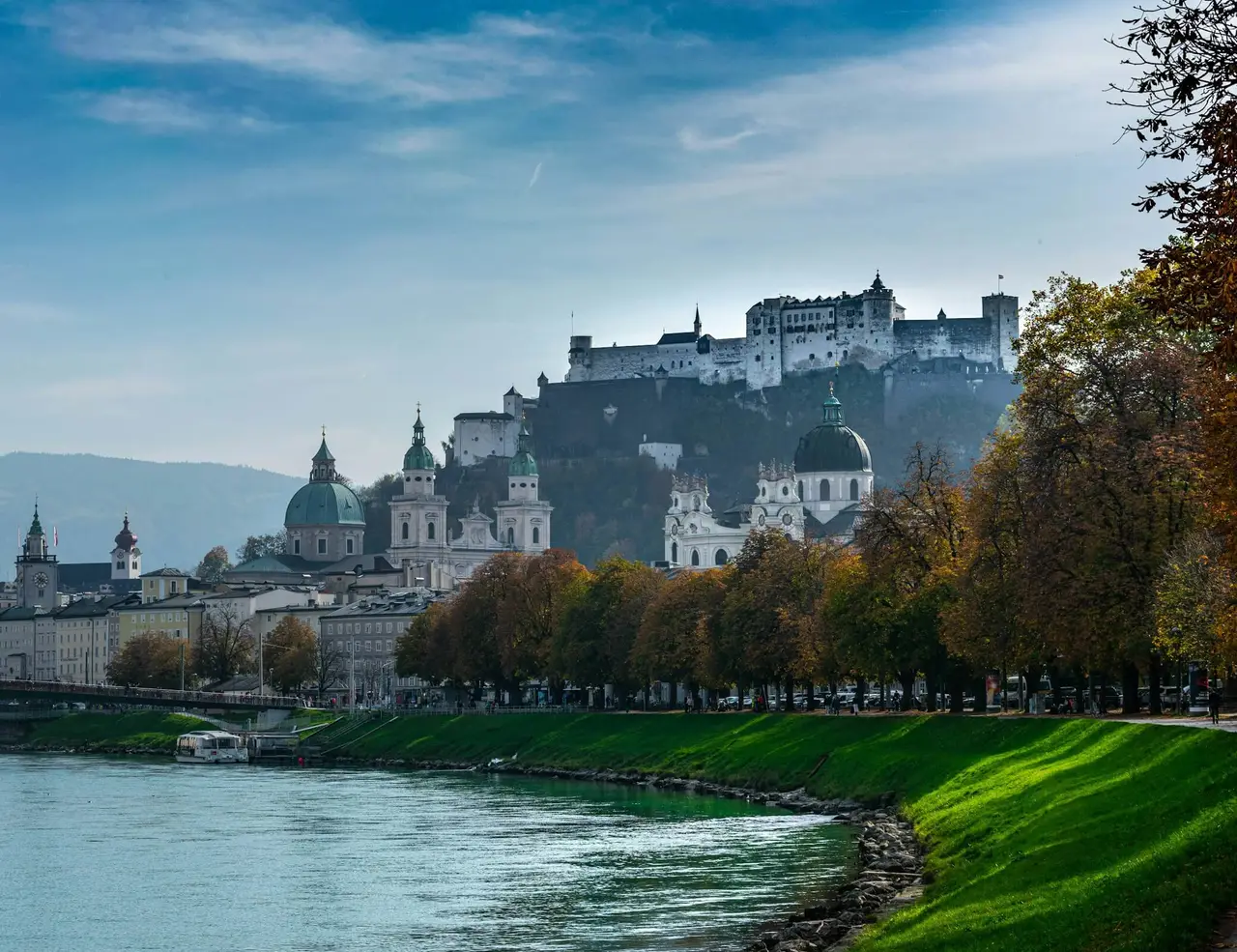
Table of Contents
- 1. Understanding the Alpe Adria Trail
- 2. Why Go Cycling the Alpe Adria Trail?
- 3. Which Are the Best Places for Cycling in the Alpe Adria Trail?
- 4. When Is the Best Time for Cycling the Alpe Adria Trail?
- 5. Enjoying Food in the Alpe Adria Trail
- 6. Journey Across Changing Landscapes with Cycling the Alpe Adria Trail
Understanding the Alpe Adria Trail
The Alpe Adria Trail begins in Salzburg, a city forever linked with Mozart and the elegance of Baroque music halls, and follows a continuous path south toward the Adriatic Sea. From an Alpine setting shaped by ornate architecture, church domes, and riverside promenades, the route gradually moves through valleys, past fortified villages, and into the sunlit plains of northern Italy before finally meeting the coast at Grado.
Cycling the Alpe Adria Trail offers a close and rewarding sense of this progression. Riders begin in mountain air, moving along riverside paths and converted railway corridors, and slowly reach warmer landscapes lined with vineyards, Roman streets, and open squares. Small pauses become part of the rhythm, whether at an Alpine bakery, a lakeside viewpoint, or an Italian gelateria as the terrain and temperature shift.
This cycling trail is ultimately a passage from one cultural world into another. Architecture changes, languages shift, and scenery softens at each stage, offering a feeling of quiet movement across borders and history.
Topography
The Alpe Adria Trail traces a landscape that reshapes itself gradually, allowing cyclists to experience the sensation of moving through entire geographic worlds in a single journey. It begins among the Alpine peaks outside Salzburg, where forested rises, glacial rivers, and high-mountain air define the early stages. Paths here often follow riverbanks and disused railway lines, offering steady gradients suitable even for moderate riders, though the backdrop remains dramatic with limestone cliffs and snowy caps hovering in view.
As the route continues south, these Alpine slopes soften into long valleys carved by the Salzach and Drava Rivers. Towns emerge along the water, framed by church towers and mountain silhouettes. Rail tunnels and bridges appear as reminders of former railway corridors, now transformed into smooth cycling passages that thread through gorges and forest openings. The terrain gradually becomes easier beneath the wheels, and the feeling of altitude begins to fade.
Crossing into Italy, the landscape transforms once again. Mountain walls loosen into open foothills, and the horizon widens into farmland bordered by orchards, orderly rows of vines, and distant ridgelines that remain visible but no longer imposing. The route descends into wide plains where roads are straight, villages appear frequently, and the air begins to warm. Cyclists move from shaded mountain stretches to bright open countryside, where long uninterrupted segments allow a relaxed cadence. Closer to Grado, the terrain levels completely. Marshland edges, lagoon views, and flat coastal tracks bring the final stretch toward the Adriatic, where sea light replaces mountain shade and the journey finds its natural pause at the water’s edge. Cycling the Alpe Adria Trail means feeling this slow dissolution of altitude. Mountains become hills, hills become plains, and plains open into the sea. The ride unfolds in stages that shift not only in difficulty, but in atmosphere, reminding cyclists how distance can gently translate one landscape into another.
Climate
The Alpe Adria Trail moves through climates that gradually shift, beginning in the cool Alpine north and ending along the softer Adriatic coast. This natural transition allows cyclists to feel the journey through changing temperature, light, and atmosphere as they ride southward.
Spring and early autumn are the most balanced seasons. From April to October, daytime temperatures generally range from 16 to 24 °C (60 to 75 °F) in the mountain valleys and rise slightly as the route descends into Italy. Meadows fill with new blooms, rivers run full with snowmelt, and mountain silhouettes appear crisp against clear skies. These months offer steady daylight, mild breezes, and comfortable riding conditions, making cycling the Alpe Adria Trail especially enjoyable. Summer brings warmer weather, particularly on the lower Italian plains, where July and August can reach 28 to 32 °C (82 to 90 °F). Higher sections near Salzburg, Bad Gastein, and Mallnitz remain cooler, with shaded forest paths and occasional mountain winds providing relief. As riders arrive in Friuli Venezia Giulia, the climate softens further, vineyards ripen, and long daylight hours match the relaxed rhythm of small Italian towns.
Winter creates a quieter atmosphere. Snow often covers the Alpine stretches, and temperatures stay between 0 and 8 °C (32 to 46 °F), shortening daylight hours and slowing overall pace. Lower areas near Udine and Grado remain milder, with peaceful roads and still landscapes, although misty mornings and periods of rain are common. While cycling the full trail is more challenging at this time, certain lower sections remain accessible and appealing for those who enjoy crisp air and quiet surroundings.
Every season brings a distinct character to cycling in the Alpe Adria Trail. Spring begins with fresh greenery and clear mountain views. Summer blends long sunny days with lively evening life. Autumn turns vineyards into warm tones as the route approaches the sea. Winter offers silence, introspection, and empty paths. The journey shifts with the climate, making the trail rewarding throughout the year in different ways.
Flora and Fauna
Cycling the Alpe Adria Trail means moving through some of Europe’s most varied natural environments, each shaped by the shift from Alpine valleys to coastal plains. The Austrian stretch begins with thick forests of spruce, pine, and fir, where moss-covered trunks line cool mountain trails and streams run through shaded woodland. In spring, slopes brighten with Alpine wildflowers, and higher meadows fill with gentian, edelweiss, and delicate primrose, creating bursts of color beneath rugged peaks.
As riders descend toward Carinthia, the vegetation softens into fertile agricultural plains. Here, the landscape transitions into orchards, lakeside reeds, and wide grassy meadows that stretch toward valley towns. Apple trees, walnut groves, and vineyards appear more frequently, especially near Villach and along the Drava corridor. From this point onward, cycling in the Alpe Adria Trail reveals a landscape that gradually feels more Mediterranean with every kilometer.
Entering Friuli Venezia Giulia, the terrain opens into warm, vineyard-lined countryside where olive trees begin to appear. Vineyards spread across low hills, ripening into shades of amber and green as late summer approaches. Country paths are bordered by acacia, mulberry, and poplar, and fields are dotted with lavender bushes and sunflowers. Roadside herbs like fennel, rosemary, and wild mint fill the air with a soft fragrance, adding to the sensory experience of cycling the Alpe Adria Trail.
Wildlife shifts with the terrain. In Austrian woodlands, red deer, foxes, and chamois move through mountain slopes, often glimpsed at early light or dusk. Alpine birds such as golden eagles and kestrels circle above cliffs, while woodpeckers are heard in the tree line. In lower valleys, storks nest in wetlands, ducks gather in still riverbanks, and songbirds occupy hedgerows. Along the approach to the Adriatic, butterflies appear in abundance through late spring and summer, fluttering across open meadows and vineyards.
As the trail nears the sea, marshland birds become a common presence, and stretches of coastal vegetation mark the final approach toward Grado. Reeds sway beside lagoons, salt meadows spread across flat terrain, and sea breezes bring a shift in character that signals the end of the Alpine corridor.
This evolving blend of vegetation, wildlife, and changing elevation gives the Alpe Adria route a distinct natural identity, turning each stage into a new ecological chapter.
Economy
The regions connected by the Alpe Adria Trail reflect three distinct yet complementary economic landscapes: Alpine valleys shaped by traditional farming, Central European towns influenced by craft industries, and Italian plains defined by vineyards, gastronomy, and coastal trade. Cycling the Alpe Adria Trail offers a direct encounter with these regional livelihoods, each visible in the landscape itself.
In Austria, dairy farming and mountain agriculture form the economic backbone. Alpine pastures support cattle, and small farms produce cheese, cured meats, and seasonal fruit preserves. Carinthia is known for trout farms, apple orchards, and distilleries that make fruit brandies. Markets in towns like Spittal and Villach display local honey, mountain herbs, breads, and smoked meat, revealing how agriculture and craft food production remain central to everyday life.
As the landscape flattens toward the Italian border, tourism becomes increasingly important. The cycle network itself supports guesthouses, cafés, rental shops, and inns that cater to riders. Villach is a prime hub, where riverfront promenades, spas, and restaurants create a lively atmosphere supported by outdoor tourism. Cycling the Alpe Adria Trail is not only about movement but about participating in a growing cultural economy built around sustainable travel.
Crossing into Friuli Venezia Giulia further shifts the economic character toward food traditions and viticulture. Vineyards spread across the Collio and Isonzo hills, producing wines such as Friulano, Ribolla Gialla, and Refosco. Olive oil production grows stronger nearer the coast, and farms cultivate figs, peaches, and vegetables that supply small trattorias along the route. Many cyclists stop in local wine estates, where tastings are embedded in the cycling experience.
The Adriatic coastline adds yet another layer, with fishing, salt marsh products, and seafood shaping local markets. Grado and its lagoon towns rely on hospitality-based industries, from family-run restaurants to coastal hotels that welcome cyclists finishing the journey.
Across all regions, the economies remain tied to land, tradition, and slow travel. Agriculture sustains daily life, tourism introduces new opportunities, and regional food production preserves cultural identity. Cycling the Alpe Adria Trail reveals how rural livelihoods, craft industries, and modern mobility coexist, offering a layered understanding of the places that line this border-crossing journey.
DREAMING OF CYCLING THE ALPE ADRIA TRAIL?
Explore our amazing bike tours the Alpe Adria Trail now !
Why Go Cycling the Alpe Adria Trail?
1. From Salzburg’s Alpine Majesty to the Adriatic Shoreline
Cycling the Alpe Adria Trail gives a rare feeling of movement from one world into another. The journey begins among snow-rimmed peaks, bell-towered villages, and green valleys shaped by rivers and mountain streams. By the final days, you are riding toward warm breezes, flat coastal lanes, and Italian piazzas lined with cafés. The landscape changes gradually beneath your wheels, making the sense of completion remarkably satisfying.
2. Cycling into UNESCO-Layered Heritage
This route does not only pass historic locations, it allows you to enter them at cycling speed. Salzburg introduces the trail with Mozart’s legacy, castle ramparts, and Baroque streets glowing against the Alps. South of the border, cyclists arrive directly into Palmanova, designed as a perfectly symmetrical star-fort town. Aquileia reveals traces of one of Rome’s great cities, where basilicas, columns, mosaics, and archaeological fields sit in open sunlight. You do not simply observe history; you pedal through it.
3. A Landscape that Unfolds Stage by Stage
The Alpe Adria Trail offers clear natural transitions. In Austria, roads follow steep valleys cut by rivers with mountain backdrops in every direction. Alpine waterfalls, wooden farmhouses, and forested slopes frame the journey. After Tarvisio, the terrain opens noticeably, with long straight cycle paths crossing vineyards, orchards, and open farmland. Riders can literally feel altitude fall away and space widen, making each section of the journey visually distinct from the last.
4. A Culinary Arc from Beer Traditions to Wine Country
The trail reveals how food culture shifts with geography. Early stages invite Austrian specialties, hearty mountain dishes, freshly baked breads, and breweries rooted in centuries of tradition. Once cyclists enter Friuli Venezia Giulia, menus move toward regional white wines, olive oils, seafood from lagoon towns, and fresh produce grown across rolling hills. Every stop introduces something drawn from the land around it, turning breaks into moments of discovery.
5. Distance Made Comfortable with Supportive Infrastructure
Though long, this journey is thoughtfully structured for cyclists. Smooth bike paths replace busy roads for most sections, and services line the route at regular intervals. The short train passage beneath the Tauern range not only connects two valleys but adds excitement and dramatic change of setting. Riders who want shorter days find train access between key towns, allowing each stage to be shaped according to pace and energy.
Which Are the Best Places for Cycling in the Alpe Adria Trail?
1. Salzburg and the Alpine Gateway
Beginning in Salzburg sets a graceful tone for cycling the Alpe Adria Trail. The city’s Baroque old town, framed by the River Salzach, presents a rich backdrop of cathedral spires, pastel façades, and cobbled streets still echoing Mozart’s legacy. Leaving the city by bicycle feels seamless, with riverside paths leading toward wooded ridgelines and open meadows. This early stretch offers a gentle warm-up before the terrain transforms into Alpine country. Historic bridges, hilltop fortresses, and distant snow-lined peaks create a stage where architecture and landscape blend in striking harmony. It is here that riders feel the first sense of transition, moving from city elegance into natural quiet.
2. The Gastein Valley and Böckstein Crossing
Reaching the Gastein Valley is one of the most immersive moments of cycling the Alpe Adria Trail. Villages like Dorfgastein and Bad Hofgastein sit between wooded slopes, waterfalls appear beside the path, and the Hohe Tauern mountains rise dramatically in every direction. Riders move through meadow-lined roads, thermal spa towns, and quiet crossroads where alpine life continues at its own steady pace. The valley narrows at Böckstein, where cyclists take the train through the Tauern tunnel, an unusual but memorable transition. Emerging on the other side feels like passing into another world, with a change in light, air, and elevation marking a clear shift in the journey.
3. Mallnitz to Villach and the Open Carinthian Plains
Descending from Mallnitz offers long-flowing kilometers of effortless riding. Wide paths follow clear mountain streams, eventually expanding into broad valleys where villages sit tucked beneath rounded slopes. Carinthia offers open riding and long stretches that establish natural rhythm. The approach toward Villach reveals a more urban character, with cafés, riverside promenades, and cycle routes threading through lively neighborhoods. This is the stage where the route smooths out, and riders begin to feel the distance accumulate beneath the wheels, knowing they are now journeying south toward a noticeably warmer climate.
4. Tarvisio and the Forested Borders
Crossing into Italy near Tarvisio brings an immediate shift in atmosphere. The town sits between forested ridges and dramatic Alpine silhouettes, and the riding becomes calm and direct along converted railway tracks. Former tunnels, old bridges, and railway stations turned cafés reveal how the past has been shaped into a contemporary cycling path. The forest canopy opens occasionally to views of the Julian Alps, with small farms and church towers adding detail to the landscape. Tarvisio feels like the hinge of the journey, marking a cultural transition while still carrying the clarity of mountain air.
5. From Tarvisio through Val Canale to Venzone
This stretch is often considered one of the scenic highlights of cycling the Alpe Adria Trail. The route follows the Fella River, passing through Pontebba and wooded valleys where slopes rise steeply above the path. Parts of this segment still show pieces of their original railway era, and the long curves mirror the gentle gradients once designed for train travel. The road leads into Venzone, an ancient walled town restored with exceptional fidelity after the 1976 earthquake. Stone arches, medieval streets, and a quiet main square offer the perfect mid-journey pause. Surrounded by high mountains, Venzone feels preserved in time.
6. From Venzone to Udine through Vineyards and Heritage Villages
South of Venzone, the terrain softens into rolling agricultural landscapes. Villages like Gemona reveal glimpses of medieval walls, hilltop views, and quiet cloisters. The Tagliamento River guides the route naturally, with views expanding into wide plains. Cyclists reach Udine through tree-lined paths and small hamlets where Venetian villas stand along rural roads. Udine itself holds a refined, lived-in elegance. Its cafés, old piazzas, and polished arcades feel welcoming for an evening stroll after a ride. This entire stretch blends motion, light, countryside rhythm, and gentle cultural discovery.
7. Udine to Aquileia and the Lagoon Approach to Grado
The final segment is where the character shifts toward coastal softness. Palmanova appears suddenly, star-shaped and geometric, with gates that still open into a perfect Renaissance plan. Nearby, Aquileia holds the weight of antiquity through mosaic floors, archaeological fields, and basilicas dating to early Christianity. The sea air becomes noticeable just past the marshlands, and the route glides into Grado through waterside paths, open lagoons, and long silhouettes of coastal birds drifting overhead. Arriving at the sea after days of changing landscapes carries quiet fulfillment, as though the journey has dissolved into salt air. Grado’s waterfront squares, late sunlight, and steady sea breeze form a natural ending, where riders often pause at the edge of the Adriatic, reflecting on the movement of the trail from mountains to coast.
PLANNING A CYCLING HOLIDAY IN ALPE ADRIA TRAIL?
Dive into our curated Alpe Adria cycling adventures today!
When Is the Best Time for Cycling the Alpe Adria Trail?
Best Season: May to June and September to early October
Spring and early autumn are the most rewarding times for cycling the Alpe Adria Trail. Between May and June, the mountains are still green and fresh from snowmelt, wildflowers brighten the river valleys, and long daylight hours allow steady, comfortable riding. In Austria and northern Italy, daytime temperatures generally range between 16 and 24 °C (61 and 75 °F), making climbs through the Alpine foothills manageable and the long descents into lowland plains especially enjoyable. Rivers run full from spring melt, waterfalls are at their strongest, and villages host seasonal events, from outdoor markets to weekend food fairs.
September and early October bring an equally beautiful atmosphere. The summer heat has softened, roads are quieter, and harvest season unfolds across the Friulian plains. Vineyards around Aquileia and Udine turn golden, and wineries open their doors for tastings, often pairing local dishes with new vintages. Afternoon temperatures linger between 18 and 26 °C (64 and 79 °F), and evenings are cool enough to sit outdoors along the Adriatic promenades. The autumn light softens the mountains behind Mallnitz and brightens the coastal marshes near Grado, creating some of the trail’s most scenic conditions.
Shoulder Season: Late April and late October
Late April brings the beginning of cycling season on the Alpe Adria Trail. Snow has receded from most mid-altitude sections, meadows open, and the river valleys begin to fill with cyclists. Daytime temperatures hover between 12 and 18 °C (54 and 64 °F), ideal for steady-paced riding, though mornings in the Alps can still be cool, especially around the Böckstein crossing.
Late October carries quieter energy. Vineyards near Udine complete their harvest, coastal winds arrive, and towns along the route settle into slower rhythms. Accommodation is easier to find, traffic on cycle paths reduces, and the landscape shifts into shades of copper and amber. Shorter days make planning important, yet the peaceful atmosphere rewards riders willing to embrace slower, unhurried distances.
Off-Season: November to April
Winter transforms parts of the route into snow-covered terrain, particularly around Mallnitz, Bad Gastein, and the Austrian mountain passes. Daytime temperatures often range between 2 and 8 °C (35 and 46 °F) in higher sections, and snow or freezing rain can make segments impractical for long-distance cycling. However, the Italian plains and coastal stretches remain accessible on clear days, allowing short scenic rides between Udine, Aquileia, and Grado.
Winter life along the Alpe Adria Trail continues through seasonal markets, church festivals, and holiday celebrations, especially in Salzburg. For cyclists accustomed to colder weather and layered riding, winter brings a quieter experience, where the mountains are silent, villages glow with indoor life, and the Adriatic coastline remains mild even in the cool season. Cycling here becomes less about distance and more about pauses and the quiet ambience of winter landscapes.
Enjoying Food in the Alpe Adria Trail
1. Kärntner Kasnudeln (Carinthian Cheese Dumplings)
A signature dish of southern Austria, Kärntner Kasnudeln are handmade pasta pockets filled with fresh dairy cheese, herbs, and sometimes potato. They are served either lightly buttered with chives or browned in a pan, creating a comforting meal after cycling long Alpine stretches. Riders passing through the valleys around Bad Gastein and Mallnitz often enjoy this dish in rustic taverns where it reflects generations of mountain cooking. The filling varies slightly from village to village, making it an opportunity to taste the nuances of local traditions as you ride.
2. Goulash Suppe
Though influenced by Central European cuisine, Austria’s version of goulash soup has its own Alpine character. Rich and slow-cooked, it warms the body after cool mountain sections, especially during spring or early autumn rides. Cyclists often encounter it in mountain huts and small inns where it is served with fresh bread and sometimes a hint of smoked paprika. It is a dish tied to endurance, making it deeply satisfying after sustained climbs through the Salzburg region.
3. Frico Friulano
Once the route crosses into northern Italy, food traditions shift dramatically and frico becomes part of the journey. A Friulian specialty made from Montasio cheese melted into crisp, golden disks or cooked slowly with potatoes into a soft interior, frico represents alpine dairy culture shaped into something hearty and flavorful. Cyclists often enjoy it in small trattorias between Tarvisio and Gemona, where it pairs naturally with local polenta or bread.
4. Prosciutto di San Daniele
Produced in the hilltop town of San Daniele del Friuli, this cured ham is considered one of Italy’s most refined. Delicately sweet, aromatic, and aged for many months, it forms part of platter lunches that fit perfectly into mid-ride pauses. Riders cycling toward Udine often stop at bars where slices of San Daniele prosciutto are served with local white wines such as Friulano, creating a distinctly regional refreshment entirely shaped by the landscape.
5. Friulano and Collio Whites
Northern Italy’s Collio region, close to the Alpe Adria route, produces white wines known for floral aromas, freshness, and mineral complexity. Friulano is the classic choice, while Ribolla Gialla and Pinot Bianco also appear on tasting menus near Aquileia and Cormòns. Many small wineries along the route offer informal tasting stops, allowing cyclists to pause, sample, and experience the agricultural backdrop of the ride.
6. Brodetto di Pesce Adriatico
As the trail approaches Grado and the Adriatic coast, seafood begins to define daily cuisine. Brodetto is a traditional fishermen’s stew made from local catches, tomatoes, saffron, and white wine. Each coastal kitchen has its own variation. After riding through lagoon landscapes and canals, sitting down to brodetto offers a sense of arrival, a meal that reflects the shift from Alpine valleys to maritime horizons.
7. Gubana
Gubana is the traditional sweet of Friuli, shaped like a spiral loaf filled with nuts, raisins, cocoa, and a touch of local liqueur. Bakeries in Cividale, Udine, and surrounding villages prepare it with recipes passed down through families. Cyclists often enjoy a slice alongside espresso or as a celebratory treat on reaching Grado. The layered pastry feels like a symbolic end to the journey, wrapping sweetness, craftsmanship, and heritage into a single bite.
READY TO CYCLE THE ALPE ADRIA TRAIL?
Get started with your cycling adventure now!
Journey Across Changing Landscapes with Cycling the Alpe Adria Trail
Cycling the Alpe Adria Trail takes you from Alpine valleys to Adriatic shores, revealing new terrain and culture with every stage. Forested mountain paths, riverside routes, vineyard roads, and seaside stretches come together in a journey that feels both varied and deeply rewarding.
From Salzburg’s historic charm to the quiet villages of Friuli and the lagoon edge of Grado, cycling in the Alpe Adria Trail offers a rare sense of progression, where landscapes shift and the experience evolves at the pace of the ride. Art of Bicycle Trips brings insight, planning, and curated experiences so you can enjoy this journey with ease. Comfortable stays, route support, and a seamless travel flow allow you to focus on what matters most: the joy of moving through landscapes that change beneath your wheels, one memorable day at a time.
Plan Your Active Adventure
Create a private trip or join a small-group departure.
