
Table of Contents
- 1. Understanding Sweden
- 2. Sweden’s Cycling Infrastructure and Trail Culture
- 3. Which Are The Best Places for Cycling in Sweden
- 4. Which Are the Best Routes for Cycling in Sweden?
- 5. When Is the Best Time for Cycling Sweden?
- 6. Enjoying Food in Sweden
- 7. Tradition and Design in Sweden
- 8. Sweden Visa Requirements
- 9. Handy Info
- 10. Through the Notes
- 11. Experience the Calm Precision of Cycling Sweden
Understanding Sweden
Sweden stretches from the fertile farmlands of the south to the Arctic Circle in the north, covering 450,295 km² (173,860 sq mi) and making it the largest country in Scandinavia. With just over 10 million residents, it remains one of Europe’s least densely populated nations. Space, silence, and access to nature define daily life here.
The capital, Stockholm, is built across 14 islands where Lake Mälaren meets the Baltic Sea, reflecting the country’s deep relationship with water. Nearly 100,000 lakes dot the landscape, and about 69% of Sweden is covered in forest. Rather than towering alpine peaks, Sweden offers open horizons, gentle terrain, and vast coastal stretches shaped by ancient glacial movement.
One of Sweden’s defining principles is allemansrätten, the Right of Public Access. This long-standing law allows people to roam freely through forests, lakeshores, and countryside, reinforcing a national culture rooted in outdoor movement and environmental responsibility.
Cycling in Sweden reflects this ethos. It is less about conquering elevation and more about continuity, clean design, and connection to land and sea. Routes move through archipelagos, along protected coastlines, and across forest corridors where infrastructure quietly supports the journey.
Geography and Landscape
Sweden’s landscape is shaped less by dramatic elevation and more by water, coastline, and glacial history. Stretching over 1,600 kilometres from south to north, the country transitions gradually from agricultural plains in Skåne to boreal forests and tundra near the Arctic Circle. Most of southern and central Sweden lies below 500 metres in elevation, creating predominantly gentle gradients and flowing terrain well suited to long-distance touring.
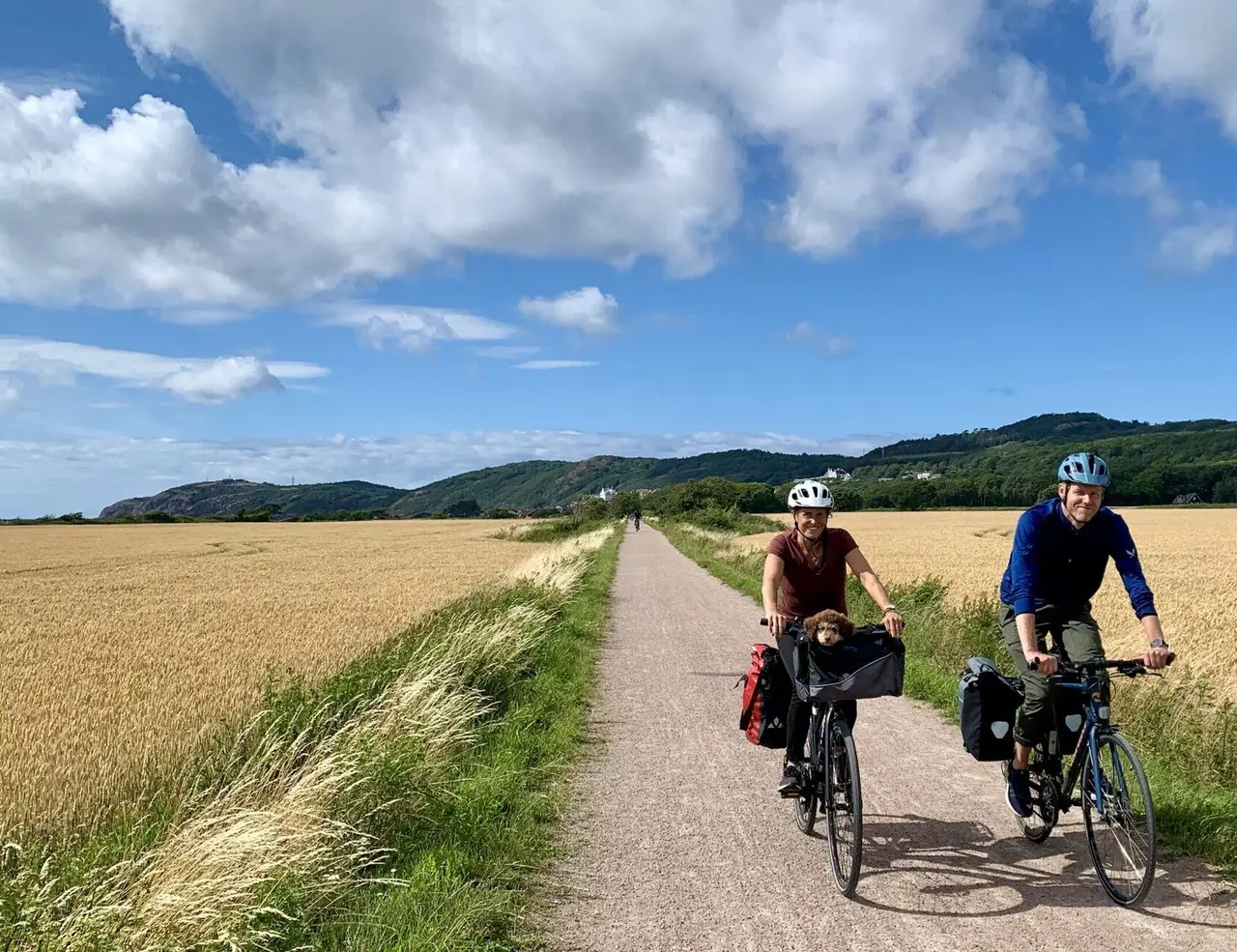
Along the west coast, the Kattegat shoreline offers sandy beaches, fishing villages, and low dunes shaped by North Sea winds. This is the corridor followed by Kattegattleden, Sweden’s first national long-distance cycle route, which runs between
Helsingborg and Gothenburg for approximately 390 kilometres. The terrain here is largely flat to rolling, with open sea views and farmland linking coastal towns.
On the east coast, the Baltic Sea breaks into thousands of islands forming the Stockholm Archipelago, one of the largest archipelagos in the world. Granite outcrops, pine forests, wooden cottages, and ferry crossings define the geography. Riding here often involves island-hopping, short inland loops, and quiet maritime roads rather than sustained climbs.
Inland Sweden is dominated by forest and freshwater systems. Nearly 100,000 lakes, including Vänern and Vättern, shape regional climates and cycling routes. Forest roads weave through pine and birch corridors, often with minimal traffic and well-maintained surfaces. The terrain rolls gently rather than rising sharply, allowing riders to settle into rhythm rather than tackle prolonged ascents.
Unlike alpine destinations, cycling in Sweden is rarely defined by altitude gain. Instead, it is characterised by flow, distance, and continuity. Coastlines meet forest interiors seamlessly, and well-designed infrastructure ensures that even remote-feeling stretches remain accessible and navigable. The landscape rewards steady pacing, scenic pauses, and long daylight hours rather than explosive climbing efforts.
Climate
Sweden experiences a temperate to subarctic climate, shaped largely by latitude and proximity to the sea. Despite its northern position, the Gulf Stream moderates temperatures in southern and western regions, making the main cycling season longer and more comfortable than many expect.
Summer, from June to August, is the peak season for cycling in Sweden. Daytime temperatures typically range between 18 and 25°C (64 to 77°F) in southern and central regions, with cooler conditions further north. One of the most distinctive features of summer riding is daylight. In June, southern Sweden enjoys up to 17–18 hours of light, while areas near the Arctic Circle experience the midnight sun, where darkness barely settles at all. These extended daylight hours allow for relaxed pacing, longer stages, and scenic stops without time pressure.
Late spring (May) and early autumn (September) are often considered ideal shoulder seasons. Temperatures range between 12 and 20°C (54 to 68°F), crowds are lighter, and landscapes shift in tone. Spring brings fresh green foliage and blooming meadows, while autumn introduces golden forests and crisp air. Coastal winds can be present, particularly along the Kattegat and Baltic shores, so route direction and layering are worth considering.
Winter, from November through March, is generally limited for road cycling. Temperatures frequently drop below freezing in much of the country, and snow cover is common, especially inland and in northern regions. While some cyclists embrace fat biking and winter touring, traditional long-distance riding is best reserved for late spring through early autumn.
Flora and Fauna
Sweden’s natural identity is defined by forest and freshwater. Approximately 69% of the country is covered in woodland, dominated by Scots pine and Norway spruce, with silver birch brightening the landscape in lighter tones. In southern regions, mixed forests include oak, beech, and maple, particularly in Skåne. During late summer, forest floors are scattered with wild blueberries and lingonberries, often accessible directly from roadside trails.
The country’s nearly 100,000 lakes shape both scenery and ecology. Lakes Vänern and Vättern, among the largest in Europe, influence local climates and create expansive waterside cycling corridors. Wetlands and coastal meadows along the Baltic Sea attract migratory birds, while sandy dunes along the west coast support hardy grasses and salt-tolerant vegetation.
Wildlife remains an integral part of Sweden’s landscape. Moose are perhaps the most iconic animal and are commonly found in forested regions, particularly at dawn and dusk. Roe deer, red foxes, wild boar, and hares are also widespread. In more remote northern areas, lynx and brown bears inhabit protected zones, though sightings are rare. Birdlife is abundant, from white-tailed eagles along coastal cliffs to cranes and swans in agricultural plains.
What distinguishes Sweden’s natural environment while cycling is its consistency. Forest corridors stretch for kilometres, lakes appear unexpectedly between tree lines, and coastal winds shift gently across open farmland. The terrain feels expansive but never extreme. Rather than dramatic alpine contrasts, the Nordic landscape offers continuity, calm, and a strong sense of ecological balance.
Cycling in Sweden becomes a quiet immersion into this environment, where nature feels accessible and integrated rather than distant or protected behind barriers.
Economy and Sustainability
Sweden has one of the most advanced and innovation-driven economies in Europe, with a GDP of approximately US $600 billion and a strong emphasis on technology, engineering, and sustainable development. The service sector dominates, particularly in technology, finance, education, and public services, while manufacturing remains globally significant through brands such as Volvo, Ericsson, and Scania.
Forestry plays a foundational role in the Swedish economy, reflecting the country’s vast woodland coverage. Timber, paper products, and bio-based materials are major exports, and forest management is closely regulated to balance productivity with conservation. This long-standing relationship between economy and ecology influences infrastructure decisions, including cycling networks designed to minimise environmental impact.
Renewable energy is central to Sweden’s economic model. A significant proportion of electricity comes from hydropower, wind, and nuclear sources, and national policy strongly supports low-carbon transport. Urban planning prioritises cycling lanes, public transport integration, and reduced vehicle emissions. These priorities extend beyond cities into regional development, where long-distance cycle routes are treated as sustainable tourism assets rather than niche recreational projects.
Small coastal fishing communities along the Kattegat and Baltic Seas continue to support local economies, while agriculture in southern regions such as Skåne contributes grains, dairy, and produce. Tourism is well developed but not overly concentrated, with many regions promoting nature-based travel, archipelago experiences, and slow exploration.
Sweden’s economic and environmental priorities translate into practical advantages for cyclists. Infrastructure is well maintained, services are reliable, and sustainability is embedded into transport planning.
DREAMING OF CYCLING IN SWEDEN ?
Explore our amazing bike tours in Sweden now!
Sweden’s Cycling Infrastructure and Trail Culture
Sweden has developed one of the most refined cycling infrastructures in Europe, built on long-term investment in safety, accessibility, and environmental responsibility. Dedicated cycle lanes are common in urban areas, while rural regions feature well-signposted long-distance routes that link towns, coastlines, and natural reserves. Surfaces are typically smooth asphalt or well-compacted gravel, maintained to a high standard even in remote areas.
National routes such as Kattegattleden set the benchmark for design and signage, with clear wayfinding, rest areas, and integration with local services. Sweden also forms part of the EuroVelo network, including segments of EuroVelo 7, the Sun Route, which connects Scandinavia with southern Europe. These international corridors are fully marked and supported by cycling-friendly accommodation and transport options.
One of Sweden’s distinguishing features is the seamless integration of ferries into route planning, particularly around the Stockholm Archipelago. Cyclists can roll directly onto boats linking islands, creating fluid multi-day journeys that combine road riding with maritime travel. Train services across much of the country allow bicycles onboard, and stations are generally equipped with clear signage and easy platform access.
The broader cycling culture reflects Sweden’s sustainability mindset. Helmets are widely worn, motorists are accustomed to sharing the road, and infrastructure prioritises low-impact travel. Small towns often provide bike repair stands, public water taps, and secure parking. Rather than an afterthought, cycling is treated as a primary mode of movement.
For visitors, this translates into confidence. Routes are intuitive, surfaces reliable, and transitions between regions straightforward. Cycling in Sweden is not just supported by the landscape. It is supported by design.
Which Are The Best Places for Cycling in Sweden
1. West Coast & Kattegat
Sweden’s west coast along the Kattegat Sea is arguably the country’s most iconic cycling corridor. Stretching between Helsingborg and Gothenburg, this coastline combines sandy beaches, fishing harbours, rolling farmland, and windswept dunes. The terrain is largely flat to gently undulating, making it suitable for beginners, leisure riders, and multi-day touring cyclists.
This region is home to Kattegattleden, Sweden’s first national cycle route, which runs for approximately 390 kilometres (242 miles). The route is fully signposted, largely traffic-separated, and consistently maintained. Coastal towns such as Falkenberg, Varberg, and Halmstad provide regular accommodation and café stops, reinforcing the relaxed rhythm of cycling in Sweden.
2. Stockholm Archipelago
The Stockholm Archipelago is one of the largest archipelagos in the world, consisting of over 30,000 islands and skerries scattered across the Baltic Sea. Cycling here is defined by short inland loops, pine-lined roads, granite outcrops, and ferry crossings that connect island to island.
Rather than sustained climbs, the terrain rolls gently, offering continuous but manageable elevation changes. The atmosphere is distinctly maritime, with red wooden cottages, small harbours, and quiet village cafés punctuating the routes.
3. Southern Sweden (Skåne)
Skåne, Sweden’s southernmost province, offers fertile farmland, open horizons, and one of the mildest climates in the country. Its proximity to Denmark via the Öresund Strait creates a landscape that feels slightly more continental than the forest-dominated north.
The terrain is mostly flat to gently rolling, making it highly accessible for long-distance touring. Agricultural fields, coastal paths, and small medieval towns define the riding experience. The region also forms part of the Coast-to-Coast Öresund corridor, linking the Baltic Sea with the Kattegat.
4. Lake Vänern Region
Lake Vänern, the largest lake in the European Union, anchors one of Sweden’s most expansive inland cycling regions. Surrounding roads trace shorelines, forests, and open farmland, offering long, uninterrupted stretches with minimal traffic.
Gradients are modest, but distances can be substantial, making this area well suited to endurance-oriented tourers who prefer steady pacing over steep climbing. Lakeside villages provide consistent resupply points, and the scenery shifts between dense woodland and open water views.
5. The Öresund Coast
The Öresund region connects southern Sweden with Denmark via the iconic Öresund Bridge. Coastal riding here blends modern Scandinavian design with historic harbour towns and accessible seaside paths.
Cyclists encounter sandy beaches, grassy coastal meadows, and well-developed cycling lanes linking urban and rural environments. The terrain remains moderate, and infrastructure is exceptionally strong, making it ideal for first-time European cycle tourists.
Sweden does not rely on dramatic mountain regions to define its cycling appeal. Instead, its strength lies in regional continuity, integrated infrastructure, and landscapes shaped by sea, lake, and forest. Each of these regions offers a distinct expression of cycling Sweden, from maritime island-hopping to long coastal corridors and forested inland loops.
Which Are the Best Routes for Cycling in Sweden?
1. Kattegattleden
The Kattegattleden is Sweden’s flagship long-distance cycling route and one of the most refined coastal rides in Europe. Running approximately 390 kilometres (242 miles) between Helsingborg and Gothenburg, the route follows the Kattegat Sea along Sweden’s west coast.
What makes Kattegattleden exceptional is its consistency. The route is almost entirely traffic-separated or on very quiet roads, clearly signposted, and designed specifically for touring cyclists. Surfaces are smooth asphalt, gradients are gentle, and daily stages can be comfortably divided over 5–7 days.
Cyclists pass sandy beaches, small fishing villages, rolling farmland, and harbour towns such as Falkenberg and Varberg. Sea views remain a constant companion, and coastal winds can add a light challenge without overwhelming the ride. This is an ideal route for leisure riders, couples, and first-time long-distance cyclists seeking structure without intensity.
2. Sydostleden
The Sydostleden runs roughly 270 kilometres (168 miles) between Växjö and Simrishamn in southern Sweden. It connects inland forest landscapes with the Baltic coast, offering a blend of lakeside roads, farmland, and coastal approaches.
The terrain is predominantly flat to gently rolling, making it accessible for a wide range of riders. Sections through Småland’s forests feel particularly peaceful, with long tree-lined stretches and minimal traffic. As the route approaches the coast, scenery opens into sandy beaches and maritime villages.
Sydostleden is well signposted and forms part of the broader national cycling network, making it a reliable choice for riders who value navigation clarity and infrastructure support.
3. Öresund Coast Route
The Öresund Coast Route links southern Sweden’s Baltic shoreline with the Kattegat Sea, connecting coastal towns, agricultural plains, and modern urban corridors. It runs near the iconic Öresund Bridge, which connects Sweden to Denmark.
This corridor is defined by accessibility. Cycle lanes are wide, surfaces well maintained, and gradients minimal. The ride moves between small harbour towns and contemporary Scandinavian design hubs, blending rural calm with urban convenience.
4. Stockholm Archipelago Circuits
Cycling in the Stockholm Archipelago offers a different rhythm from mainland routes. Instead of one continuous corridor, the experience is built around island circuits connected by passenger ferries.
Roads are typically quiet, bordered by pine forest and granite shoreline. Elevation changes are gentle but frequent, creating a rolling cadence rather than sustained climbs. Riders move between small villages, marinas, and summer cottages painted in traditional Falun red.
5. EuroVelo 7 – The Sun Route (Sweden Section)
EuroVelo 7, also known as the Sun Route, stretches from northern Norway to Malta. Its Swedish section traces portions of the west coast and southern regions, integrating seamlessly with established national routes such as Kattegattleden.
The Swedish stretch of EuroVelo 7 benefits from excellent infrastructure, consistent signage, and strong integration with public transport. Riders can combine international ambition with Sweden’s calm cycling environment, making it attractive for those planning extended cross-border journeys.
Sweden’s best cycling routes share common characteristics: smooth surfaces, clear wayfinding, moderate gradients, and strong support systems. Rather than testing vertical endurance, these routes reward distance, rhythm, and immersion in landscape.
When Is the Best Time for Cycling Sweden?
Best Season
The best period for cycling in Sweden runs from May to September, when temperatures are mild, daylight is long, and routes are fully accessible. In southern and central Sweden, daytime temperatures typically range between 16–25°C (61–77°F) during summer months, while coastal breezes help regulate heat along the Kattegat and Baltic shores.
One of Sweden’s greatest seasonal advantages is daylight. In June and early July, southern regions enjoy up to 17–18 hours of light per day, while areas near the Arctic Circle experience the midnight sun. These extended daylight hours allow riders to plan flexible stages, take scenic breaks, and enjoy evening coastal light without feeling rushed.
Unlike southern Europe, Sweden rarely experiences extreme heatwaves. Even in peak summer, temperatures tend to remain comfortable for sustained riding, especially along the coast or near lakes where air circulation moderates conditions.
Peak Season
The peak cycling season coincides with June through August, when both domestic and international tourism are at their highest levels. This is when routes such as Kattegattleden and the Stockholm Archipelago see the most activity.
Accommodation prices can increase slightly during midsummer, particularly around the Midsummer holiday in late June, when Swedes traditionally retreat to countryside cottages and coastal regions. However, tourism in Sweden remains well distributed, and even in peak season, routes rarely feel congested.
July is the warmest and most stable month for weather, making it particularly attractive for first-time visitors planning multi-day cycling tours in Sweden.
Shoulder Season
Late May and September are often considered ideal by experienced tourists. Temperatures range between 12–20°C (54–68°F), landscapes are vibrant, and visitor numbers are noticeably lower.
Spring brings fresh foliage, blooming meadows, and quiet coastal towns reopening after winter. September introduces golden tones across forests and farmland, with crisp air and stable conditions well suited to longer distances.
Wind can be slightly stronger along open coastal corridors in shoulder months, but infrastructure remains fully operational.
Off Season
From October through April, cycling conditions become more limited. Daytime temperatures drop below 10°C (50°F) in much of the country, and inland regions may experience frost or snow. Northern Sweden enters prolonged winter conditions, while southern areas see shorter daylight hours and increased rainfall.
While urban cycling remains possible year-round, long-distance touring routes are best enjoyed during late spring through early autumn. Winter cycling is practiced locally, often with studded tires, but it requires specialized preparation and cold-weather experience.
Enjoying Food in Sweden
Despite its northern latitude and relatively small population, Sweden’s cuisine is distinctive, seasonal, and deeply connected to the landscape. Long winters, short but abundant summers, and proximity to cold, nutrient-rich seas have shaped a food culture that values preservation, simplicity, and balance. Traditional dishes often rely on curing, pickling, smoking, and fermenting, while modern Swedish cooking embraces clean flavors and local ingredients.
What you can expect while cycling in Sweden is food that feels fresh, unfussy, and carefully composed rather than heavy or ornate. Meals are rarely overcomplicated. Instead, they reflect the Swedish idea of lagom, not too much, not too little, just enough.
The seven top foods you should try while cycling in Sweden are:
1. Fika and Cinnamon Buns (Kanelbullar)
Fika is not just coffee. It is a ritual. Across Sweden, cafés pause daily for this quiet social break centered around coffee and pastries. The most iconic accompaniment is the kanelbulle, a soft cinnamon bun flavored with cardamom and topped with pearl sugar.
Along cycling routes such as Kattegattleden, small-town bakeries provide ideal rest stops where riders can refuel without rushing. The sweetness is moderate, the texture light, and the ritual restorative rather than indulgent.
2. Gravlax
Gravlax is thinly sliced salmon cured with salt, sugar, and dill, traditionally served with mustard sauce and crispbread. The technique dates back to medieval fishermen who preserved their catch by burying it in sand above the tide line.
Today, it appears on menus across coastal Sweden, particularly near the Stockholm Archipelago and the west coast. Light yet protein-rich, it pairs well with summer riding stages and long daylight hours.
3. Swedish Meatballs (Köttbullar)
Perhaps Sweden’s most internationally recognized dish, meatballs are typically made from a mix of beef and pork, seasoned subtly with onion and white pepper. They are served with creamy gravy, lingonberry jam, and mashed or boiled potatoes.
The sweet-tart lingonberry balances the richness of the sauce, creating a dish that feels comforting but not overwhelming. After a cooler spring or autumn ride, this is a dependable recovery meal found in countryside inns and city restaurants alike.
4. Västerbotten Cheese
Produced in northern Sweden since the 19th century, Västerbotten cheese is firm, crumbly, and sharply aromatic. It is often baked into Västerbottenpaj, a savory pie commonly served at celebrations such as Midsummer.
Its concentrated flavor reflects Sweden’s dairy traditions and makes it a popular picnic option when cycling near lakes or forest clearings.
5. Fresh Seafood
Sweden’s long coastline ensures that seafood is both accessible and central to regional cuisine. On the west coast, shrimp, herring, and smoked mackerel dominate menus. Pickled herring in various marinades remains a staple of festive tables.
Fishing villages along the Kattegat serve seafood simply prepared, often boiled or smoked and accompanied by dill and new potatoes. Coastal cycling days naturally end near harbors where this freshness defines the meal.
6. Cloudberries
Cloudberries grow wild in northern wetlands and forested areas during late summer. Golden in color and delicate in flavor, they are often turned into jams or served with cream for dessert.
Because they are difficult to cultivate, cloudberries are considered something of a delicacy. Their presence reflects Sweden’s deep connection to its wild landscapes.
7. Rye Crispbread (Knäckebröd)
Crispbread has been a Swedish staple for centuries. Originally developed as a durable food that could last through winter, it remains central to everyday meals.
Lightweight and long-lasting, it is practical for touring cyclists assembling simple roadside lunches of cheese, smoked fish, or cured meats. Its texture and mild flavor make it a neutral base for many combinations.
PLANNING A CYCLING HOLIDAY IN SWEDEN?
Dive into our curated Sweden cycling adventures today!
Tradition and Design in Sweden
Sweden’s cultural identity is shaped by restraint, craftsmanship, and a deep respect for nature. Design is not treated as decoration but as function. Clean lines, natural materials, and thoughtful proportions define everything from architecture to furniture. This aesthetic has traveled globally through brands such as IKEA, yet its roots lie in centuries of practical adaptation to climate and landscape.
The Swedish concept of lagom, meaning just enough, influences daily life. It encourages moderation, balance, and sustainability rather than excess. Homes are designed to maximise light during dark winters. Public spaces prioritise simplicity and usability. Even cafés and guesthouses along cycling routes reflect this quiet attention to detail.
Equally central is allemansrätten, the Right of Public Access. This legal and cultural principle allows individuals to roam forests, lakeshores, and countryside responsibly. It reinforces the idea that nature belongs to everyone, provided it is respected. For cyclists, this ethos translates into welcoming landscapes and infrastructure that encourages movement rather than restricts it. Seasonal traditions remain strong. Midsummer, celebrated in late June, is one of Sweden’s most important holidays.
Communities gather around decorated maypoles, wear flower crowns, and share meals outdoors under long daylight hours. In coastal regions and across the Stockholm Archipelago, red wooden cottages dot granite shores and pine forests, creating the imagery often associated with Swedish summer.
Historic wooden churches and medieval stone buildings appear unexpectedly in rural settings. Craft traditions such as Dala horse carving and glassmaking in Småland continue to preserve regional identity. Even modern urban centers maintain this balance between heritage and innovation.
Cycling in Sweden unfolds within this cultural framework. Infrastructure is carefully planned, landscapes are protected, and daily life moves at a measured pace. The result is a country where design supports experience, and tradition quietly shapes the rhythm of the road.
Sweden Visa Requirements
Sweden is part of the Schengen Area, which allows for visa-free travel between 27 European countries under a shared border agreement. For many international travelers, entry into Sweden for tourism, including cycling holidays, is straightforward and efficient.
Citizens of the European Union and European Economic Area may enter and stay freely without a visa. Travelers from countries such as the United States, Canada, the United Kingdom, Australia, New Zealand, Japan, and several others can typically enter visa-free for up to 90 days within a 180-day period for tourism purposes.
Visitors who require a visa must apply in advance for a Schengen short-stay visa through a Swedish embassy or consulate in their country of residence. Sweden does not issue tourist visas on arrival. Processing times and documentation requirements vary by nationality, and applicants may be required to provide proof of accommodation, onward travel, travel insurance, and sufficient financial means for their stay.
Passports must generally be valid for at least three months beyond the intended departure date from the Schengen Area and must have been issued within the last ten years. Border officials may request proof of return travel and travel insurance coverage.
Travelers planning to combine cycling in Sweden with visits to other Schengen countries should remember that the 90-day rule applies collectively across the entire Schengen zone, not per country.
Because immigration regulations can change, travelers are advised to confirm the latest entry requirements through official Swedish government or consular websites before finalizing travel plans.
Handy Info
Currency
The official currency in Sweden is the Swedish Krona (SEK). As of 2024, the exchange rate fluctuates around 1 EUR = 11–12 SEK and 1 USD = 10–11 SEK, though rates vary.
Sweden is one of the most cashless societies in the world. Credit and debit cards are accepted almost everywhere, including cafés, rural shops, ferry terminals, and even small bakeries along cycling routes. Visa and Mastercard are the most widely used, while American Express is accepted in larger establishments.
Carrying cash is generally unnecessary when cycling in Sweden, although having a small amount can be useful in very remote rural areas or for small roadside purchases. Contactless payments and mobile wallets are widely supported.
Transport
Sweden’s transport infrastructure is efficient, organized, and highly supportive of cycling tourism. Major international airports include Stockholm Arlanda Airport (ARN), Gothenburg Landvetter Airport (GOT), and Copenhagen Airport (CPH), which serves southern Sweden via the Öresund Bridge connection.
Swedish trains are reliable and generally bicycle-friendly. Most regional trains allow bicycles onboard for a small additional fee, though space must often be reserved in advance. Long-distance services may have limited bike capacity, so planning ahead is recommended.
Ferries are seamlessly integrated into cycling routes, particularly in the Stockholm Archipelago. Cyclists can roll bikes directly onboard without disassembly. Coastal routes such as Kattegattleden are also well connected by local buses and rail networks. Public transport is punctual and well signposted, making regional transfers straightforward.
Language
The official language of Sweden is Swedish. However, English proficiency is exceptionally high. Over 85 percent of the population speaks fluent English, and nearly all tourism, transport, and hospitality services operate comfortably in English. Road signs, ticket machines, and train announcements are clear and easy to navigate for international visitors. That said, learning a few polite phrases such as “Hej” (hello) and “Tack” (thank you) is always appreciated.
Culture and Religion
Sweden is historically Lutheran Christian, with the Church of Sweden playing a significant cultural role. However, modern Sweden is largely secular, and many residents identify as non-religious. Religious practice exists but tends to be understated in daily life.
Swedish culture places strong emphasis on equality, sustainability, and social responsibility. The idea of lagom shapes attitudes toward moderation and balance, while environmental awareness influences everything from recycling systems to urban planning.
Festivals such as Midsummer in June remain central to cultural identity, featuring flower crowns, traditional music, and outdoor gatherings. Seasonal rhythms shape community life more strongly than religious observance.
Tipping is not mandatory in Sweden. Service charges are included in bills, but rounding up or leaving 5–10 percent for excellent service is appreciated.
Appliances and Devices
Electricity in Sweden is supplied at 230 volts and 50 Hz.
Sweden uses Type C and Type F plugs, which are standard across much of Europe. These sockets feature two round pins. Travelers from North America, the UK, and parts of Asia will require a universal adapter.
Power supply is stable throughout the country, including rural areas. Charging devices during multi-day cycling tours is straightforward, and accommodations typically provide accessible outlets.
Mobile Coverage
Mobile coverage in Sweden is strong and reliable across most of the country. 4G networks are widespread, and 5G coverage continues to expand in urban centers and major corridors.
Signal remains stable even in many rural and forested regions, though remote northern areas may occasionally experience reduced reception.
Major Swedish providers include Telia, Tele2, Telenor, and Tre. Prepaid SIM cards are easily available at airports, supermarkets, and convenience stores. eSIM services are also widely supported.
Time Zone
Sweden operates on Central European Time (CET), which is UTC+1. During daylight saving time, from late March to late October, it shifts to Central European Summer Time (CEST), which is UTC+2.
Long daylight hours during summer significantly enhance cycling conditions, especially between June and August when evenings remain bright well past 9 pm in southern regions.
Through the Notes
Sweden reveals itself quietly. Literature, cinema, music, and daily rituals offer context that deepens the experience of cycling through forests, archipelagos, and coastal towns.
Read
Start with Pippi Longstocking by Astrid Lindgren, which captures the spirit of Swedish childhood, independence, and rural life. For a darker, contemporary tone, Stieg Larsson’s The Girl with the Dragon Tattoo introduces the atmosphere of modern Stockholm and Nordic noir. Vilhelm Moberg’s The Emigrants provides historical insight into rural Sweden and the migration era that shaped much of the country’s social identity.
Listen
ABBA remains Sweden’s most globally recognized musical export, and their melodies still echo through cafés and summer festivals. For a more traditional tone, explore Swedish folk music featuring fiddles and nyckelharpa. Contemporary artists such as Avicii and First Aid Kit represent Sweden’s strong presence in modern pop and indie music.
Watch
Ingmar Bergman’s films, particularly The Seventh Seal, reflect Sweden’s philosophical and visual austerity. The Millennium film adaptations bring Stieg Larsson’s Stockholm to life. For lighter viewing, adaptations of Astrid Lindgren’s stories reveal countryside landscapes and archipelago life. Scandinavian crime series also offer insight into urban and rural contrasts.
Eat
Beyond cinnamon buns and gravlax, try pickled herring in various marinades, new potatoes with dill during summer, and smörgåsbord spreads during festive periods. In coastal towns, sample freshly boiled shrimp. In forest regions, look for dishes featuring chanterelle mushrooms when in season.
Drink
Aquavit, a caraway-flavored spirit, accompanies traditional celebrations. Swedish craft beers are widely available, and coffee culture remains central to daily life. During winter months, warm glögg, a spiced mulled drink, appears in cafés and homes.
Learn
Learn about the concept of lagom and how it influences design, work-life balance, and environmental policy. Explore the tradition of allemansrätten and the responsibilities that come with it. Understanding these principles adds depth to cycling experiences across rural and coastal Sweden.
Experience
Visit the archipelago islands near Stockholm and travel by ferry between quiet harbors. Cycle sections of Kattegattledenalong the west coast. Celebrate Midsummer in a small village if timing allows. Pause at a lakeside jetty at sunset. Let long daylight hours stretch the day naturally.
Sweden rewards attentiveness rather than speed. Through its books, music, and seasonal rituals, the country becomes more than a route. It becomes an atmosphere.
READY TO CYCLE THE SWEDEN?
Get started with your cycling adventure now!
Experience the Calm Precision of Cycling Sweden
Cycling in Sweden is about rhythm and ease. Smooth, well-marked routes trace coastlines, forests, and archipelago islands, allowing landscapes to unfold gradually rather than dramatically. The gradients are gentle, infrastructure is excellent, and the experience feels intuitive from start to finish.
Our Classic Kattegattleden Bike Tour follows Sweden’s celebrated west coast, linking fishing villages, sandy beaches, and dedicated cycle paths along the Kattegat shoreline. It is one of Scandinavia’s most scenic and accessible long-distance rides. The Unique Stockholm Archipelago Bike Tour combines island cycling with ferry crossings, weaving through pine forests, granite shores, and red wooden cottages scattered across the Baltic Sea.
For broader variation, our Coast to Coast Öresund Bike Tour connects southern Sweden’s coastline with inland countryside, blending lakes, farmland, and cultural stops along a thoughtfully paced route.
Each of our cycling tours in Sweden includes carefully curated accommodations, luggage transfers, detailed navigation support, and reliable on-ground assistance. Electric bikes are available, making longer days and coastal winds comfortably manageable.
