
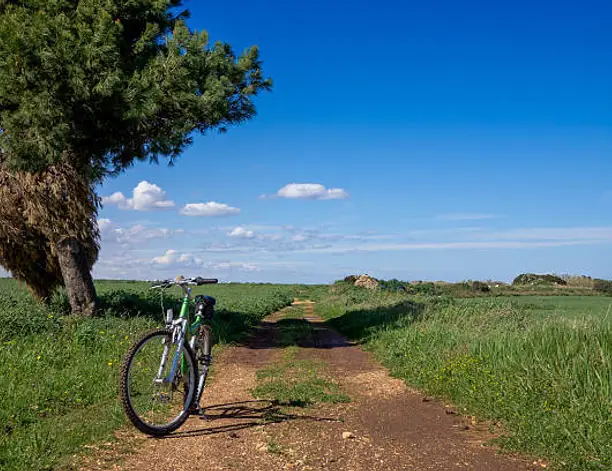
Understanding Puglia
Stretching across Italy’s southeastern tip, Puglia is a land of sun-drenched landscapes, layered history, and traditions that have shaped its towns and countryside for millennia. This region is home to ancient olive groves, baroque cities, whitewashed villages, and miles of Adriatic and Ionian coastline.
From the stone trulli houses of Alberobello to the dramatic sea cliffs of Polignano a Mare, Puglia’s character is defined by a blend of simplicity and elegance rooted in both its geography and its past. Cycling in Puglia offers one of the most immersive ways to experience this richness. Routes take you through the rural Salento peninsula, past vineyards and olive orchards, into fortified towns with winding alleys, and down to fishing harbors where life still follows the rhythm of the sea.
Each ride reveals a different dimension of the region, whether it is Roman ruins in Lecce, limestone plateaus in the Murgia, or the quiet beauty of coastal watchtowers along the Adriatic. For cyclists, the reward lies not only in the landscapes but also in the culture, cuisine, and warm hospitality that define this corner of southern Italy.
Topography
The landscapes of Puglia are defined by their variety, shifting from gentle coastlines to fertile plains and rolling interior hills. The region is flanked by the Adriatic Sea to the east and the Ionian Sea to the southwest, creating more than 800 kilometers of coastline that alternate between dramatic cliffs, sandy beaches, and small fishing harbors. Inland, the expansive Tavoliere plain dominates the north, often called Italy’s “granary” for its vast fields of wheat and sunflowers.
Further south, the land rises into the limestone plateaus of the Murge, dotted with olive groves, vineyards, and ancient dry-stone walls. The Valle d’Itria is one of the most picturesque cycling areas, with its patchwork fields, orchards, and clusters of trulli houses that give the countryside a storybook feel. Toward the Salento Peninsula, the terrain flattens again, opening to long stretches of quiet roads lined with olive trees and framed by views of two seas.
This topography offers something for every style of riding. Gentle coastal routes provide easygoing days by the water, while the climbs into the Murge and around Matera introduce more challenging gradients and sweeping panoramas. The combination of plains, plateaus, and coastal roads creates a rhythm that makes cycling in Puglia both accessible and rewarding, whether you are seeking leisurely exploration or routes with a touch of adventure.
Climate
Puglia’s weather is among the most reliable in Italy, with plenty of sun and mild conditions that lend themselves to both coastal and inland rides. Long days of sunshine define the cycling season, ensuring clear views over farmland, olive groves, and the Adriatic coast.
Summer temperatures often range between 28 and 34 °C (82 and 93 °F), particularly in July and August, when inland towns and valleys can feel quite warm. Coastal areas such as Salento benefit from breezes that soften the heat, making seaside rides more comfortable. Spring and autumn are the most favorable seasons for cycling in Puglia, with daytime temperatures between 18 and 25 °C (64 and 77 °F) and landscapes full of seasonal color.
Rainfall is moderate, arriving mostly in spring and late autumn, while winters remain mild in most lowland and coastal areas. Snow is rare outside the Apennine foothills, and daytime temperatures usually stay above 8 to 12 °C (46 to 54 °F). September and October are especially atmospheric, as vineyards and olive groves come alive with harvest activity, giving cyclists both scenic and cultural rewards on their rides.
Flora and Fauna
Puglia’s flora and fauna create a vivid backdrop for cycling, with landscapes that shift constantly from vineyards and wheat fields inland to Mediterranean scrubland and coastal wetlands alive with birdlife. Ancient olive trees dominate much of the countryside, their gnarled trunks and silvery leaves standing as icons of the region.
In spring, bright wildflowers like poppies, daisies, and orchids color the fields, while summer brings the golden tones of sun-dried wheat and ripening grapes. Along the coasts, salt-tolerant plants thrive among dunes and marshes, giving way to palms and pines in sheltered areas.
Wildlife is just as varied. Herons, flamingos, and migratory birds flock to the wetlands, while kestrels and buzzards circle above the fields. In the quieter rural areas, foxes and hedgehogs can occasionally be spotted, adding a touch of movement to the ride. Butterflies, bees, and cicadas are constant companions in the warmer months, their sounds and colors filling the air. This blend of cultivated land and natural habitats ensures that cycling in Puglia always comes with encounters that are as alive and dynamic as the landscapes themselves.
Economy
Relying on a strong foundation of agriculture, tourism, and artisanal traditions, Puglia’s economy is shaped by the region’s fertile soil and long Mediterranean growing season. Agriculture remains central, with Puglia producing nearly half of Italy’s olive oil. Vast groves stretch across the countryside, their harvest forming both an economic engine and a defining feature of the landscape.
The region is also a leading producer of durum wheat, which gives rise to its celebrated orecchiette pasta, as well as tomatoes, artichokes, almonds, and figs. Vineyards flourish in the Valle d’Itria, Salento, and Castel del Monte, producing DOC and DOCG wines such as Primitivo di Manduria, Negroamaro, and Nero di Troia, now gaining international recognition.
Tourism is another key driver, drawing visitors to Puglia’s baroque towns, whitewashed villages, Adriatic and Ionian coastlines, and UNESCO sites like Alberobello’s trulli and Castel del Monte.
In recent years, the region has become one of Italy’s most talked-about destinations, offering a mix of cultural immersion, seaside leisure, and active travel. Rural and gastronomic tourism thrive alongside beach resorts, while cycling tours increasingly attract travelers seeking slower, more authentic ways to explore.
Artisanal crafts remain vibrant, sustaining local communities and preserving traditional skills. Ceramics from Grottaglie, papier-mâché from Lecce, and handwoven textiles reflect centuries-old practices passed through generations. Fishing also contributes to the coastal economy, supplying fresh seafood that anchors Puglia’s cuisine and markets.
With a population of over four million, Bari serves as the regional capital and economic hub, though smaller towns and rural areas remain closely tied to agriculture and artisanal trades. The balance of modern tourism, historic crafts, and agricultural abundance gives Puglia a distinctive economy that reflects both its heritage and evolving role on the global stage.
DREAMING OF CYCLING IN PUGLIA ?
Explore our amazing bike tours in Puglia now !
Why Go Cycling Puglia?
Seaside Roads
Puglia’s Adriatic and Ionian coasts offer some of the most scenic cycling in southern Italy. Routes trace rugged cliffs, long sandy beaches, and quiet fishing villages where colorful boats bob gently in the harbors. The famous coastal ride from Otranto to Santa Maria di Leuca, the “finibus terrae” or land’s end of Italy, is a highlight with its lighthouse views and turquoise waters. Small seafood trattorias along the way make for perfect mid-ride stops, where cyclists can enjoy freshly caught octopus, anchovies, or sea urchin pasta. The mix of sea breezes, dramatic headlands, and peaceful coves ensures that each stretch of coastline feels both invigorating and rewarding.
Whitewashed Towns
Inland, Puglia is dotted with whitewashed villages and historic towns that feel timeless. Riding through the Itria Valley brings cyclists to Alberobello, famous for its conical trulli houses, and to hilltop towns like Ostuni, the “White City,” which gleams brilliantly under the Mediterranean sun. Narrow alleys, baroque piazzas, and quiet corners invite unhurried exploration on foot after the ride. The climbs here are moderate, offering enough challenge to make the views from the top even more satisfying. Each town has its own character, from artisan workshops to bustling markets, giving riders a cultural journey that complements the landscape.
Land of Vines and Olives
Puglia is one of Italy’s most productive agricultural regions, with landscapes shaped by vineyards, olive groves, and wheat fields. Cyclists pass ancient olive trees with twisted trunks, some thousands of years old, and rows of vines that produce full-bodied reds like Primitivo and Negroamaro. Wine estates welcome riders for tastings, while olive mills showcase the region’s liquid gold. This is also the heart of Puglia’s cucina povera, a tradition of simple but flavorful cooking rooted in the land. Cycling through this patchwork of farmland is a sensory experience where agriculture, tradition, and scenery come together seamlessly.
Cities of Stone
Beyond the countryside, Puglia’s cities hold layers of history waiting to be explored. Lecce, often called the “Florence of the South,” dazzles with its ornate Baroque churches and golden limestone facades. Matera, a UNESCO World Heritage site, is renowned for its cave dwellings, or Sassi, carved into the cliffs. These urban rides offer a different rhythm, blending cultural immersion with architectural splendor. Cafés spill into sunlit squares, artisan bakeries line the streets, and museums provide glimpses into the region’s past. For cyclists, these cities are not just destinations but highlights where the ride intersects with centuries of heritage.
Taste of Puglia
Food is at the heart of every journey through Puglia, and cycling here offers countless opportunities to savor it. Local specialties include orecchiette pasta with turnip tops, creamy burrata cheese from Andria, and rustic focaccia baked in wood-fired ovens. Markets overflow with fresh produce, from figs and cherries in summer to wild greens in spring. Long rides often end with evenings of shared meals and wine, where simple ingredients shine in dishes passed down through generations. Sampling Puglia’s food is more than a culinary reward, it is a way of understanding the region’s soul and the traditions that continue to define it today.
Which Are The Best Places for Cycling Puglia?
Salento Peninsula
The Salento Peninsula, stretching between the Adriatic and Ionian Seas, is one of Puglia’s most popular cycling regions. Quiet coastal roads lead to Otranto, with its impressive cathedral mosaics, and south to Santa Maria di Leuca, the southern tip of Italy, where the two seas meet.
The terrain is mostly flat to gently rolling, perfect for long days in the saddle with plenty of seaside views. Cyclists can stop in fishing villages, swim at sandy coves, and enjoy evenings in vibrant towns where piazzas come alive with local life. Routes here also pass ancient olive groves and dry-stone walls that have shaped the land for centuries. Combined with the peninsula’s warm hospitality and long tradition of seafood cuisine, riding in Salento is as much about cultural immersion as it is about coastal beauty.
Valle d’Itria
The Valle d’Itria is the heart of inland Puglia and a highlight of many cycling tours. The landscape is dotted with olive groves, vineyards, and the region’s famous trulli houses, particularly around Alberobello, a UNESCO World Heritage site. Towns like Locorotondo and Cisternino offer atmospheric old centers with winding alleys and panoramic terraces. The roads here undulate gently, linking one whitewashed town to another, with plenty of opportunities to pause at family-run trattorias. The valley is also known for its local wines, cheeses, and festivals, making it easy to pair riding with culinary experiences. With its rhythm of gentle climbs and cultural pauses, the Valle d’Itria captures the balance of discovery and relaxation that defines cycling in Puglia.
Ostuni and the Adriatic Coast
Known as the “White City,” Ostuni sits on a hilltop overlooking the Adriatic. Its gleaming old town of narrow streets and staircases offers both cultural richness and dramatic views across the surrounding olive plains. From here, routes extend toward the Adriatic coastline, where long beaches and small harbors provide a change of rhythm from inland riding. Combining a climb to Ostuni with a roll down to the sea is one of the most rewarding experiences for cyclists in the region. The area also serves as a crossroads between inland traditions and coastal life, offering routes that blend architecture, cuisine, and landscapes in quick succession. Ostuni’s position makes it a natural hub for exploring both the white towns of the interior and the wide horizons of the coast.
Matera and the Murgia Plateau
Matera is one of Italy’s most extraordinary cycling destinations, famed for its cave dwellings known as the Sassi. Riding here means navigating both cultural landmarks and the rugged landscapes of the Murgia plateau. The terrain includes rolling hills and limestone gorges, with scenic roads that reveal both prehistoric cave churches and sweeping countryside views. Matera itself, a UNESCO World Heritage site and European Capital of Culture in 2019, offers unforgettable evenings after days of exploration by bike. The city’s unique stone architecture and history stretch back thousands of years, creating an atmosphere unlike anywhere else in Italy. Cycling around Matera allows riders to combine a sense of deep history with the stark beauty of the surrounding plateau, making it a highlight for adventurous travelers.
Gargano Peninsula
In northern Puglia, the Gargano Peninsula offers a strikingly different landscape. Known as the “spur” of Italy’s boot, it features forested hills, limestone cliffs, and a coastline full of sea caves and hidden beaches. Cyclists ride through the Foresta Umbra, a protected woodland, before descending to coastal towns like Vieste and Peschici. The routes are more challenging here, with rewarding climbs and sweeping sea views. Fishing villages dot the coastline, offering plenty of chances to pause for fresh seafood or quiet harborside views. The peninsula is also home to important pilgrimage sites such as Monte Sant’Angelo, adding a cultural layer to the natural spectacle. For those seeking both adventure and solitude, Gargano provides some of Puglia’s most rewarding rides.
Lecce and Surrounding Countryside
Lecce, often called the “Florence of the South,” is another cultural and cycling hub. Its ornate Baroque architecture and lively squares set the stage for rides into the surrounding countryside, where quiet backroads wind through olive groves and small villages. Cycling here balances city discovery with rural charm, offering both architectural splendor and peaceful routes just beyond the town walls. Local cafes and markets provide inviting pauses, where riders can enjoy simple regional specialties like pasticciotti or orecchiette pasta. As a base, Lecce offers excellent connections to southern Salento, making it possible to combine days of city culture with excursions toward the sea. The blend of vibrant town life and tranquil countryside makes it one of the most versatile destinations in Puglia.
PLANNING A CYCLING HOLIDAY IN PUGLIA?
Dive into our curated Puglia cycling adventures today!
When Is the Best Time for Cycling in Puglia?
Best Season: April to June and September to October
Spring and early autumn are the most favorable times for cycling in Puglia. From April to June, the countryside awakens with almond blossoms, wildflowers, and vibrant green olive groves stretching across the hills. Daytime temperatures usually range from 16 to 25°C (61 to 77°F), ideal for both leisurely coastal rides and more energetic inland routes through the Valle d’Itria or toward Matera. May and June bring a lively atmosphere with festivals, outdoor concerts, and bustling evening piazzas, making each stop along the way full of cultural color.
September and October are equally appealing, with golden light softening the olive plains and grape harvests adding activity to the vineyards. Average temperatures hover around 18 to 26°C (64 to 79°F), offering warm but manageable conditions for long days on the bike. Villages often celebrate food and wine festivals at this time, and the Adriatic and Ionian seas remain warm enough for post-ride swims. Autumn rides through whitewashed towns or along the coast carry a slower, more reflective rhythm as the peak summer crowds fade.
Shoulder Season: March and November
March signals the early arrival of spring, when wildflowers begin to spread across the fields and cycling roads are quiet. Temperatures typically stay between 12 and 18°C (54 and 64°F), with cooler mornings giving way to pleasant afternoons. It is a peaceful time for those who enjoy having routes and towns largely to themselves, though layers are recommended for early starts.
November brings a different kind of charm, with olive harvests in full swing and local festivals celebrating new oil, roasted chestnuts, and hearty seasonal dishes. Days are shorter, but the slower pace and autumn colors make for rewarding rides.
Off-Season: December to February
Winter in Puglia is mild compared to northern Italy, with coastal and lowland areas often staying between 8 and 14°C (46 and 57°F). Rain is more common, but clear days can still be excellent for riding, particularly on quiet coastal roads or through olive groves inland.
While some rural accommodations may close, towns like Lecce, Matera, and Ostuni remain lively, offering rich cultural exploration alongside cycling. Christmas markets, Epiphany parades, and Carnival traditions brighten the winter months, providing unique cultural encounters. For riders willing to dress for cooler weather, this season offers empty roads, atmospheric towns, and a glimpse of everyday Puglian life away from the tourist season.
Enjoying Food in Puglia
1. Orecchiette con Cime di Rapa
Perhaps the most iconic dish of Puglia, orecchiette (“little ears”) are handmade pasta paired with cime di rapa, a leafy green similar to broccoli rabe. The slight bitterness of the greens is balanced with garlic, anchovies, and chili, creating a rustic dish that reflects the simplicity and strength of Puglian cooking traditions. Bari is the heart of orecchiette culture, where you can still see women shaping the pasta by hand in the narrow streets of the old town. Eating a plate of this dish connects visitors directly to centuries of family kitchens and local pride.
2. Focaccia Barese
This beloved specialty from Bari is thick, fluffy, and rich with olive oil. Typically topped with cherry tomatoes, olives, and oregano, it is baked until golden and fragrant. Found in bakeries across the region, focaccia barese makes for the perfect mid-ride snack or casual meal with friends. Unlike focaccia from northern Italy, this version often uses a potato dough base, which gives it a softer texture and longer freshness. Locals enjoy it warm with a sprinkle of sea salt, and it remains a staple at family tables and street markets alike.
3. Panzerotti
Crispy on the outside and soft within, panzerotti are fried dough pockets most often filled with mozzarella and tomato, though other variations abound. They are the ultimate street food of Puglia, sold piping hot at stalls and bakeries. Their portability and indulgent flavor make them irresistible for cyclists exploring town squares or coastal promenades. In Bari and Lecce, you will find late-night panzerotti vendors serving these turnovers as a favorite snack after an evening out. Some fillings include ham, spinach, or even anchovies, making them endlessly versatile.
4. Burrata
Originating in Andria, burrata is one of Puglia’s most famous contributions to Italian cuisine. This fresh cheese has a delicate outer shell of mozzarella filled with a creamy, buttery center of stracciatella and cream. Often served with ripe tomatoes, fresh bread, or drizzled with olive oil, it is a dish that captures the richness of Puglia’s dairy traditions. Burrata was first created in the early 20th century as a way to use leftover mozzarella scraps, and it quickly became a regional treasure. Today, it is exported worldwide, but tasting it fresh in Puglia is an unmatched experience.
5. Tiella Barese
This layered baked dish brings together rice, potatoes, mussels, onion, and tomato, seasoned with herbs and a touch of pecorino. It is a classic expression of Puglia’s coastal identity, uniting flavors from both the land and the sea. Traditionally prepared for family gatherings, tiella remains one of the region’s most comforting and distinctive meals. Some families add zucchini or artichokes depending on the season, while others follow recipes passed down for generations. The dish takes its name from the terracotta pan in which it is baked, linking it to Puglia’s deep culinary heritage.
6. Fave e Cicoria
A humble yet deeply satisfying dish, fave e cicoria combines puréed dried fava beans with sautéed wild chicory greens. Drizzled with local olive oil and eaten with rustic bread, it embodies the cucina povera style of cooking, transforming simple, readily available ingredients into something nourishing and flavorful. The earthy flavor of the beans pairs beautifully with the bitterness of the chicory, creating a balance prized in Puglian cuisine. It remains a beloved everyday meal in rural homes, symbolizing resourcefulness and comfort.
7. Taralli and Pasticciotto
Two Puglian baked specialties, each unique in character. Taralli are small, ring-shaped crackers that can be sweet or savory, often flavored with fennel seeds, pepper, or wine. They are the region’s go-to snack, perfect alongside a glass of wine. Pasticciotto, by contrast, is a sweet pastry from Lecce filled with custard cream, best enjoyed warm with coffee. Taralli are often served during holidays or given as gifts, while pasticciotto has become such a symbol of Salento that many bakeries sell it fresh from dawn. Both embody Puglia’s love of simple yet deeply satisfying flavors.
Experience the Essence of Cycling Puglia
Discover the charm of Puglia, where every ride takes you past whitewashed villages, centuries-old olive groves, and coastlines that glow under the southern Italian sun. Cycling here is about more than covering distance. It is about tasting orecchiette in a family-run trattoria, pausing in a piazza lined with Baroque churches, or coasting past endless fields of wheat and vines that have sustained this land for generations. Each day on the bike connects you with the region’s traditions, landscapes, and rhythm of life.
With more than a decade of experience in creating unforgettable cycling holidays, the Art of Bicycle Trips invites you to explore Puglia at a pace that lets you savor it fully. Our self-guided tours are carefully designed to combine scenic routes, welcoming accommodations, and authentic cultural encounters, with the reassurance of seamless logistics.
READY TO CYCLE PUGLIA ?
Get started with your cycling adventure now!
Plan Your Active Adventure
Create a private trip or join a small-group departure.
