
Understanding Normandy
Normandy is a region where history and landscape meet in powerful ways. Its coastline witnessed the pivotal D-Day landings of World War II, while its rolling countryside has inspired artists like Claude Monet, who painted his famous water lilies in nearby Giverny.
Cycling in Normandy is a journey through timeless villages, apple orchards, and dramatic shores, where every road carries echoes of both beauty and memory.
From the soaring abbey of Mont Saint-Michel rising out of tidal sands to the half-timbered houses of Honfleur and the cider orchards of the Pays d’Auge, the region offers endless discoveries. Each ride reveals a new side of Normandy, blending natural charm with cultural richness in a way few places can.
Topography
Normandy stretches across France’s northern coast, bordered by the English Channel and defined by its rolling countryside, river valleys, and long stretches of dramatic shoreline. The region’s landscapes are as varied as they are memorable: chalk cliffs at Étretat rise steeply from the sea, the tidal flats around Mont Saint-Michel shift constantly with the rhythm of the ocean, and inland bocage farmland creates a quilt of hedgerows, apple orchards, and quiet lanes.
Cycling routes often follow gentle river valleys, such as the Seine as it curves toward Rouen or the greenways along the Orne and Vire. Coastal roads alternate between breezy flats and short climbs over headlands, especially on routes like Bayeux to Honfleur or along La Vélomaritime.
The Pays d’Auge, a highlight on several tours, offers undulating terrain through orchards and half-timbered villages, while canal paths leading toward Mont Saint-Michel provide shaded, car-free stretches.
When cycling Normandy, variety is part of the charm. Riders can expect a balanced mix of flat greenways, rolling farmland, and rugged coastal sections, making it equally suited for leisurely touring and more energetic rides. This means every day brings a fresh change of scenery, from windswept cliffs and sandy beaches to river valleys and historic market towns.
Climate
Normandy has a temperate oceanic climate shaped by its position on the English Channel. Summers are mild and pleasant, with average highs between 20 and 25 °C (68 and 77 °F), making them ideal for long days in the saddle without the intensity of southern France. The coast enjoys refreshing breezes, while inland areas can feel warmer and more sheltered.
Spring and early autumn are especially appealing seasons when cycling Normandy. From April to June, the countryside blooms with apple blossoms and wildflowers, and temperatures range from 15 to 22 °C (59 to 72 °F). September and early October bring crisp mornings, golden light across the fields, and a quieter atmosphere once the peak holiday crowds have left.
Rainfall is spread fairly evenly through the year, with light showers more common than prolonged downpours. Skies often shift quickly between clouds and sunshine, giving the landscape a dynamic atmosphere. Winters are cool and damp, with daytime temperatures between 5 and 10 °C (41 to 50 °F), which makes them less suitable for cycling, though the coastline has a stark beauty at this time.
Normandy’s climate is well suited to leisurely cycling, with no extreme heat to contend with and a freshness in the air that keeps the landscapes green and vibrant for much of the year.
Flora and Fauna
The landscapes of Normandy are defined by their lush greenery, shaped by a mild, oceanic climate and fertile soils. The countryside is a patchwork of apple orchards, hedgerows, and meadows, while coastal areas feature salt marshes, dune grasses, and windswept cliffs lined with wildflowers. In spring, fields brighten with poppies and daisies, while autumn transforms the orchards into golden seas of ripening fruit.
Apple trees are the region’s most iconic crop, central to Normandy’s production of cider and Calvados brandy. Bocage farmland, with its hedgerows and pastures, supports dairy farming, giving rise to Normandy’s world-famous cheeses such as Camembert, Pont-l’Évêque, and Livarot.
Along rivers and canals, willow and alder trees create shady routes that are particularly inviting for cyclists. Wildlife in Normandy is equally diverse. The Cotentin and Bessin Marshes Regional Park is home to herons, storks, and other wetland birds, while coastal cliffs attract puffins, guillemots, and cormorants. Inland forests provide habitats for deer, foxes, and wild boar, which are sometimes glimpsed during early-morning rides.
Seals and dolphins can occasionally be spotted along the coast near the Channel Islands. This blend of fertile farmland, wooded valleys, and coastal reserves makes cycling Normandy a treat for nature lovers, with scenery that shifts constantly between countryside calm and maritime drama.
Economy
Normandy’s economy relies on agriculture, fishing, dairy production, and tourism. Its fertile pastures and temperate climate make it one of France’s richest farming regions, particularly for dairy, apples, and grains. The region’s cheeses, including Camembert, Pont-l’Évêque, and Livarot, are exported worldwide and remain central to local life. Apple orchards supply both cider and Calvados, the apple brandy that has been produced here for centuries.
Fishing and seafood are another cornerstone of Normandy’s economy. The long coastline supports thriving ports such as Honfleur, Cherbourg, and Dieppe, where scallops, oysters, mussels, and sole are caught and sold in markets across the region. Cancale, just beyond the Breton border, also influences local oyster traditions that spill into Normandy’s cuisine.
Tourism plays a vital role, drawing visitors to Mont Saint-Michel, the white cliffs of Étretat, and the historic D-Day beaches. Heritage towns such as Bayeux, Caen, and Rouen thrive as cultural hubs, while smaller villages sustain themselves through farm stays, markets, and artisanal food production.
Cycling Normandy has become increasingly popular thanks to routes like La Vélomaritime, canal-side greenways, and tours that combine history, culture, and natural beauty.
Normandy is home to more than three million people, with Caen and Rouen serving as regional hubs. Beyond the cities, rural communities remain closely tied to the land and the sea, preserving traditions that continue to shape the region’s identity.
DREAMING OF CYCLING NORMANDY?
Explore our amazing bike tours in normandy now!
Why Go Cycling Normandy?
1. Historic D-Day Beaches
Cycling Normandy brings you face to face with one of the most important chapters of modern history. Routes along Omaha, Utah, Juno, and Gold beaches pass memorials, museums, and cemeteries that honor the events of June 1944. The landscape itself tells a story, with wide sandy stretches, old bunkers, and peaceful seaside villages now standing in stark contrast to the past. Riding here is both moving and memorable, combining coastal beauty with profound history.
2. The Iconic Ride to Mont Saint-Michel
Normandy’s terrain is wonderfully varied, offering cyclists a mix of dramatic coastline and tranquil countryside. The white chalk cliffs of Étretat rise spectacularly from the sea, while inland routes meander through the bocage farmland of the Pays d’Auge. Apple orchards, rolling pastures, and river valleys provide ever-changing scenery. Gentle greenways along the Orne or Vire rivers make cycling Normandy accessible for all levels, while short climbs over coastal headlands add just enough challenge.
3. Food, Cider, and Market Culture
Normandy is a paradise for cyclists who love to pair riding with gastronomy. Weekly village markets brim with fresh seafood, creamy cheeses like Camembert, and seasonal produce. Apple orchards supply the region’s signature cider and Calvados, both perfect accompaniments to traditional buckwheat galettes. Stopping at farm shops or tasting rooms along the way transforms every ride into a culinary journey rooted in local tradition.
4. Gothic Towns and Waterfront Charm
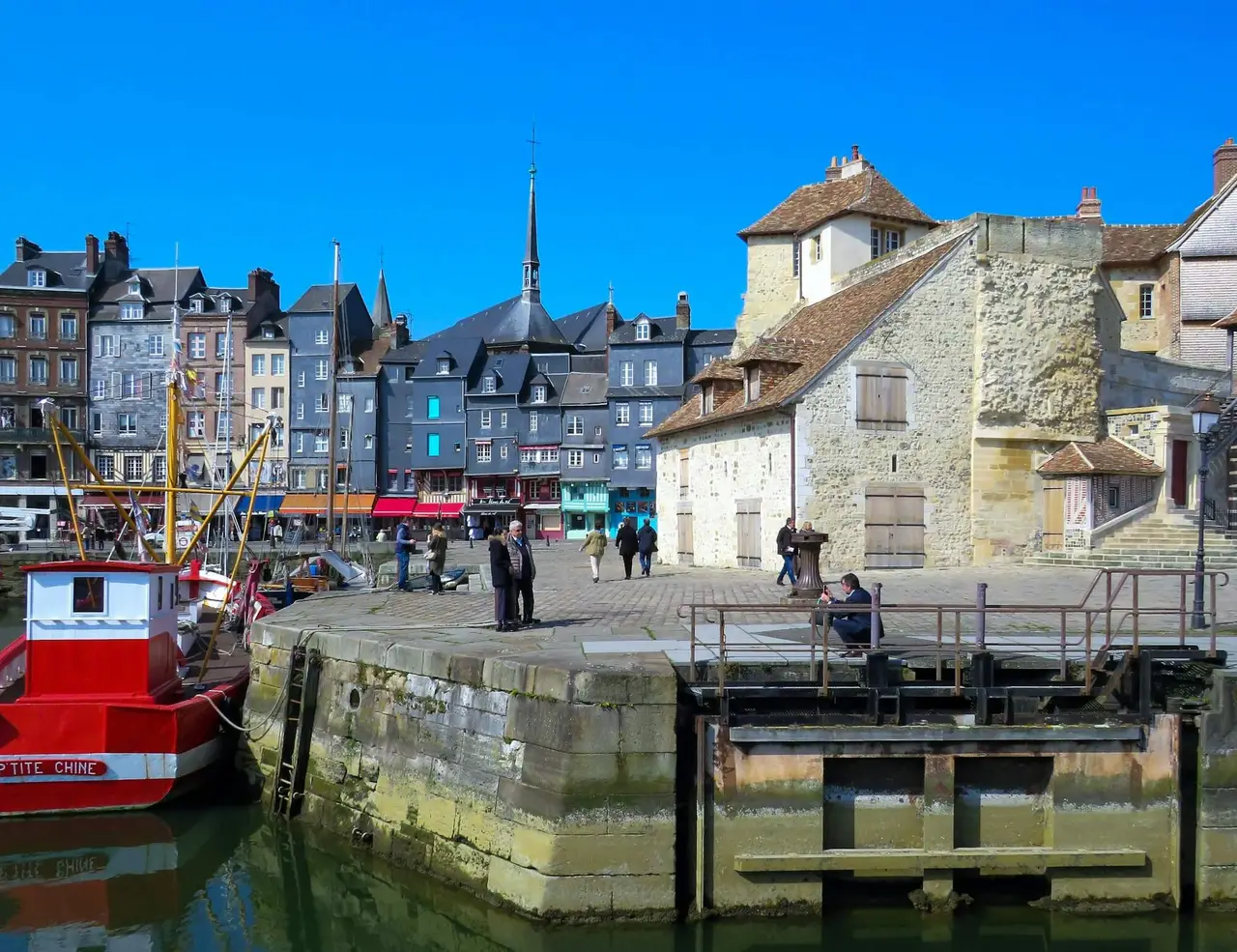
The region is filled with historic towns and ports that make ideal stops between rides. Bayeux, home of the world-famous tapestry, offers cobbled streets and Gothic architecture. Honfleur charms with its pastel-colored harbor, once painted by Monet and Boudin. Rouen dazzles with its cathedral and medieval half-timbered houses. Cycling in Normandy gives you time to explore these towns, weaving cultural immersion into every stage of the journey.
Which Are the Best Places for Cycling in Normandy?
1. Bayeux and the D-Day Beaches
Bayeux makes an excellent base for exploring the historic D-Day landing sites by bike. Routes connect Omaha, Utah, Gold, and Juno beaches, each with memorials, museums, and peaceful stretches of sand. The terrain is mostly gentle, with rolling farmland leading down to broad coastal plains. Riding here offers both a cultural journey through history and a scenic ride along Normandy’s rugged shoreline.
2. Honfleur and the Côte Fleurie
Honfleur is one of Normandy’s most picturesque towns, with its colorful harbor, cobbled streets, and artistic heritage. From here, cycling routes stretch along the Côte Fleurie, passing seaside resorts like Deauville and Trouville. The terrain is varied, with flat coastal roads interspersed with short climbs to viewpoints overlooking sandy bays. Stopping in Honfleur itself, once painted by Monet and Boudin, is as much a highlight as the cycling.
3. Pays d’Auge
The Pays d’Auge is the heart of Normandy’s apple country and a perfect destination for cycling. The landscape is a patchwork of orchards, half-timbered houses, and rolling farmland. Quiet country roads lead to small villages where you can sample cider, Calvados, and creamy cheeses. The undulating terrain offers gentle climbs that reward riders with sweeping rural views, making this one of Normandy’s most authentic cycling experiences.
4. Mont Saint-Michel
Few rides are as iconic as the approach to Mont Saint-Michel. Following canal paths and quiet lanes, cyclists watch as the abbey slowly rises out of the tidal sands, creating one of the most dramatic arrivals in Europe. The route is largely flat and car-free, making it accessible to all levels. Whether at sunrise or sunset, cycling to Mont Saint-Michel is a journey that blends history, spirituality, and unforgettable scenery.
5. Caen and the Orne Valley
Caen is a lively hub and gateway to cycling in the Orne Valley. Routes here follow the Orne River south through green countryside, stone villages, and shaded canal paths. The terrain is mostly flat with occasional gentle climbs, making it perfect for relaxed day rides. Along the way, riders can visit memorials in Caen, sample local specialties, and enjoy the tranquil landscapes that define inland Normandy.
6. Étretat and the Alabaster Coast
On Normandy’s northern edge, the Alabaster Coast is a striking destination for cyclists. Étretat’s white chalk cliffs rise dramatically from the sea, with natural arches and soaring viewpoints that reward every climb. The terrain here is more undulating than inland areas, with short but steep sections that lead to panoramic coastal views. The combination of dramatic scenery and seaside charm makes this one of the most memorable rides in Normandy.
7. Rouen and the Seine Valley
Rouen, with its Gothic cathedral and medieval half-timbered houses, is a cultural highlight of Normandy. Cycling routes along the Seine Valley pass through riverbanks, forests, and small villages steeped in history. The terrain is generally gentle, with quiet roads following the bends of the river. It is a perfect area for riders who want to combine history, architecture, and scenic countryside in one journey.
PLANNING A CYCLING HOLIDAY IN NORMANDY?
Dive into our curated normandy cycling adventures today!
When Is the Best Time for Cycling Normandy?
Best Season: May to June and September
Late spring and early summer are some of the most rewarding times for cycling in Normandy. In May and June, the countryside bursts into life with apple blossoms, wildflowers, and lush green pastures. Temperatures usually range between 16 and 23 °C (61 and 73 °F), making rides comfortable without the high summer crowds. By September, the landscapes take on autumn tones, apple harvests are in full swing, and the air turns crisp, creating an atmospheric backdrop for cycling Normandy’s towns, orchards, and coastlines.
Shoulder Season: April and October
April marks the beginning of spring in Normandy. While mornings can be cool, average temperatures rise to around 12 to 18 °C (54 to 64 °F), and the days grow longer, ideal for early-season rides. October is quieter, with fewer tourists and a softer light over the fields and beaches. Temperatures typically fall between 10 and 16 °C (50 and 61 °F). This is a wonderful time to explore historic towns such as Bayeux or Rouen, and to enjoy cycling in Normandy at a more relaxed pace.
Off-Season: November to March
Winters in Normandy are cool and damp, with average daytime temperatures of 5 to 9 °C (41 to 48 °F). Rain and shorter days make this period less suitable for cycling, and many rural accommodations operate on limited schedules. However, for travelers who enjoy quiet roads and don’t mind layering up, the stark cliffs, windswept beaches, and tranquil countryside have a beauty of their own. Cycling Normandy in the winter months is best for those seeking solitude rather than distance.
Enjoying Food in Normandy
1. Camembert
Camembert is Normandy’s most famous cheese and a staple of the region’s culinary identity. Produced in the lush pastures of the Pays d’Auge, it is creamy, rich, and best enjoyed at room temperature with crusty bread. Many cycling routes pass through villages where artisanal producers still make Camembert using traditional methods.
Tasting it straight from the source adds a rustic authenticity to the experience. The cheese even has its own museum in the village of Camembert, where visitors can learn about its origin story dating back to the late 18th century. Pairing it with a glass of cider completes a classic Normandy flavor combination.
2. Cider and Calvados
Apple orchards line the countryside of Normandy, and from them comes the region’s beloved cider and its stronger cousin, Calvados apple brandy. Crisp, refreshing, and slightly sweet, cider is the perfect post ride drink, while Calvados is often sipped slowly at dinner.
Cycling through the orchard-lined lanes of the Cider Route offers plenty of opportunities to stop for tastings and learn about this centuries-old tradition. Normandy’s ciders are often classified as doux (sweet) or brut (dry), giving plenty of variety to explore. Calvados has been produced under strict AOC rules for decades, ensuring that every sip reflects the region’s heritage.
3. Galettes and Crêpes
Galettes, made from buckwheat flour, are a savory staple in Normandy. They can be filled with cheese, ham, eggs, or vegetables, and are often paired with a glass of local cider. Sweet crêpes, on the other hand, highlight Normandy’s butter, cream, and seasonal fruits.
Stopping at a crêperie during a ride is a simple but satisfying way to experience the region’s culinary comfort food. Buckwheat was introduced to Normandy in the Middle Ages and thrives in its climate, making galettes a dish with deep regional roots. Today, every town seems to have its own beloved crêperie, often serving recipes passed down through generations.
4. Moules à la Normande
Seafood is central to Normandy’s coastal cuisine, and mussels are a highlight. Moules à la Normande are prepared with cream, cider, and shallots, reflecting the region’s rich dairy and apple traditions. Served with crispy fries, they make for a hearty and flavorful meal after a day of cycling along the coast.
Towns such as Honfleur and Barfleur are especially known for their fresh mussel dishes. Normandy also hosts annual mussel festivals in seaside towns, celebrating the harvest with music, markets, and community meals. The blue mussels of Barfleur are even protected by a quality label, prized for their delicate flavor.
5. Tarte Normande
This classic dessert combines apples, Calvados, and rich cream in a pastry base. Tarte Normande embodies the essence of Normandy’s orchards and dairies, making it the perfect sweet note to end a meal. It is often found in local bakeries and markets, making it easy for cyclists to enjoy a slice alongside a coffee during a break from the road.
The tart is sometimes dusted with almonds or cinnamon, adding layers of flavor to the custard-like filling. Its simplicity and warmth make it a favorite at family tables, where recipes are often closely guarded secrets.
Discover History and Coastal Charm of Cycling Normandy
Discover the charm of cycling Normandy with routes that carry you from dramatic coastlines and apple orchards to medieval towns and iconic landmarks like Mont Saint-Michel. Cycling here allows you to connect with the region’s layered history, rich food culture, and natural beauty.
Art of Bicycle Trips, with over a decade of experience creating meaningful cycling holidays, offers carefully designed bike tours across Normandy. Enjoy the freedom of self-guided rides supported by a dedicated vehicle, handpicked accommodations, and opportunities to experience local traditions along the way. Whether pedaling past D-Day beaches, through cider orchards, or along canal paths to the sea, every moment of cycling Normandy is designed to be memorable.
READY TO CYCLE NORMANDY ?
Get started with your cycling adventure now!
Plan Your Active Adventure
Create a private trip or join a small-group departure.
