
Table of Contents
- 1. Understanding Morocco
- 2. Atlas Gravel and High-Mountain Cycling in Morocco
- 3. Why Go Cycling Morocco?
- 4. Which Are The Best Places for Cycling in Morocco
- 5. Which Are the Best Cycling Routes in Morocco?
- 6. When Is the Best Time for Cycling Morocco?
- 7. Enjoying Food in Morocco
- 8. Tradition and Craft in Morocco
- 9. Morocco Visa Requirements
- 10. Handy Info
- 11. Through The Notes
- 12. Final Thoughts
Understanding Morocco
Morocco is a country shaped by crossroads. For centuries, caravan routes carried gold and salt across the Sahara, scholars debated theology in ancient madrasas, and dynasties ruled from fortified kasbahs set against mountain backdrops. In cities like Marrakech and Fez, history is not distant. It lives in tiled courtyards, carved wooden doors, and the daily rhythm of the medina.
Beyond the imperial cities, the land rises into the vast folds of the Atlas Mountains. Snow-tipped peaks give way to high plateaus, palm-lined valleys, and deep red gorges. Traditional Berber villages remain woven into these landscapes, their lives shaped by altitude, agriculture, and community.
Cycling in Morocco reveals this diversity at a human pace. A ride can begin among the energy of a historic city and unfold into long mountain roads and quiet desert horizons. Cycling Morocco is not only about distance or elevation. It is about moving through layers of culture and landscape that feel both dramatic and deeply rooted.
Topography
Morocco’s terrain is defined by scale. The vast sweep of the Atlas Mountains stretches diagonally across the country, forming a dramatic barrier between the Atlantic coast and the Sahara. Within this system, the High Atlas rises highest, with peaks exceeding 4,000 metres and cycling passes often reaching between 2,000 and 2,600 metres. Roads here climb steadily through switchbacks and exposed plateaus, offering long ascents and wide-open views.
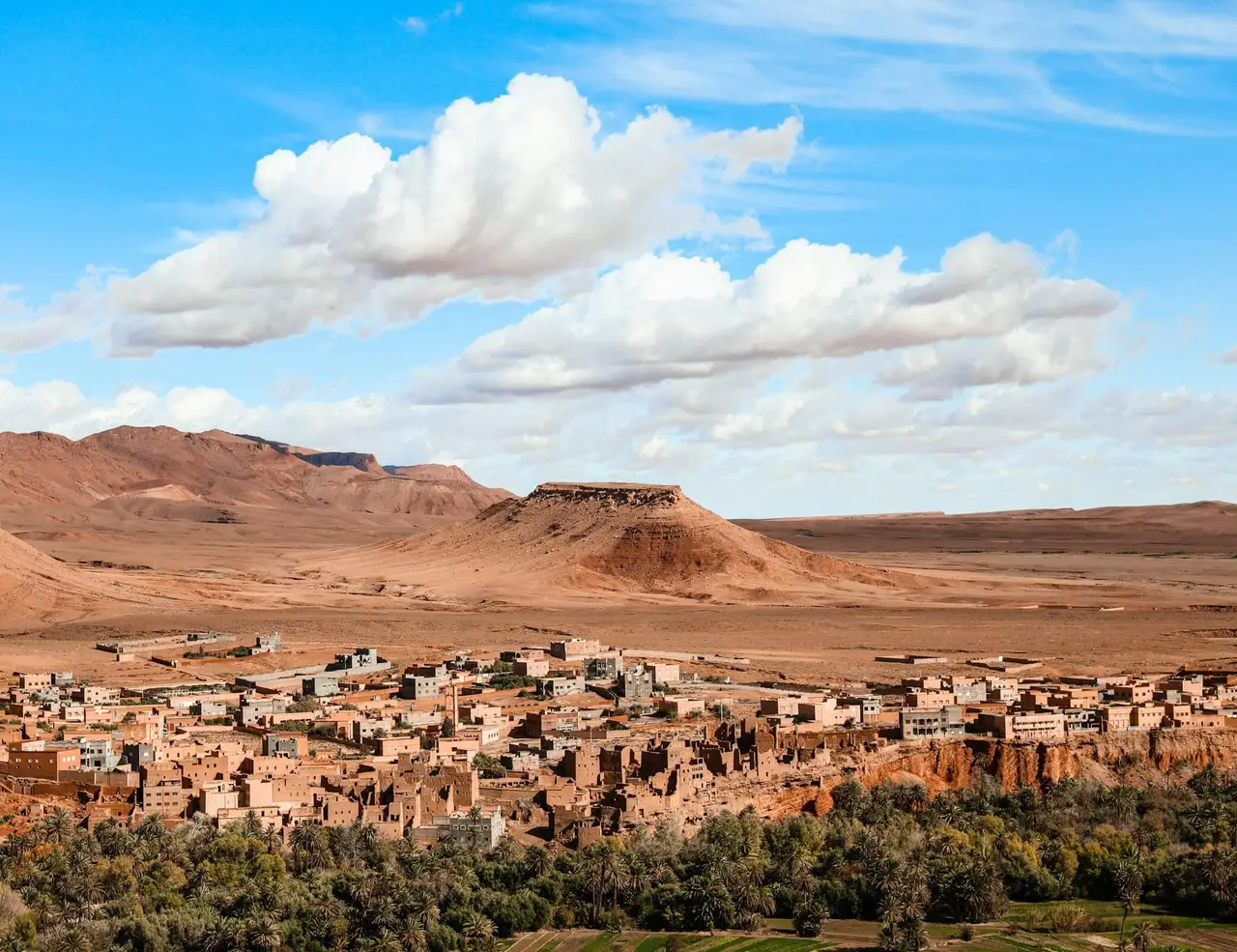
South of the mountains, the landscape shifts into arid valleys and sculpted canyon systems. Routes through Dades Gorge and Todra Gorge trace winding ribbons of tarmac beneath towering red cliffs. Further west, high desert plains and fertile pockets such as the Valley of Roses add contrast with palm groves and seasonal blooms.
This topography creates real variety. Smooth mountain highways deliver sustained climbs suited to strong road riders, while quieter backroads and gravel tracks lead deeper into remote Berber villages. The gradients are rarely extreme but often persistent, making cycling in Morocco best suited to riders comfortable with elevation gain and changing terrain. The reward is a sense of space and drama that few landscapes match.
Climate
Morocco’s climate varies significantly by elevation and region, which makes timing important when planning cycling in Morocco. Broadly, the country enjoys abundant sunshine and dry air, but temperatures shift dramatically between mountain passes and desert valleys.
Spring, from March to May, is one of the best times for cycling Morocco. Daytime temperatures typically range between 18 and 28 °C (64 to 82 °F) in most riding regions. The High Atlas remains cool at altitude, valleys begin to bloom, and conditions are generally stable. Autumn, from September to November, offers similarly comfortable temperatures and clear skies, making it another prime season for both road and gravel riding.
Summer can be intense, particularly in lower elevations and desert-facing valleys where temperatures often exceed 35 °C (95 °F). In contrast, higher routes in the High Atlas remain cooler and more manageable, though climbs can still feel demanding under strong sun. Winter is mild in cities and lower plains, averaging 12 to 20 °C (54 to 68 °F), but high passes may experience cold winds and occasional snowfall.
The most comfortable window for cycling in Morocco falls in spring and autumn, when long daylight hours, moderate temperatures, and clear mountain visibility create ideal riding conditions.
Flora and Fauna
The natural landscapes encountered while cycling in Morocco shift as dramatically as the terrain itself. In lower valleys and oases, date palms and olive trees cluster around irrigation channels, creating pockets of green against otherwise arid surroundings. In western regions, argan trees dot dry hillsides, their twisted branches adapted to harsh sun and sparse rainfall. Along cultivated plains, fields of citrus, figs, and pomegranates support rural communities and weekly markets.
Spring transforms many of these landscapes. Almond trees bloom pale pink across mountain slopes, and in places like the Valley of Roses, fields briefly flush with color during the annual rose harvest. Higher elevations in the Atlas Mountains support juniper forests, wild thyme, and hardy shrubs that cling to rocky ground shaped by wind and time.
Wildlife sightings tend to be subtle rather than dramatic, but they add quiet interest to long riding days. Barbary macaques inhabit parts of the Middle Atlas, while mountain goats navigate steep slopes with ease. Raptors such as eagles and kestrels circle above canyon systems, and small desert birds move quickly between scrub and stone. In remote stretches, the sense of ecological adaptation is striking. Every plant and animal here has evolved to thrive in extremes of heat, altitude, and limited water.
Economy
Morocco’s economy reflects its geography. Agriculture remains central, particularly in fertile valleys and irrigated plains where olives, citrus fruits, dates, almonds, and grains are cultivated. In mountain regions, terraced farming supports small communities, while seasonal harvests shape village life. In areas such as the Valley of Roses, annual blooms are not only beautiful but economically important, supplying rosewater and cosmetic industries.
Tourism plays a significant role, especially in cities like Marrakech and Fez, where historic medinas, riads, and cultural heritage attract visitors year-round. Beyond the cities, rural tourism has grown steadily, with mountain guesthouses and locally run lodges offering more intimate stays. Cycling in Morocco often intersects with these smaller economies, as routes pass through villages where hospitality, handicrafts, and local cuisine remain part of daily life.
Traditional crafts continue to define Morocco’s identity. Leather tanneries in Fez, handwoven carpets in Berber communities, intricate zellige tilework, and metalwork in city souks are not merely souvenirs but livelihoods sustained over generations. In coastal areas, fishing contributes to regional markets and cuisine, while urban centers such as Casablanca anchor finance and industry.
This economic landscape adds depth to the journey. Roads connect not only dramatic terrain but also communities shaped by agriculture, craftsmanship, and trade. The experience becomes more than a physical challenge. It becomes an encounter with a living, working country where tradition and modernity coexist.
DREAMING OF CYCLING IN MOROCCO ?
Explore our amazing bike tours in Morocco now !
Atlas Gravel and High-Mountain Cycling in Morocco
Morocco’s High Atlas delivers scale, solitude, and sustained elevation in a way few mountain regions do. The High Atlas forms the backbone of this terrain, with long mountain roads climbing steadily toward windswept plateaus and remote passes often exceeding 2,000 metres. The gradients are rarely sharp and punchy. Instead, they stretch patiently upward, demanding rhythm and endurance.
Gravel adds another layer of immersion. Quiet backroads and mixed-surface tracks branch away from main passes, leading into Berber villages built from earth-toned stone and clay. Traffic thins as elevation increases, and the landscape opens into wide horizons of rock, scrub, and sky. The experience feels expansive and unhurried, shaped more by geography than by infrastructure.
Canyon systems such as Dades Gorge and the sculpted formations near Monkey Fingers Canyon introduce technical variety. Winding roads trace the base of towering red cliffs, combining smooth tarmac with occasional rougher stretches. Climbs are rewarded with panoramic views across valleys carved by wind and time.
This terrain suits strong intermediate and experienced cyclists comfortable with sustained elevation gain. It is less about speed and more about commitment to the climb, settling into the quiet of high country roads, and descending into villages where tea is poured slowly and life moves at the pace of the mountains.
Why Go Cycling Morocco?
1. Imperial Cities at the Start and Finish
Few cycling destinations begin and end in cities as culturally rich as Marrakech and Fez. The experience of cycling in Morocco often feels framed by these historic centres, where labyrinthine medinas, tiled courtyards, and centuries-old universities create a powerful sense of continuity. Starting a journey amid the energy of souks and finishing it beneath carved cedar ceilings adds depth that extends beyond the road. The contrast between urban intensity and open landscapes makes each return to the city feel earned.
2. Canyon Roads and Desert Horizons
Southern Morocco unfolds in vast valleys and sculpted rock formations that feel almost cinematic. Routes through Todra Gorge reveal sheer canyon walls that rise dramatically on either side of the road, while the approach to Dades Gorge delivers sweeping switchbacks and expansive views. Further along, formations near Monkey Fingers Canyon showcase wind-carved stone in striking shapes. These landscapes create cycling experiences defined by scale and light, where long stretches of road meet wide desert skies.
3. Berber Villages and Living Traditions
Rural Morocco offers a quieter kind of richness. Roads pass through Berber villages where mud-brick homes blend into the surrounding hillsides and daily routines revolve around farming, markets, and shared meals. Encounters are simple but memorable, from roadside greetings to mint tea served in small guesthouses. Cycling here reveals a country where tradition remains visible and hospitality feels genuine rather than staged.
4. Kasbahs and Valley Routes
Historic fortresses and fertile valleys add architectural and agricultural texture to the journey. The route past Kasbah Telouet, once part of an important trade corridor, offers a glimpse into Morocco’s layered past. In the Valley of Roses, seasonal blooms soften the arid surroundings and support local livelihoods tied to rosewater production. These stretches combine gentle gradients with cultural landmarks, creating rides that balance effort with discovery.
These elements make cycling in Morocco more than a physical challenge. It becomes a journey through history, geology, and living culture, where each day connects landscape with story.
Which Are The Best Places for Cycling in Morocco
Marrakech and the Atlas Foothills
The region surrounding Marrakech offers a compelling introduction to cycling in Morocco. Just beyond the city’s historic medina, the landscape opens into wide plains framed by distant mountain silhouettes. Quiet rural roads pass olive groves, small farms, and traditional villages before gradually rising toward the foothills. The gradients here are manageable, making the area well suited to riders easing into Morocco’s terrain while still enjoying expansive views and cultural immersion.
Dades and Todra Valleys
Few regions combine geological drama and rideable roads as effectively as the valleys shaped by Dades Gorge and Todra Gorge. Towering red cliffs frame winding canyon routes, while switchbacks carve elegant lines into the mountainsides. The scenery shifts between narrow rock corridors and broader desert plateaus, creating constant visual interest. These valleys deliver a mix of steady climbs and flowing descents, with light traffic and unforgettable panoramas.
Fez and the Middle Atlas
The area around Fez provides a different atmosphere. Rolling hills, cedar forests, and agricultural plains define the landscape as it transitions toward the Middle Atlas. Roads here feel quieter and more pastoral, offering long stretches through farmland and small towns. The region balances moderate elevation changes with cultural depth, making it appealing for riders who value rhythm and scenery over extreme gradients.
The Valley of Roses and Kasbah Routes
Routes through the Valley of Roses combine gentle terrain with strong cultural identity. During spring, rose fields add subtle color to otherwise arid surroundings, while small cooperatives produce rosewater and local products. Nearby, the road past Kasbah Telouet offers historic context, tracing corridors once linked to trans-Saharan trade. These areas blend manageable climbs with architectural landmarks and agricultural life.
Anti-Atlas and Southern Plateaus
For those drawn to remote horizons, the Anti-Atlas and southern plateaus offer wide, open roads and stark beauty. The terrain feels less vertical than northern mountain regions but equally dramatic, with sweeping views and minimal traffic. Here, cycling in Morocco becomes about space and silence, where long straight stretches meet distant ridgelines and traditional villages appear like mirages against the landscape.
Together, these regions reveal the geographic range that defines Morocco as a cycling destination. From foothills and forested uplands to canyon valleys and desert plateaus, each area brings a distinct character to the journey.
Which Are the Best Cycling Routes in Morocco?
1. Marrakech to the Atlas Passes
The route climbing out of Marrakech toward the Tizi n’Tichka corridor is one of the most iconic road cycling experiences in Morocco. The ascent builds gradually, leaving behind palm groves and fertile plains before rising into exposed mountain curves. Long, sweeping bends reveal valleys carved by centuries of trade movement, and roadside villages appear in earthy tones that blend into the surrounding slopes.
The road surface is generally smooth and well maintained, making it popular with endurance road cyclists. Elevation gains are sustained rather than abrupt, rewarding patience and rhythm. Views expand dramatically as altitude increases, and clear days provide visibility across layered ridgelines. It is a route defined by progression, where each kilometre reveals a broader horizon.
2. Dades Gorge Switchbacks
The climb through Dades Gorge is visually unmistakable. A series of tight switchbacks carve into red canyon walls, forming one of the most photographed cycling roads in North Africa. The ascent is steady but manageable, with gradients that allow strong intermediate riders to maintain a consistent pace.
As the road rises, the valley floor recedes and sculpted rock formations take over the landscape. Light shifts constantly across the canyon faces, creating a dynamic backdrop throughout the climb. Descents are smooth and flowing, offering a satisfying counterpoint to the ascent. The route combines geological drama with rideable gradients, making it one of the standout cycling corridors in Morocco.
3. Todra Gorge and Desert Valley Roads
Further east, the approach to Todra Gorge offers a contrasting atmosphere. The canyon narrows dramatically, with sheer rock walls rising vertically above the road. Riding here feels enclosed and intimate compared to the openness of the Atlas passes. Beyond the gorge, the landscape opens into desert valleys punctuated by date palms and irrigated fields. Roads stretch long and straight toward distant ridgelines, creating a sense of scale and quiet. This combination of canyon riding and expansive valley roads makes the region especially rewarding for multi-day journeys.
4. Valley of Roses to Kasbah Telouet Corridor
The route linking the Valley of Roses with the historic Kasbah Telouet traces landscapes shaped by both agriculture and trade. In spring, rose fields soften the terrain with subtle colour, while fortified kasbahs punctuate the horizon. Gradients here are varied but generally moderate, making the route suitable for sustained touring. Riders move between cultivated valleys and high desert plateaus, encountering small villages and roadside cooperatives along the way. The experience balances cultural heritage with approachable cycling terrain.
5. Fez to the Middle Atlas Cedar Forests
Routes extending from Fez into the Middle Atlas offer a cooler, greener riding environment. Rolling hills and cedar forests replace arid canyon systems, and roads wind through farmland and pastoral settlements. Elevation gain is present but less relentless than in the High Atlas, making the area appealing for riders seeking rhythm rather than sustained climbing. Wildlife sightings, particularly Barbary macaques in forested areas, add a subtle layer of interest. The route blends cultural depth with gentler mountain scenery.
6. Anti-Atlas Plateau Roads
In southern Morocco, the Anti-Atlas region presents wide, open roads that stretch across stark plateaus. The terrain is less vertical than central mountain systems but equally dramatic in its scale. Long straight sections are broken by occasional ridgelines and traditional villages built from stone and clay.
Traffic is minimal, and the sense of space feels almost meditative. The Anti-Atlas routes are well suited to experienced tourers comfortable with exposure to sun and wind, rewarding them with quiet horizons and uninterrupted riding.
When Is the Best Time for Cycling Morocco?
Best Season: March to May and September to November
Spring and autumn are widely considered the ideal windows for cycling in Morocco. Between March and May, daytime temperatures across most riding regions range from 18 to 28 °C (64 to 82 °F). Mountain passes are generally clear of snow, valleys begin to bloom, and desert-facing landscapes feel warm but manageable. Light is crisp, visibility is excellent, and long daylight hours allow for steady riding without extreme heat.
September to November offers similarly comfortable conditions. Temperatures ease after the summer peak, typically sitting between 20 and 30 °C (68 to 86 °F) depending on elevation. Harvest season brings activity to rural areas, markets feel lively, and the golden tones of late sun add warmth to canyon and valley landscapes. These months often provide the most balanced mix of climate, scenery, and road conditions for both road and mixed-surface routes.
Shoulder Months: February and Early June
Late winter and early summer can still be rewarding, with some caveats. February remains mild in cities and lower elevations, averaging 12 to 20 °C (54 to 68 °F), though higher passes may be cold and occasionally windy. Early June is warmer, particularly in southern valleys, but higher routes remain more comfortable. Riders should plan for strong sun exposure and carry adequate hydration.
These months offer quieter roads and fewer visitors in historic centres such as Marrakech and Fez, allowing for a more relaxed cultural experience alongside cycling.
Off-Season: July, August, and Mid-Winter
July and August bring intense heat to lower regions, often exceeding 35 °C (95 °F) in desert-facing valleys. While early morning starts and higher elevations can mitigate this, sustained climbing in strong sun can feel demanding. Winter months, particularly December and January, are cooler and generally rideable in lower plains, with temperatures between 10 and 18 °C (50 to 64 °F). However, high mountain routes may experience snow, icy winds, or temporary closures.
For most riders, the clearest and most comfortable period for cycling in Morocco remains spring and autumn, when moderate temperatures and expansive mountain visibility create ideal conditions for sustained, immersive journeys.
PLANNING A CYCLING HOLIDAY IN MOROCCO?
Dive into our curated Morocco hiking adventures today!
Enjoying Food in Morocco
Long days spent cycling in Morocco are matched by meals that feel deeply rooted in landscape and history. Moroccan cuisine draws from Berber, Arab, Andalusian, and North African influences, shaped by trade routes that once connected sub-Saharan Africa to Mediterranean ports. Spices such as cumin, coriander, saffron, and cinnamon are used with restraint rather than heat, creating dishes that are aromatic, layered, and nourishing. After hours of steady climbing or long valley roads, these meals feel restorative in both body and spirit.
Tagine
The tagine is Morocco’s most iconic dish, named after the conical clay vessel in which it is prepared. Slow-cooked over low heat, combinations vary by region. Chicken with preserved lemon and green olives offers brightness and salt, while lamb with prunes and toasted almonds leans gently sweet. In mountain villages, vegetable tagines highlight carrots, zucchini, potatoes, and seasonal greens grown in terraced fields. The slow simmering creates tender textures and concentrated sauces that are perfect for scooping with fresh bread after a long ride.
Couscous
Couscous is traditionally prepared for Friday gatherings, but it appears regularly on restaurant and guesthouse tables. Steamed semolina grains are topped with a generous ladle of vegetables, chickpeas, and slow-cooked meat. The broth is fragrant yet light, making it satisfying without feeling heavy. In rural settings, the dish is often shared communally, reinforcing the sense of hospitality that defines many cycling experiences in Morocco.
Harira
Harira is a tomato-based soup enriched with lentils, chickpeas, herbs, and sometimes small pieces of meat. It is especially associated with Ramadan, when it is used to break the fast, but it remains widely available throughout the year. Balanced with lemon and fresh coriander, it provides warmth on cooler evenings and steady energy after high-altitude efforts.
Pastilla
Originating in imperial cities such as Fez, pastilla reflects Morocco’s refined culinary heritage. Layers of delicate pastry encase spiced meat, often pigeon or chicken, mixed with almonds and subtle sweetness from cinnamon and sugar. The contrast of savoury and sweet captures the complexity of Moroccan flavour traditions and offers a memorable meal in historic riads and city restaurants.
Dates and Almonds
In valley towns and desert-edge communities, dates and almonds are more than snacks. They are symbols of hospitality. Naturally rich in energy, they are often served with tea upon arrival and make practical fuel during long cycling days. Date palms thrive in irrigated oases, while almonds grow in mountain foothills, tying these simple foods directly to the surrounding terrain.
Mint Tea
Mint tea is woven into daily life across Morocco. Green tea leaves are steeped with fresh mint and generous sugar, then poured from height into small glasses to aerate and cool the liquid. The ritual signals welcome and conversation. Whether enjoyed in a bustling riad in Marrakech or a quiet guesthouse after descending from mountain roads, mint tea marks the close of a day and the beginning of shared stories.
Together, these foods create a culinary landscape that mirrors the physical one. Cycling Morocco connects riders not only to valleys, canyons, and villages, but also to kitchens where recipes have been passed down for generations. Each meal becomes part of the journey, grounding effort in flavour and tradition.
Tradition and Craft in Morocco
Morocco’s cultural identity is deeply rooted in craftsmanship, architecture, and ritual practices that remain woven into everyday life. Across cities and mountain villages, tradition is not preserved as nostalgia. It is practiced, refined, and passed down through generations. From geometric tilework to handwoven textiles, the country’s artistic vocabulary reflects centuries of exchange between Berber, Arab, Andalusian, and African influences.
In cities such as Fez, craft traditions remain highly visible. The ancient tanneries continue to produce leather using methods that date back centuries, their stone vats arranged in rhythmic patterns across the medina. Artisans work in small workshops shaping brass lanterns, carving cedar wood, and assembling intricate zellige tiles that decorate mosques, riads, and fountains. These crafts are not mass-produced symbols. They are skills sustained through apprenticeship and family lineage.
In Marrakech, craftsmanship intersects with design and global influence. The city’s courtyards and riads showcase carved plasterwork, patterned mosaics, and painted ceilings that reflect Morocco’s architectural sophistication. The distinct shade known as Majorelle blue, made famous in the twentieth century, continues to shape the city’s visual identity. Markets overflow with woven baskets, hand-dyed textiles, and carpets whose patterns tell regional stories tied to specific tribes and landscapes.
Beyond the cities, Berber communities maintain traditions of carpet weaving, pottery, and silver jewellery making. Each rug carries symbols representing fertility, protection, or landscape features, turning everyday objects into cultural narratives. Weekly souks remain central gathering points, where trade, conversation, and craft converge.
For those cycling in Morocco, these traditions add depth to the journey. Roads connect not only valleys and passes but also living workshops and heritage practices that define the country’s character. The experience becomes richer when landscapes are understood alongside the crafts shaped by the same mountains, clay, and desert light.
Morocco Visa Requirements
Morocco offers relatively straightforward entry procedures for many international travellers, making it accessible for tourism and cycling holidays. Citizens of countries such as the United States, Canada, the United Kingdom, Australia, New Zealand, and most European Union nations can typically enter Morocco without obtaining a visa in advance for short stays. Visa-free entry is generally granted for up to 90 days for tourism purposes, including activities such as cycling in Morocco.
Travellers from countries that do require a visa must apply in advance through a Moroccan embassy or consulate in their country of residence. Morocco does not typically issue tourist visas on arrival, so advance planning is essential. Processing times and documentation requirements vary by nationality, and applicants may need to provide proof of accommodation, onward travel, and sufficient financial means for their stay.
Passports should be valid for at least six months beyond the intended date of entry. Visitors may be asked to show a return or onward ticket upon arrival, particularly if entering on a visa exemption. While border procedures are generally efficient at major airports such as those serving Marrakech and Casablanca, travellers should ensure all documentation is complete before departure.
Tourists visiting for recreational purposes, including guided or self-guided cycling tours, do not require additional permits beyond standard entry clearance. However, immigration regulations can change, and entry rules differ by nationality. Travellers are strongly advised to consult official Moroccan government or embassy sources before finalising plans, particularly if combining cycling in Morocco with onward travel to other countries in North Africa or Europe.
Handy Info
Currency
Morocco’s official currency is the Moroccan Dirham (MAD). The dirham is a closed currency, which means it cannot be legally imported or exported in large amounts, so most travelers exchange money upon arrival. Currency exchange counters are widely available at international airports and in major cities such as Marrakech and Casablanca.
Card payments are accepted in most hotels, larger restaurants, and established tourism businesses. Visa and Mastercard are widely used, though American Express is not universally accepted. In smaller towns and rural areas, especially when cycling in Morocco through mountain villages or desert valleys, cash remains essential. Local cafés, roadside shops, market stalls, and small guesthouses often operate on a cash-only basis.
ATMs are readily available in cities and regional centres, and withdrawals are generally straightforward. However, machines may be limited in remote areas, so it is wise to withdraw sufficient cash before heading into high mountain or canyon regions. Carrying small denominations can also be useful for tipping, market purchases, and local services.
Transport
Morocco’s transport network connects major cities efficiently while allowing access to more remote cycling regions. International flights operate regularly into hubs such as Marrakech, Casablanca, Fez, and Agadir, making entry straightforward from Europe, North America, and the Middle East.
The national rail system links Casablanca, Rabat, Tangier, and Fez with reliable service and comfortable carriages. High-speed trains operate between Tangier and Casablanca, offering a smooth option for longer internal transfers. However, trains do not extend into many southern or mountain regions, so cyclists often rely on private transfers or vehicle support when accessing routes in the Atlas or canyon systems.
Intercity buses run between most towns and are affordable, though bike transport policies vary by operator. Confirming in advance is recommended. Car rentals are widely available and provide flexibility for riders planning multi-region trips or self-guided extensions.
Within cities, taxis are common and inexpensive. For cycling-focused itineraries, especially in remote terrain, guided logistics or pre-arranged support vehicles simplify transitions between stages.
Language
Morocco’s linguistic landscape reflects its layered history and geographic diversity. Modern Standard Arabic and Amazigh (Berber languages) are official languages, while Moroccan Arabic, known as Darija, is widely spoken in daily life. French is commonly used in business, government, and tourism, and road signage often appears in both Arabic and French.
In northern regions and some urban areas, Spanish is also spoken, reflecting historical ties across the Strait of Gibraltar. English is increasingly understood in tourism spaces, particularly in cities and larger hotels, though it may be limited in rural villages.
For those cycling in Morocco, learning a few basic greetings can enhance interactions. Phrases such as “salaam alaikum” for hello and “shukran” for thank you are warmly received. Language here is more than communication; it is an expression of hospitality and cultural continuity. Place names often carry meanings rooted in geography and tribal identity, adding context to the landscapes riders pass through.
Culture and Religion
Morocco is predominantly Muslim, and Islam shapes daily rhythms, architecture, and social customs. The call to prayer is heard five times a day from mosques across cities and villages, creating a steady cadence that anchors community life. Religious practice coexists with modern urban living, and visitors are generally welcomed with openness and warmth.
Dress is modest in many areas, especially outside major cities. While tourists are not expected to adopt local attire, respectful clothing is appreciated, particularly in rural communities. During Ramadan, fasting takes place from sunrise to sunset, and some cafés or restaurants may operate on reduced hours. Travelers are not required to fast, but being mindful of public eating during daylight hours is courteous.
Morocco’s cultural fabric extends beyond religion. Hospitality is central, and sharing tea or conversation is common. Weekly markets, known as souks, remain important gathering points for trade and social exchange. For cyclists, these encounters often become memorable highlights, adding depth to the physical journey.
Appliances and Devices
Morocco uses plug types C and E, the standard two-round-pin European style. Electricity operates at 220 volts and 50 Hz. Travelers from North America and some parts of Asia will require a universal adapter. Most modern electronics are dual voltage, but checking device compatibility before travel is advisable.
Power supply is generally stable in cities and established accommodations. In remote mountain guesthouses or rural lodges, electricity may occasionally fluctuate, so carrying a small power bank is practical for charging GPS devices, phones, and lights during multi-day cycling trips.
Wi-Fi is widely available in hotels, riads, and cafés in urban centres. Connectivity can be limited in remote valleys or high mountain areas, making offline maps a useful backup.
Mobile Coverage
Mobile coverage in Morocco is strong in cities, towns, and along major highways, with widespread 4G service and expanding 5G networks in urban areas. Providers such as Maroc Telecom, Orange Morocco, and Inwi offer prepaid SIM cards that can be purchased at airports or local shops.
Coverage becomes less consistent in remote mountain regions and deep canyon systems, where signal may drop entirely for stretches of road. Riders exploring less populated areas should download offline navigation maps and inform someone of planned routes when traveling independently.
In most established accommodations, Wi-Fi access is available. Combined with a local SIM card, staying connected while cycling Morocco is generally straightforward, even when routes extend beyond main population centres.
Time Zone
Morocco operates on Western European Time (WET), which is UTC+0, and typically observes daylight saving adjustments except during Ramadan, when the clock may shift temporarily. This creates long daylight hours in spring and autumn, particularly favorable seasons for cycling in Morocco.
Extended daylight during peak riding months allows flexibility in planning climbs, scenic stops, and cultural visits. Early morning starts are common during warmer months to avoid midday heat, while cooler seasons allow for more relaxed daily pacing.
For travelers arriving from North America, Asia, or Australasia, the time difference may require brief adjustment. Once settled, the rhythm of light and temperature aligns naturally with the steady cadence of multi-day cycling journeys.
Through The Notes
Read
Begin with The Caliph’s House by Tahir Shah, a memoir that captures the texture of Moroccan domestic life with warmth and humour. For historical depth, A History of Modern Morocco by Susan Gilson Miller provides a clear overview of the country’s political and cultural evolution. Elias Canetti’s The Voices of Marrakesh offers impressionistic snapshots of medina life, revealing the rhythms and characters that define urban Morocco.
For fiction rooted in atmosphere, Paul Bowles’ The Sheltering Sky evokes the stark emotional pull of desert landscapes, while Tahar Ben Jelloun’s novels explore identity and social change with poetic intensity. Reading before cycling in Morocco adds context to the kasbahs, caravan routes, and mountain villages you encounter along the road.
Listen
Morocco’s soundscape is layered and regionally distinct. Gnawa music, with its hypnotic rhythms and deep percussion, reflects spiritual traditions rooted in sub-Saharan Africa. Andalusian classical music, often heard in Fez, carries intricate melodies shaped by centuries of cultural exchange across the Mediterranean.
Contemporary Moroccan artists blend traditional instruments with modern styles, creating a dynamic urban soundtrack in cities such as Marrakech and Casablanca. In rural areas, the sound of frame drums, wedding celebrations, or a simple radio playing Arabic pop often drifts across valleys at dusk, grounding each ride in lived daily life.
Watch
Watch Casablanca for a romanticised but enduring cinematic connection to Morocco’s international past. The Sheltering Sky offers a more austere portrayal of desert vastness and emotional isolation. For a contemporary and culturally grounded perspective, The Unknown Saint reveals humour and social nuance within rural Moroccan settings.
Documentaries focusing on the Sahara, the Atlas Mountains, or traditional crafts deepen understanding of the environments riders pass through. Visual storytelling here often centres on landscape and human resilience, themes that resonate strongly when cycling Morocco’s varied terrain.
Eat
Seek out local bakeries for fresh khobz, Morocco’s round bread that accompanies nearly every meal. Street stalls in Fezserve spiced grilled meats and savoury pastries, while markets in Marrakech offer olives, dried fruits, and fragrant spices in vivid displays.
In mountain regions, seasonal produce shapes menus, from almonds and figs to slow-cooked vegetable stews. Coastal towns highlight grilled fish and seafood seasoned simply with lemon and herbs. Eating in Morocco often unfolds slowly, with shared plates and tea extending conversations well beyond the meal itself.
Drink
Mint tea remains the defining ritual, poured high to aerate and cool the liquid before serving. Freshly squeezed orange juice is common in city squares, especially in the evenings. In some regions, cafés serve spiced coffee infused with cardamom or cinnamon, offering a warming alternative after cooler rides.
While Morocco is not primarily known for alcohol, select vineyards near Meknes and the foothills of the Atlas produce wines influenced by Mediterranean climates. Those who partake will find small but growing boutique producers shaping a quiet wine culture.
Learn
Understanding the role of Amazigh heritage provides essential context for Morocco’s cultural identity. Many place names, weaving patterns, and architectural styles stem from Amazigh traditions that predate Arab influence. Learning basic greetings such as “salaam alaikum” fosters respectful interactions, particularly in rural communities.
Islam shapes social rhythms, architecture, and public life, and recognising the significance of Friday prayers or Ramadan observance enhances cultural sensitivity. Morocco’s history as a crossroads between Africa and Europe also explains its architectural forms, music, and cuisine. Cycling here becomes richer when viewed through this layered historical lens.
Experience
Visit the tanneries of Fez to witness centuries-old craft techniques still in operation. Wander through the blue-washed streets of Chefchaouen before heading toward quieter roads. Explore mountain villages where daily routines revolve around farming, livestock, and market days.
Pause at a roadside café after a climb, watch late-afternoon light settle across canyon walls, or share tea with a guesthouse host in a small valley town. Morocco reveals itself gradually through texture, colour, and conversation. Allow time between stages to absorb not just the kilometres travelled but the cultural layers encountered along the way.
READY TO CYCLE THE MOROCCO ?
Get started with your cycling adventure now!
Final Thoughts
From the rose-scented valleys of southern Morocco to the canyon roads carved into red stone, cycling in Morocco brings a rare sense of movement across living history. Landscapes shift quickly yet feel deeply connected, from fertile palm groves and fortified kasbahs to expansive desert plateaus and cedar forests beyond Fez. Each region expresses a distinct character, shaped by altitude, light, and centuries of trade and tradition. The pace of cycling allows these contrasts to unfold gradually, turning distant mountain silhouettes and village calls to prayer into lived, memorable moments.
If you would like to discover Morocco by bike, contact us and we will help design a journey that reflects your preferred riding style and pace. Our guided experiences combine carefully planned routes, trusted local knowledge, thoughtfully selected accommodations, and reliable on-ground support so you can focus fully on the landscapes and cultural depth around you.
Electric bikes are available on select journeys, offering greater flexibility on sustained climbs and longer stages while preserving the immersive rhythm of travel. Whether you are tracing historic trade corridors, winding through canyon systems, or sharing mint tea in a mountain village, cycling Morocco invites both challenge and connection. If you are exploring further possibilities, you can also browse our full collection of cycling guides across Europe, Asia, and other global destinations to inspire your next ride.
Plan Your Active Adventure
Create a private trip or join a small-group departure.
