
Understanding Brittany
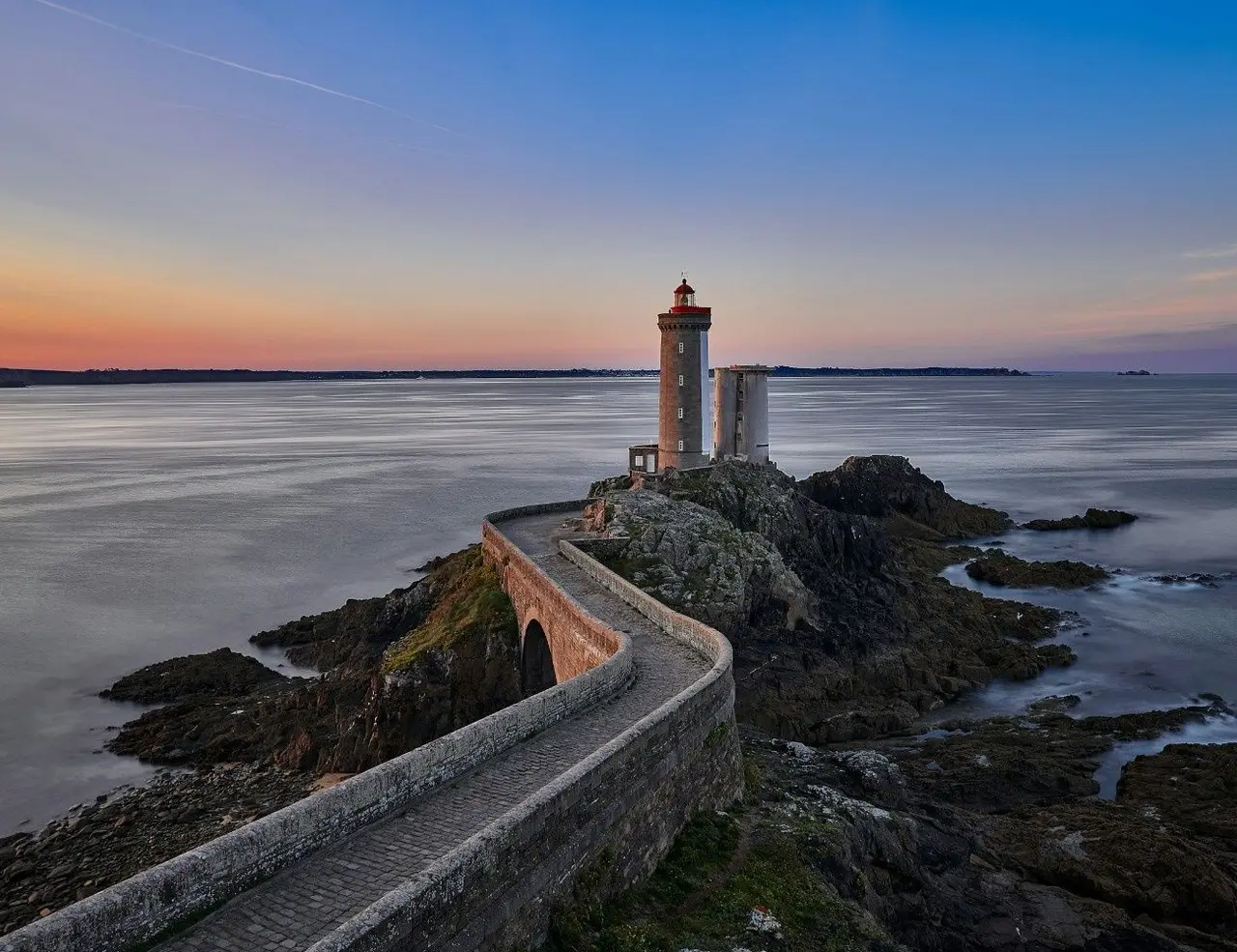
Brittany is a land where the rhythm of the tides shapes both its landscapes and its people. Jagged cliffs drop dramatically into the Atlantic, their edges softened by hidden coves and wide sandy beaches. Inland, green valleys give way to rolling farmland, dotted with stone cottages and medieval villages where time seems to slow.
The region’s proud Celtic roots remain visible in its music, festivals, and traditions, and whispers of myth and legend drift through its forests and along its coasts. From the mysterious standing stones of Carnac to the tales of King Arthur woven into the woods of Brocéliande, Brittany feels both timeless and alive.
Cycling in Brittany carries you along quiet coastal lanes scented with sea spray, past bustling fishing harbors where boats unload the day’s catch, and through rustic countryside where chapels and windmills rise from the fields. It is a place where history, folklore, and the natural world come together, offering riders a journey that is as much about atmosphere and culture as it is about the ride itself.
Topography
Brittany forms the northwestern tip of France, bordered by the English Channel to the north and the Atlantic Ocean to the west. The region is defined by its dramatic coastline, with rugged cliffs, sheltered coves, and sweeping bays that stretch for more than 1,700 kilometers. Inland, the land softens into rolling farmland, wooded valleys, and heather-covered moors, giving cyclists a constant mix of seascapes and countryside.
The Pink Granite Coast, with its striking rose-colored rock formations, is one of the most distinctive features of northern Brittany. To the south, the Gulf of Morbihan is scattered with islands and tidal inlets, offering a gentler coastal landscape. Inland routes often follow rivers and canals, such as the Nantes to Brest Canal, with flat, shaded towpaths ideal for relaxed riding. While Brittany has no towering mountains like the Alps or Pyrenees, the terrain is far from monotonous. Short, punchy climbs are common on coastal routes, where headlands rise and fall dramatically.
At the same time, large sections of dedicated greenways and cycle paths provide stress-free cycling through quiet countryside. This mix of rugged coast and tranquil interior makes cycling in Brittany both varied and rewarding.
Climate
Brittany’s climate is shaped by the Atlantic Ocean, which brings mild temperatures, fresh sea breezes, and a mix of sunshine and showers throughout the year. Summers are comfortably warm without being extreme, with average daytime highs between 20 and 25 °C (68 and 77 °F). This makes it an excellent season for long rides along the coast or through the inland countryside.
Spring and autumn are also rewarding times to visit, with cooler but pleasant temperatures ranging from 12 to 20 °C (54 to 68 °F). In April and May, wildflowers brighten the hedgerows and meadows, while September and October see golden light across the moors and vineyards, along with lively harvest festivals. These shoulder months often provide quieter cycling routes compared to the peak summer season.
Rain is a frequent companion while cycling in Brittany, though showers are typically brief and often followed by clear skies. Winds from the Atlantic can add both freshness and challenge, particularly along the exposed coastal stretches. Winters remain relatively mild, averaging 6 to 10 °C (43 to 50 °F), but shorter days and wetter weather make it the least favorable time for cycling.
The changing skies are part of Brittany’s charm: misty mornings, dramatic cloudscapes, and bursts of sunshine create an atmosphere that is as dynamic as the landscapes themselves.
Flora and Fauna
Brittany’s plant life is shaped by its maritime climate and rugged geography, offering cyclists a changing palette of coastal and inland scenery. Along the shoreline, salt-tolerant plants like sea thrift, gorse, and heather thrive on windswept cliffs, painting the headlands in bursts of pink, yellow, and purple through spring and summer.
Inland, the countryside is dotted with oak and chestnut forests, rolling pastures, and hedgerows that form part of the region’s traditional bocage farmland.
Seasonal wildflowers brighten the meadows, while apple orchards bloom in spring, giving way to the cider production that Brittany is famous for. In the moorlands and upland plateaus, bracken and heathland dominate, offering a wilder, more untamed character compared to the fertile valleys below.
Brittany’s varied habitats are equally rich in wildlife. Its long coastline is a haven for seabirds, with puffins, gannets, and cormorants common around islands and cliffs. The Gulf of Morbihan, recognized as part of a UNESCO-protected natural reserve, is particularly important for migratory birds, hosting thousands of waders and ducks each year. Along riverbanks and canals, cyclists may catch sight of kingfishers, otters, or herons. Inland forests are home to roe deer, foxes, and wild boar, while the heaths provide habitat for butterflies and smaller reptiles.
This blend of maritime reserves and inland ecosystems makes cycling Brittany a feast for nature lovers, where every ride reveals new landscapes alive with seasonal color and birdlife.
Economy
Brittany’s economy is shaped by a blend of agriculture, fishing, artisanal traditions, and tourism. Its mild, oceanic climate and fertile soils support a wide variety of crops, from grains and vegetables to the apple orchards that form the base of its famous cider production. Dairy farming is widespread across the inland countryside, and the region is also one of France’s leading producers of butter and salted caramel, both iconic to Breton cuisine.
Fishing and seafood play a central role in Brittany’s identity and economy. Coastal towns and villages depend on rich Atlantic waters for scallops, oysters, mussels, and lobster, which are served fresh in local markets and restaurants. Ports like Concarneau and Roscoff have long histories tied to the fishing industry, while modern aquaculture continues to thrive in the bays and estuaries.
Tourism is another key pillar, with visitors drawn to Brittany’s dramatic coastlines, medieval towns, and Celtic festivals. Destinations such as Saint-Malo, Dinan, and Vannes attract millions each year, while natural wonders like the Pink Granite Coast and the Gulf of Morbihan showcase the region’s landscapes.
Cycling tourism is steadily growing too, thanks to extensive greenways and routes like La Vélomaritime and the Nantes to Brest Canal.
Brittany is home to over three million people, with Rennes serving as the regional capital and economic hub. Beyond the cities, many rural communities still rely on farming, fishing, and small-scale artisanal crafts, helping preserve the region’s cultural character and strong sense of independence.
DREAMING OF CYCLING BRITTANY?
Explore our amazing bike tours in brittany now!
Why Go Cycling Brittany?
1. A Rose-Colored Coastline
Cycling in Brittany means riding along some of France’s most striking coastlines. The Pink Granite Coast dazzles with its rosy rock formations, while the Emerald Coast lives up to its name with turquoise waters and sweeping sandy bays. Inland, the terrain shifts to rolling farmland, moorland plateaus, and shaded canal paths like the Nantes to Brest Canal. Routes such as La Vélomaritime let cyclists experience both rugged cliffs and tranquil harbors in the same day, making every ride varied and memorable.
2. A Feast of Breton Flavors
Food and drink are central to the Breton experience, and cycling offers the perfect excuse to indulge. The region is famed for its buckwheat galettes filled with ham, cheese, or eggs, paired with locally made cider from centuries-old orchards. Coastal towns serve fresh oysters, mussels, and lobster straight from the Atlantic, while markets brim with crêpes, kouign-amann pastries, and buttery salted caramel treats. Stopping for a picnic with these specialties turns every ride into a gastronomic journey.
3. Medieval Towns and Celtic Heritage
Brittany is dotted with towns that carry a deep sense of history and tradition. Walled Saint-Malo recalls a past of privateers and seafarers, while Dinan’s half-timbered houses and cobbled streets feel frozen in time. Inland, riders can explore villages shaped by Celtic roots, with chapels, standing stones, and folklore tied to the land. Festivals celebrating Breton music and dance still bring this culture to life, offering cyclists an immersion in both heritage and local spirit.
4. Shores of the Morbihan
Southern Brittany’s Gulf of Morbihan is a world of its own, dotted with islands and tidal inlets that change with the rhythm of the sea. Cyclists can explore quiet roads along the coast, take short ferry rides to Île-aux-Moines or Île d’Arz, and enjoy panoramic views across sheltered waters. This blend of cycling and island-hopping adds a sense of adventure, making the Gulf one of Brittany’s most rewarding and memorable cycling destinations.
Which Are the Best Places for Cycling in Brittany?
1. Pink Granite Coast
One of Brittany’s most iconic cycling destinations, the Pink Granite Coast is known for its striking rose-colored rocks, sculpted by wind and waves into surreal shapes. The route from Perros-Guirec through Ploumanac’h and Trégastel is dotted with sandy bays, lighthouses, and fishing villages. The terrain is gently rolling, with short climbs leading to sweeping views over the Atlantic. Sunset rides here are especially unforgettable, when the granite glows in shades of orange and pink.
2. La Vélomaritime
Stretching along Brittany’s northern coastline, La Vélomaritime is part of the EuroVelo 4 route and offers one of the region’s most scenic long-distance cycling experiences. Riders pass through fortified towns like Saint-Malo, dramatic headlands, and quiet fishing harbors. The path is well-marked and alternates between coastal climbs and flatter inland stretches, giving a balanced mix of challenge and ease. Highlights include the emerald waters around Cap Fréhel and the picturesque town of Roscoff.
3. Gulf of Morbihan
In southern Brittany, the Gulf of Morbihan is a labyrinth of tidal inlets and islands that feels almost like a world apart. Cyclists can follow coastal roads that wind past oyster beds, salt marshes, and small ports, with opportunities to hop on ferries to islands like Île-aux-Moines or Île d’Arz. The terrain is moderate, with flat stretches broken by gentle rises, and the changing tides give the landscape a sense of constant movement. It’s an ideal area for relaxed rides combining culture, scenery, and fresh seafood.
4. Rennes to Mont Saint-Michel
This inland route follows quiet greenways and the Ille-et-Rance Canal, linking Brittany’s capital, Rennes, to one of France’s most iconic landmarks. The ride is peaceful and shaded, with stretches along rivers, locks, and stone villages. While Mont Saint-Michel itself is in Normandy, the approach through Breton countryside is a highlight in its own right, offering flat, leisurely cycling with a dramatic finale as the abbey rises in the distance.
5. Quiberon Peninsula
The Quiberon Peninsula extends into the Atlantic on Brittany’s southern coast, connected to the mainland by a narrow strip of land known as the tombolo. Cyclists are rewarded with views of rugged cliffs on the wild Côte Sauvage and sandy beaches on the sheltered eastern side. The loop is relatively flat and straightforward, making it accessible while still delivering dramatic seascapes. Seafood restaurants and harborside cafés provide excellent stops along the way.
6. Dinan and the Rance Valley
Dinan is one of Brittany’s most charming medieval towns, with half-timbered houses, cobbled streets, and a dramatic riverside setting. From here, cyclists can follow the Rance Valley north toward Saint-Malo, with gentle riverside paths and occasional climbs to viewpoints overlooking the water. The mix of cultural heritage and tranquil landscapes makes it a favorite route for those wanting both history and nature in a single ride.
7. Crozon Peninsula
Jutting out into the sea on Brittany’s western edge, the Crozon Peninsula is a wilder and more remote cycling destination. Its coastal roads reveal rugged cliffs, secluded coves, and panoramic viewpoints over the Atlantic. Routes here are more undulating, with frequent climbs and descents, but the reward is some of the most spectacular scenery in Brittany. Small fishing villages and hidden beaches provide atmospheric breaks along the way.
PLANNING A CYCLING HOLIDAY IN BRITTANY?
Dive into our curated brittany cycling adventures today!
When Is the Best Time for Cycling Brittany?
Best Season: May to June and September
Late spring and early autumn are the best times to cycle in Brittany. From May to June, the countryside bursts with wildflowers, apple orchards bloom, and the weather is comfortably mild, usually ranging between 15 and 22 °C (59 to 72 °F). Coastal routes are especially pleasant at this time, with long daylight hours and fresh sea breezes.
September offers equally good conditions, with warm days, cooler evenings, and fewer tourists than in the peak summer months. The light takes on a golden quality, moorlands and heaths glow with late-season color, and cycling routes feel quieter and more relaxed. This is also the season of local harvest festivals, making it a culturally rich time to visit.
Shoulder Season: April and October
April marks the start of the cycling season, with temperatures slowly rising and landscapes greening after winter. While the weather can still be changeable, riders are rewarded with peaceful paths and the first signs of spring along the canals and coasts. October, by contrast, brings cooler days averaging 12 to 16 °C (54 to 61 °F). The weather is less predictable, but the quieter atmosphere and autumn colors in the forests and valleys create a different kind of charm.
Off-Season: November to March
Winters in Brittany are mild compared to much of northern Europe, with average highs around 8 to 10 °C (46 to 50 °F). However, short days, frequent rain, and strong Atlantic winds make cycling less appealing. Many coastal accommodations reduce their services during this period. Still, for those who enjoy solitude and dramatic landscapes, winter rides along stormy seas and misty inland canals can be a unique experience, provided you are well prepared with warm and waterproof gear.
Enjoying Food in Brittany
1. Buckwheat Galettes
Perhaps the most iconic dish of Brittany, galettes are savory crêpes made with buckwheat flour. They are traditionally filled with ham, cheese, and egg, though variations include mushrooms, smoked salmon, or local vegetables.
Found in almost every village crêperie, they are hearty, wholesome, and perfect for cyclists looking to refuel. Their earthy flavor reflects the Breton soil where buckwheat has been cultivated for centuries. Enjoying one at a small crêperie with cider on the side is an experience as authentic as the ride itself.
2. Fresh Oysters from Cancale
The fishing town of Cancale on Brittany’s northern coast is world-renowned for its oysters, once praised by Louis XIV himself. Eaten raw with a squeeze of lemon or paired with a glass of crisp Muscadet wine, they are best enjoyed fresh from seaside stalls overlooking the bay.
Cancale’s oyster beds stretch far into the bay, visible at low tide, giving cyclists a direct connection between sea and plate. Stopping for a tasting here is not just a meal, but a chance to soak in the salty air and seafaring heritage of Brittany.
3. Kouign-Amann
This indulgent pastry, whose name means “butter cake” in Breton, is made from layers of dough, butter, and sugar baked into a caramelized delight. Originating in the town of Douarnenez, kouign-amann has become a symbol of Brittany’s baking tradition.
Rich and golden, it offers the perfect blend of crisp edges and tender layers. Found in bakeries across the region, it rewards cyclists with a taste that is both decadent and deeply rooted in local tradition.
4. Breton Cider
Brittany’s apple orchards produce some of the finest cider in France, often served in traditional ceramic bowls. Dry, sparkling, and slightly tangy, it pairs perfectly with buckwheat galettes and seafood. Many small producers open their doors for tastings, often set among picturesque orchards where the scent of apples hangs in the air. For cyclists, a pause at a cider farm is both refreshing and a window into the agricultural heart of Brittany.
5. Salted Butter Caramel
Brittany is famous for its salted butter, and its most beloved creation is salted butter caramel. Whether spread on crêpes, swirled into ice cream, or crafted into candies, it is a sweet that captures the essence of the region.
Markets and artisanal shops sell endless variations, from jars of smooth caramel cream to hand-wrapped caramels. For riders, it’s both a quick sugar boost on the road and a memorable taste to take home.
Embrace the Spirit of Cycling Brittany
Experience the raw beauty of cycling Brittany, where every route reveals windswept coasts, medieval towns, and landscapes steeped in Celtic legend. From the rosy cliffs of the Pink Granite Coast to the tidal magic of the Gulf of Morbihan, cycling here connects you with a region shaped by sea, story, and tradition.
With over a decade of expertise, Art of Bicycle Trips offers thoughtfully designed bike tours across Brittany. Enjoy handpicked accommodations, local food and cultural encounters, and seamless support with a dedicated vehicle and experienced tour leaders. Whether along quiet greenways, island-studded bays, or cliff-lined coasts, your ride through Brittany is crafted for comfort, discovery, and unforgettable adventure.
READY TO CYCLE BRITTANY ?
Get started with your cycling adventure now!
Plan Your Active Adventure
Create a private trip or join a small-group departure.
