Chat with us on WhatsApp. We're just a message away.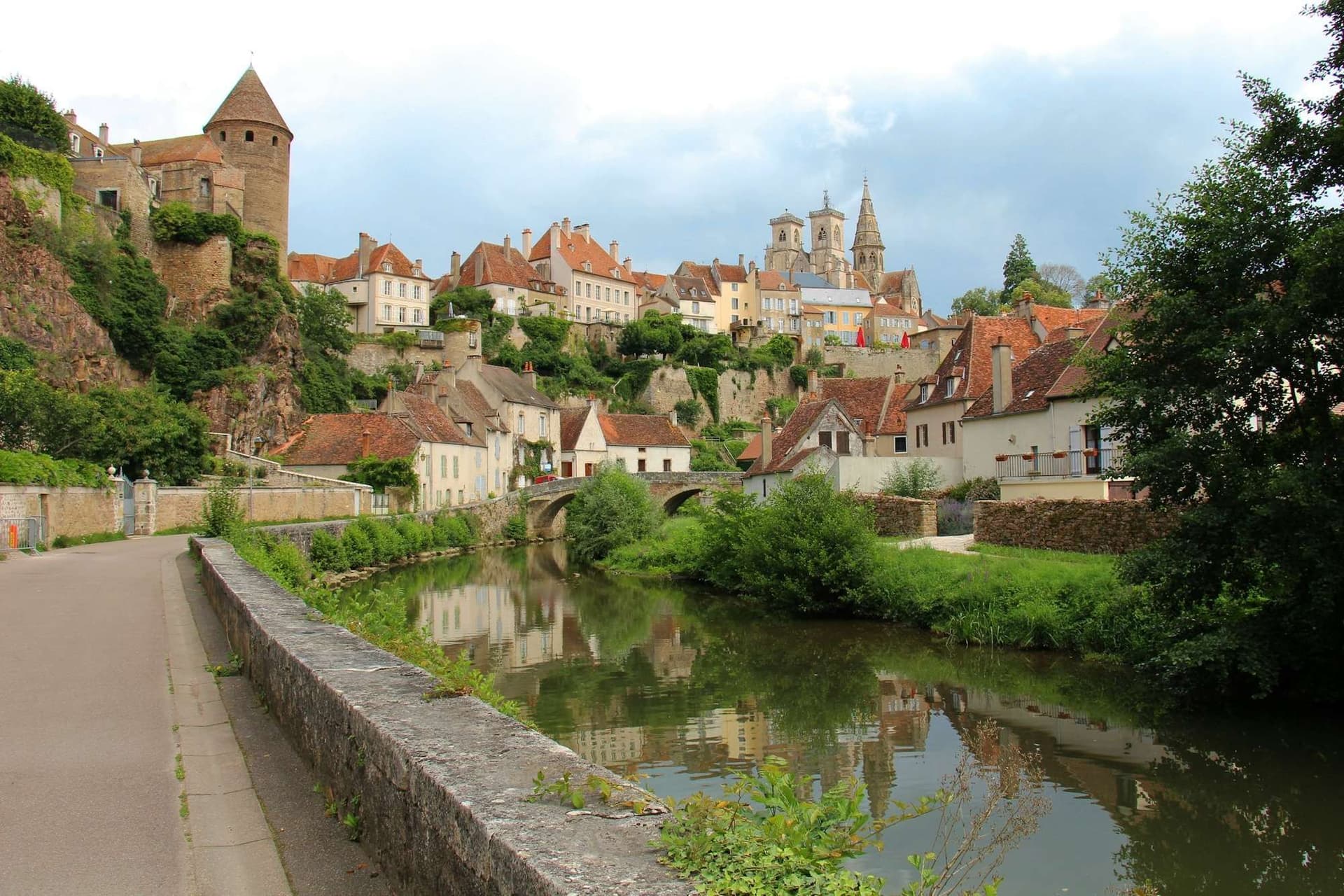
Hiking in Burgundy is unlike hiking almost anywhere else in France. This is not a region of high alpine drama or coastal scenery. What it offers instead is something rarer: a deeply layered landscape where Roman roads run past medieval abbeys, where vineyard paths thread between Grand Cru plots, and where the act of walking connects you physically to one of the world's most historically charged pieces of land. The experience rewards hikers who want to move slowly through a place and understand it, not just cross it.
The trail network here is substantial. Burgundy holds over 6,000 km of marked paths, spanning four departments: Yonne in the north, Cote-d'Or in the east, Saone-et-Loire in the south, and Nievre covering the western highlands. Long-distance Grande Randonnee (GR) routes cross the region in multiple directions, including the GR 2 following the Seine and Yonne rivers, the GR 13 traversing the Morvan highlands, and the GR 7 running the full length of the famous Cote d'Or wine corridor from Dijon to Santenay. Day walkers and multi-day trekkers will find purpose-built routes as well as pilgrimage trails used continuously since the 11th century.
Hiking Burgundy does not demand extreme fitness or technical skill, but it does reward preparation. The Morvan massif in the west offers genuine terrain: forested ridges, lake circuits, and climbs up to 900 m (2,953 ft). The wine-country trails of the Cote d'Or are moderate by comparison, but long days on limestone tracks in summer heat require solid footwear and adequate water. Beginners and seasoned hikers alike will find routes calibrated to their level, from gentle half-day vineyard loops to six-day GR traverses.
The most iconic routes in the region are the GR 13 through the Morvan, the Pays des Grands Crus trail along the Cote d'Or wine road, the Via Cluny pilgrim route, and the Chemin de Saint-Jacques de Compostelle passing through Vezelay. This guide covers the best sections of each, along with planning information for seasons, accommodation, logistics, and food. Whether you are spending a long weekend based in Beaune or committing to a full week on trail, hiking in Burgundy will give you more to think about than the distance covered.
Explore our amazing hiking tours in Burgundy now!
Burgundy sits at the heart of France, an inland region bordered by the Paris Basin to the north, the Alps to the east, and the Massif Central to the southwest. Its character comes from the contrast between two distinct halves: a western highlands zone anchored by the Morvan massif, and an eastern escarpment where the famous Cote d'Or drops into the flat Saone plain. Between these two zones lie the rolling limestone plateaux of the Auxois and the gentle hills of the Maconnais in the south.
The Morvan is the geological core of Burgundy, a granite massif rising to 901 m (2,956 ft) at Haut-Folin. Lakes formed by dams for water supply punctuate the hills, including Lac des Settons and Lac de Panneciere, both of which serve as focal points for hiking loops. The Morvan Regional Natural Park covers 2,915 sq km (1,125 sq mi) and protects a landscape of Douglas fir forest, open moorland, and fast-running rivers fed by high rainfall. This is the part of Burgundy that feels wild, and it is the region most suited to hikers seeking solitude and elevation.
The Cote d'Or escarpment to the east is geologically complex: a series of limestone and clay bands tilted by ancient faults, creating the celebrated sequence of terroirs from Dijon south through Nuits-Saint-Georges, Beaune, and Meursault. The hillside faces predominantly east and southeast, which is why the light is particular at dusk. Hiking here means walking between walled vineyards (known as clos) on packed limestone tracks. The elevation rarely exceeds 450 m (1,476 ft) on these slopes, but the views across the Saone plain to the Alps on clear days are significant.
Wildlife in Burgundy is quiet but present. The Morvan supports red deer, wild boar, and a recovering population of otter along its rivers. The limestone hillsides of the Cote d'Or and the Auxois host common buzzard, kestrel, and skylark. Burgundy's canal network, which extends 1,200 km across the region, also provides towpath walking that passes through a distinct lowland ecosystem of poplar, willow, and migratory waterbirds.
Burgundy's walking routes are inseparable from its history, because in most cases the trails and the history are the same path. The Chemin de Saint-Jacques, the pilgrimage road to Santiago de Compostela, passes through Vezelay, a hilltop town in the Yonne where the Basilique Sainte-Marie-Madeleine has drawn Christian pilgrims since the 11th century. The route south through Burgundy to Nevers follows medieval roads that predate any modern trail marking. Hikers on this section walk through the same villages, ford the same rivers, and sleep in the same towns that pilgrims used for nearly a thousand years.
The Cistercian and Cluniac monastic orders shaped the region's landscape as much as any geological force. The Abbey of Cluny, founded in 910 CE in the Maconnais, became the largest Christian church in the world before St. Peter's Basilica was built in Rome. The Via Cluny hiking trail follows the monastic network radiating out from Cluny through a chain of daughter abbeys, chapels, and granges. The Abbey of Fontenay in the Auxois, founded in 1118 and now UNESCO-listed, is another anchor point, surrounded by a valley the Cistercians cleared, drained, and farmed with discipline. Walking between these sites is to follow a monastic geography still legible on the ground.
The Duchy of Burgundy at its 15th-century height controlled territory stretching from the Rhine to the North Sea, and the region's churches, chateaux, and fortified towns reflect that wealth and ambition. Beaune, the wine capital of the region, is built around the Hotel-Dieu, a 15th-century charity hospital founded by the Burgundian chancellor Nicolas Rolin. Dijon, the regional capital, holds some of the finest Flemish-influenced Gothic architecture in France. Hikers based in either city can walk directly from the urban core into the vineyards within twenty minutes.
The working rural culture of Burgundy is still visible in the hamlets and farmsteads that punctuate the trail network. The Charolais cattle breed, developed in the hills around Charolles, grazes on the limestone pastures between vine country and the Morvan edge. Village markets, communal ovens, and stone-walled vegetable gardens appear regularly along quieter GR routes. This is not a region that performs its culture for tourism; it lives it, and walkers who engage with it directly will find the experience considerably richer than those who treat the trail as background.
Burgundy's vineyard landscape was designated a UNESCO World Heritage Site in 2015 under the concept of the "Climates of Burgundy." A climat (the word is used in its original French sense, not meaning weather) is a precisely defined parcel of vineyard, each with its own name, soil composition, aspect, and drainage characteristics, mapped and named over centuries of observation by Cistercian monks. There are approximately 1,247 individual climates along the Cote d'Or, each with legal boundaries unchanged since the 19th century. Walking through this landscape means passing through a living archive of agricultural knowledge.
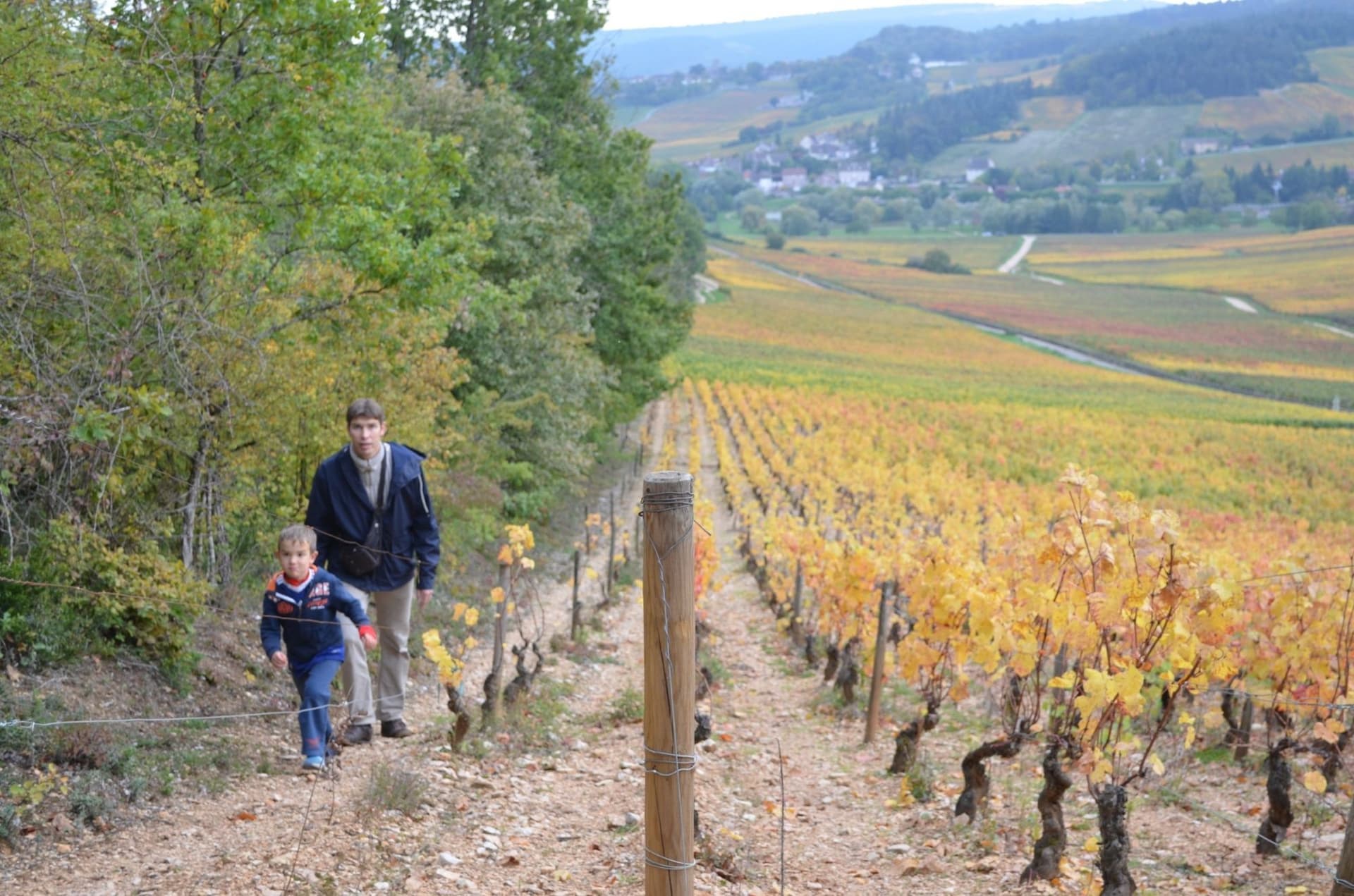
For hikers, the practical consequence is that the trails through the Cote d'Or are not simply scenic routes. They are readings of a classification system. The flat plots nearest the RN74 road carry the regional Bourgogne appellation. Moving up the slope, you pass through village-level appellations such as Gevrey-Chambertin or Pommard. The narrow strip mid-slope holds the Premier Crus. At the top edge, the Grand Crus occupy specific pockets of limestone and clay that have been producing wine of the highest recognised quality for over five centuries. Walking up a single hillside, you traverse this entire hierarchy within 500 m.
Understanding this system transforms a vineyard walk from a pleasant stroll into something genuinely educational. The walled enclosures (clos) that appear throughout the hike mark individual ownership going back generations. The village of Vougeot houses the Clos de Vougeot, a single 50-hectare enclosure with 82 different owners, each farming their allocated rows. The Chateau du Clos de Vougeot is open to visitors and sits directly on the GR 7 trail. Similarly, the village of Aloxe-Corton, accessible on the Pays des Grands Crus route, has Grand Cru hillsides on three sides of the trail.
Hikers who want to connect trail walking with wine education will find this structure more useful than any tasting brochure. Several vignerons along the Cote d'Or welcome walkers who knock on their gates during harvest, typically September to early October. This is not guaranteed access, but it is culturally accepted in a way that reflects the openness of the region to visitors who come on foot.
Burgundy does not have a single best season; it has two windows separated by extremes. Spring and autumn are the primary hiking seasons for most routes. Summer is viable on the Morvan and on shaded canal towpaths, but exposed vineyard tracks become very hot. Winter limits walking to low-level routes.
Late April through June is the best overall period for hiking in Burgundy. Temperatures range from 12 to 22 degrees C (54 to 72 degrees F). The vineyards show new growth, the limestone hillsides are covered in wildflowers including orchids specific to the Cote d'Or calcaire, and tourist pressure is moderate outside of Beaune and Dijon. The Morvan is especially good in May and June when the forest is fresh and river levels have dropped enough to make stream crossings comfortable. Days are long, with usable light until 9 p.m. in June.
July and August bring reliable weather but significant heat on the exposed vineyard trails. Temperatures regularly reach 30 to 35 degrees C (86 to 95 degrees F) in the Cote d'Or. Canal towpath walks and shaded Morvan forest routes remain comfortable. The GR 13 through the Morvan highlands is a good choice in summer given its tree cover and elevation. The harvest period begins in late August in some years, which brings a specific energy to the vineyard villages; arriving by foot gives a different perspective from the wine-tour bus crowds. Book accommodation in Beaune and Dijon well in advance for July and August.
September and October are arguably the finest months for hiking in Burgundy, particularly for the wine-country routes. The harvest (vendanges) takes place from mid-September to mid-October depending on the appellation and the year. The vineyard foliage turns gold and copper, giving the Cote d'Or its name a second meaning. Temperatures drop to a comfortable 10 to 18 degrees C (50 to 64 degrees F), the light is different, and the smell of fermenting grape must drifts across the trails at dawn. The Morvan also colours well in autumn. This is the season that rewards hikers who plan their routes around the landscape rather than the weather alone.
Hiking in Burgundy in winter is limited but not impossible. The Morvan receives significant rainfall and occasional snow above 600 m (1,969 ft), making the GR 13 demanding in poor conditions. The Cote d'Or vineyard trails are passable on clear days but offer limited daylight and closed restaurants. Canal towpath walks remain accessible year-round in decent weather. The Via Cluny and the Chemin de Saint-Jacques routes are quiet in winter, which suits hikers who want solitude over comfort. Most gites and chambres d'hotes along the GR routes close between November and March, so accommodation planning is essential.
Dive into our curated Burgundy hiking adventures today!
Burgundy's trail network rewards targeted planning. The five routes below represent the range of what hiking in Burgundy offers, from pilgrimage roads to vineyard traverses to wilderness circuits in the Morvan. Each stands on its own; they can also be combined for longer itineraries.
The GR 13 is the backbone long-distance route of the Morvan massif, running southwest from the pilgrimage town of Vezelay through the heart of the Regional Natural Park to Autun, a city of Roman and medieval layers. This is the most physically demanding multi-day hike in Burgundy. The route climbs onto granite ridges, descends into river valleys, and passes through forest and moorland that feel remote by French standards.
The section between Vezelay and Quarré-les-Tombes covers some of the highest terrain, crossing the summit plateau above 700 m (2,297 ft) with open views across the Morvan in good weather. From Quarré-les-Tombes, the trail descends to the Cure valley and follows the river south through Chastellux-sur-Cure, a hamlet dominated by a medieval castle above the water. The approach to Autun passes through the Couhard hill, where Roman ruins including a pyramid-like monument called the Pierre de Couhard mark the edge of the ancient city.
Autun is a worthwhile destination in its own right. The Cathedrale Saint-Lazare holds Romanesque carved capitals considered among the finest in France, and the city's Roman theatre and temple ruins are accessible on foot from the centre.
Total Distance: approx. 120 km (75 mi) Vezelay to Autun Duration: 6 to 8 days Difficulty: Challenging High Point: Haut-Folin area, approx. 850 m (2,789 ft) on route Best Season: May to June, September to October Accommodation: Gites d'etape, chambres d'hotes, occasional village hotels Gateway Town: Vezelay (start), Autun (end) Highlights: Vezelay basilica, Morvan lakes, Chastellux castle, Autun Roman ruins
The Pays des Grands Crus trail runs 60 km (37 mi) along the full length of the Cote d'Or wine corridor from the edge of Dijon south to Santenay, passing through the most famous vineyard villages in Burgundy. This is a well-maintained, well-signed trail that can be walked in four days at a comfortable pace or done as a series of day sections. It is the trail that best captures what makes hiking Burgundy distinctive: the connection between the act of walking and the landscape of wine.
The northern section from Dijon to Nuits-Saint-Georges (approx. 22 km / 14 mi) passes through the Cote de Nuits, home to Chambolle-Musigny, Gevrey-Chambertin, Vougeot, and Vosne-Romanee. The walled Clos de Vougeot sits directly on the trail, and the village of Vosne-Romanee, home to Domaine de la Romanee-Conti, is reached on a path between rows of Grand Cru vines. The southern section from Beaune to Santenay (approx. 20 km / 12 mi) covers the Cote de Beaune, including Pommard, Volnay, Meursault, and Chassagne-Montrachet. The chalky limestone soils of the Meursault plateau, visible in the pale colour of the track itself, produce the region's great white wines.
The trail is mostly flat to gently rolling, with a maximum elevation of around 400 m (1,312 ft) on the hillside sections. The main challenge is heat on exposed stretches in July and August. Each village on the route has at least one tasting cellar open to walkers.
Total Distance: 60 km (37 mi) Duration: 3 to 4 days Difficulty: Easy to Moderate High Point: Hillside sections, approx. 400 m (1,312 ft) Best Season: April to June, September to October Accommodation: Hotels and B&Bs in Beaune (hub), village gites along route Gateway Town: Dijon (start), Santenay (end); Beaune (midpoint base) Highlights: Clos de Vougeot, Vosne-Romanee, Beaune old town, Meursault vineyards Combined Well With: Beaune to Pommard day loop
The Via Cluny is a 119 km (74 mi) route through the Maconnais and Charolais hills, connecting the monastic heritage sites of Cluny and its satellite abbeys. It follows ancient pilgrimage roads between Cluny in the south and the Saone valley in the north, passing through a landscape of Romanesque churches, fortified farmsteads (bories), and livestock country largely untouched by wine tourism. This is the quietest of Burgundy's major trails and the one most likely to give walkers the sense of being somewhere genuinely off the main visitor circuit.
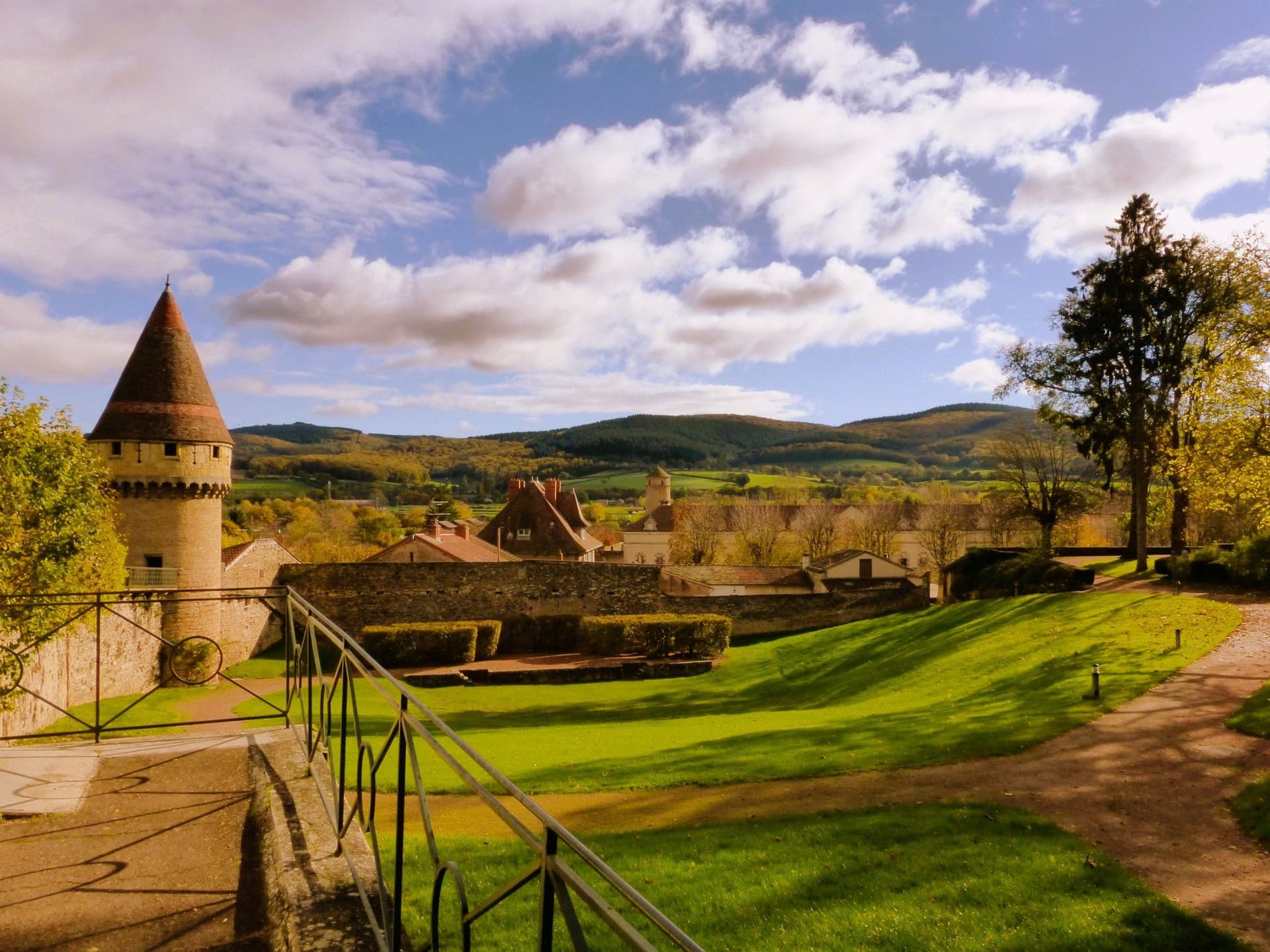
The section between Cluny and Brancion is particularly rewarding. The town of Cluny itself, though the great abbey church survives only as ruins since the Revolutionary demolition, remains architecturally coherent and gives the walk a strong starting point. The trail climbs through the Maconnais hills on limestone tracks, passing through villages like Chapaize, whose 11th-century tower church is one of the oldest standing structures in Burgundy. The fortified medieval village of Brancion, perched on a spur above two valleys, sits at around the midpoint and makes a natural overnight stop.
The route continues north to Tournus on the Saone, a city with a Romanesque abbatiale (abbey church) of significant architectural importance, particularly its stripped-down nave and crypt dating from the early 11th century.
Total Distance: 119 km (74 mi) Duration: 5 to 7 days Difficulty: Moderate High Point: Maconnais hills, approx. 500 m (1,640 ft) Best Season: April to June, September to October Accommodation: Gites d'etape, pilgrim-friendly chambres d'hotes Gateway Town: Cluny (start), Tournus (end) Highlights: Cluny abbey ruins, Chapaize church, Brancion village, Tournus abbatiale
The Chemin de Saint-Jacques through Burgundy is one of the four historic French pilgrim roads to Santiago de Compostela, and the Vezelay route (designated Via Turonensis in its southern sections) is the one most associated with the region. From Vezelay, the trail runs southwest through the Morvan's southern edge to Nevers on the Loire, a distance of approximately 100 km (62 mi). This section carries the traditional waymarking of the pilgrim trail: red and white GR stripes combined with yellow scallop shells.
The landscape between Vezelay and Nevers is quieter than the Cote d'Or and more varied than a simple vineyard walk. Hikers cross agricultural plateaux, descend through cattle-farming valleys, and pass through villages where the church is often the only public building. The small town of La Charite-sur-Loire, approximately 45 km (28 mi) from Nevers, is a former priory town of Cluniac origin and was itself once considered a stopping point of such importance that it was called La Charite (The Charity) in reference to the hospitality it offered pilgrims. The priory church, though damaged, is still imposing.
This route suits hikers who want a walking experience with spiritual or historical depth rather than a wine-focused itinerary. It is also practical for those wanting to connect Burgundy to a longer Camino journey south toward the Pyrenees.
Total Distance: approx. 100 km (62 mi) Vezelay to Nevers Duration: 5 to 6 days Difficulty: Moderate Best Season: March to June, September to November Accommodation: Pilgrim gites, village B&Bs; book ahead in spring and early autumn Gateway Town: Vezelay (start), Nevers (end) Highlights: Vezelay basilica, Loire valley approach, La Charite-sur-Loire priory Combined Well With: Continuation on GR 654 south toward Le Puy-en-Velay
The Tour du Morvan GR de Pays is a circular route covering the entire Morvan massif, approximately 230 km (143 mi) of maintained trail. Unlike the point-to-point GR 13, this circuit returns to its starting point and gives a comprehensive reading of the Morvan's character: its granite ridges, its lake district in the north, its forested centre, and its agricultural southern edge. Most hikers take 10 to 14 days to complete the full circuit, though sections can be done independently.
The northern section of the circuit, between Lormes and Lac des Settons, passes through the Morvan lake district, where reservoirs ringed by fir and oak forest offer some of the most solitary walking in Burgundy. The Lac des Settons at 360 m (1,181 ft) is the largest lake in the Morvan and makes a good overnight base. From Settons, the trail climbs toward the Haut-Folin area, Burgundy's highest accessible terrain at 901 m (2,956 ft), before descending to the Cure valley.
The Tour du Morvan is best walked in a clockwise direction from Montsauche-les-Settons, which has the best transport connections of the Morvan villages. This is the circuit for hikers who want genuine physical challenge, consistent solitude, and a landscape that has nothing to do with wine.
Total Distance: approx. 230 km (143 mi) Duration: 10 to 14 days Difficulty: Challenging High Point: Haut-Folin, 901 m (2,956 ft) Best Season: May to June, September to October Accommodation: Gites d'etape, lake-side campsites, occasional village hotels Gateway Town: Montsauche-les-Settons Highlights: Lac des Settons, Haut-Folin plateau, Cure valley, Chastellux castle
Get started with your Hiking adventure now!
Burgundy's food culture is inseparable from its wine culture, and both are built on the same logic: the best ingredients from a specific place, prepared with minimal interference. This is not a region of elaborate cooking technique. Dishes here are slow-cooked, bone-deep satisfying, and calibrated to the wines that will accompany them. Hikers who time their rest days around a serious restaurant meal will eat as well as anywhere in France.
The defining dish of the region is boeuf bourguignon, beef braised in red wine with lardons, pearl onions, and mushrooms. In Burgundy, this is made with local Charolais beef and Pinot Noir, ideally a simple village-level Bourgogne Rouge. Equally central to the cuisine is coq au vin, the same technique applied to chicken. Both dishes are found on every restaurant menu in the region; the quality varies enormously, and the best versions come from small village auberges with their own vegetable gardens, not tourist-facing restaurants in Beaune.
The mustard of Dijon deserves specific mention for hikers passing through or based in the city. Moutarde de Dijon is not a condiment here; it is an ingredient that appears in vinaigrettes, cream sauces for rabbit or veal, and the crust of baked gratins. The Fallot mill in Beaune still produces mustard on stone mills and welcomes visitors. Along the trail, a simple picnic of regional mustard, local cheese, and bread eaten on a limestone ledge above a Grand Cru vineyard is one of the genuine pleasures of hiking in Burgundy.
The cheese most associated with Burgundy is Epoisses, a washed-rind cow's milk cheese from the village of the same name in the Auxois. It is pungent, creamy when ripe, and traditionally eaten with a glass of Sauternes or marc de Bourgogne (the regional grape spirit). Moutier d'Ahun, Soumaintrain, and Aisy Cendre are other regional cheeses less known outside France but found in the markets of Semur-en-Auxois and Autun.
Gougeres, the light choux pastry puffs baked with Gruyere, are the standard accompaniment to any wine tasting in the region. They appear at cellar doors and on bar counters throughout the Cote d'Or. Jambon persille (ham in parsley jelly) and andouillette de Chablis (a strong-flavoured offal sausage made with Chablis wine) are regional charcuterie staples worth trying at least once. For resupply on trail, the weekly markets in Beaune, Autun, and Auxerre carry the full range of regional products.
The accommodation system for hiking in Burgundy is built primarily on gites d'etape (walkers' hostels) and chambres d'hotes (bed and breakfasts). Unlike the formal hut systems of the Alps or Scandinavia, there is no single network or membership scheme. The main resource for finding and booking accommodation along GR routes is the Gites de France national platform and the FFRandonnee (French Hiking Federation) gite database. Both are searchable by trail name and stage.
Gites d'etape are the primary accommodation for multi-day hikers on GR routes in Burgundy. They offer dormitory beds or small private rooms, shared bathrooms, and typically a simple dinner (table d'hote) prepared by the owner. Prices range from 18 to 35 euros per person for a bed, with dinner adding 15 to 25 euros. Many gites are family-run and provide local knowledge about trail conditions and closures that no app or guidebook can match. Booking two to three days ahead is adequate outside July and August; during peak season, advance booking of a week or more is recommended on the popular Via Cluny and GR 13.
Chambres d'hotes (B&Bs) are more comfortable than gites and are concentrated around the wine-producing villages of the Cote d'Or and the pilgrimage towns of Vezelay and Autun. Prices range from 60 to 120 euros per double room including breakfast. Several wine-producing families along the Pays des Grands Crus trail offer chambres d'hotes with cellar tastings included, which provides a combination unavailable anywhere else. The standard of these properties is generally high; Burgundy's wine tourism has raised expectations across the sector.
Small hotels exist in most of the larger trail towns, including Beaune, Autun, Nuits-Saint-Georges, and Tournus. Prices vary from 60 euros for a simple room to 200 euros for converted manor properties. Wild camping is tolerated in the Morvan outside designated no-camping zones, particularly on private agricultural land with permission. Organised campsites exist at Lac des Settons and several other Morvan lake sites; prices start at around 10 euros per person per night. On the Cote d'Or wine trails, camping is not practical given the density of private vineyard land and the short distances between villages with accommodation.
Burgundy is one of the best-connected inland regions in France. Paris Gare de Lyon to Dijon by TGV takes 1 hour 35 minutes. Paris to Beaune takes under 2 hours. Paris to Auxerre (gateway for Vezelay) takes about 2 hours on regional trains. Macon-Loche TGV station in the south serves the Via Cluny starting point. International access is through Paris Charles de Gaulle or Lyon-Saint-Exupery airports, both within 2 hours of the main trail hubs by rail. For the Morvan, the nearest railhead is Autun or Chateau-Chinon, requiring a taxi or local bus to reach trailheads at Vezelay, Settons, or Quarré-les-Tombes.
The IGN (Institut Geographique National) Carte de Randonnee series at 1:25,000 scale covers all major hiking areas in Burgundy. The relevant map numbers for each trail are listed in the official FFRandonnee topo-guides, available in French bookshops and online. For digital navigation, the French hiking app Visorando covers Burgundy trails with offline map functionality. IGNrando is the official IGN app and provides the most detailed base mapping. The AllTrails database also covers the Cote d'Or day routes and is useful for English-speaking hikers. GR trails are waymarked with red and white paint blazes on trees, walls, and posts; waymarking quality is generally high in Burgundy but decreases in the most rural Morvan sections.
France uses the euro. Burgundy is well-served by bank ATMs in all towns over 2,000 people. Trail-adjacent villages with under 500 inhabitants may have no cash facilities; carry enough cash for one to two days of gite fees. Supermarkets for resupply are in Beaune, Autun, Nuits-Saint-Georges, Auxerre, and Macon. Village boulangeries and small epiceries exist on most major GR stages; opening hours are typically 7 a.m. to 12 p.m. and 3 to 7 p.m. on weekdays, shorter on weekends. Stock up for remote Morvan sections where two or three days may pass without a resupply point.
Burgundy presents no technical alpine hazards. The Morvan's main risks are hypothermia in wet winter conditions and getting lost in dense forest in poor visibility. The region has significant tick activity from April to October; check after every day on trail and carry tick removal tools. River crossings on the Morvan GR routes can be elevated after heavy rainfall; check local conditions before departing. On the Cote d'Or vineyard trails, the primary safety consideration is heat exhaustion in July and August. Carry at least 2 litres of water on any day exceeding 28 degrees C (82 degrees F) and plan for long midday breaks in shade.
Fitness requirements vary considerably by route. The Pays des Grands Crus trail and the Via Cluny are accessible to anyone who walks regularly; daily distances of 15 to 20 km (9 to 12 mi) on mostly flat or gently rolling terrain are manageable for moderate-fitness hikers. The GR 13 through the Morvan and the Tour du Morvan circuit require genuine hiking fitness, with several days exceeding 700 m (2,297 ft) of elevation gain. For the wine-country routes, the main challenge is not the terrain but the heat in summer and the temptation to stop for tastings every few kilometres.
The main GR routes in Burgundy are fully waymarked and do not require a guide for confident navigators with a 1:25,000 IGN map. Independent hiking is the norm on all routes described in this guide. That said, a guide adds significant value on the Cote d'Or wine trails if you want to understand what you are walking through: the climat system, the appellation hierarchy, and which caves (cellars) to prioritise for tastings. Several local operators in Beaune and Dijon offer half-day and full-day guided vineyard walks.
No permits are required for any of the hiking routes described in this guide. GR trails in France are maintained by the FFRandonnee and are free to use. The Morvan Regional Natural Park has no access restrictions for walkers on marked trails; some areas around sensitive wildlife sites have advisory restrictions in spring, which are signposted. Access through working vineyards on the Cote d'Or is restricted to marked paths; straying into the vines is not permitted and will be politely but firmly corrected by the vignerons.
This is one of the defining features of hiking Burgundy, particularly on the Pays des Grands Crus trail. Many domaines along the route welcome walkers for tastings, particularly outside peak harvest season. The convention is to arrive during business hours (typically 10 a.m. to 12 p.m. and 2 to 6 p.m.), knock or ring, and ask politely in French if possible. Buying at least one bottle after a serious tasting is considered courteous. The Hospices de Beaune tourist office publishes a map of domaines open to walk-in visitors, updated annually.
For a first visit of three to four days, the Pays des Grands Crus trail between Beaune and Dijon is the most rewarding introduction to hiking in Burgundy. It is logistically simple, the accommodation is well-established, and it covers the most distinctive features of the region in a single linear route. Beaune itself makes an excellent base for the first and last night. For a more physically demanding first visit, the three-day section of the GR 13 between Vezelay and Quarré-les-Tombes in the Morvan offers a complete contrast.
French is essential in the Morvan and in the smaller villages of the Saone-et-Loire. English is widely spoken in Beaune, Dijon, and the major wine villages of the Cote d'Or given the volume of international wine tourists. Learning a handful of trail-related French phrases (sentier balisé for marked trail, chambre d'hotes for B&B, randonnée for hike) is useful. Gite owners and local hikers are generally patient with non-French speakers.
Vezelay has no direct train service. The standard route from Paris is: TGV from Paris Gare de Bercy or Paris Bercy to Laroche-Migennes or Auxerre (approximately 1 hour 30 minutes), then a connecting regional train or local bus south to Sermizelles-Vezelay station. A taxi or pre-arranged transfer covers the final 10 km (6 mi) from the station to the hilltop town. The total journey takes 2.5 to 3 hours from Paris. Several walking tour operators offer luggage transfer from Auxerre to Vezelay for hikers arriving with heavy packs.
The UNESCO designation of the Burgundy Climates in 2015 covers the wine-producing slopes of the Cote d'Or and applies to the landscape you walk through on the Pays des Grands Crus trail. In practical terms, it means the vineyard plots you pass are legally protected in their current configuration; no new development can alter the boundaries or the visual character of the hillside. The designation also drives the quality of interpretation resources available to visitors, with signage along the trail explaining specific climats in English and French. Understanding the system deepens the hiking experience considerably.
Wild camping (camping sauvage) is technically governed by the landowner's permission in France and is neither universally permitted nor universally forbidden. In the Morvan Regional Natural Park, camping outside designated sites is tolerated in practice on a one-night, leave-no-trace basis, particularly in forested areas away from water sources and private properties. On the Cote d'Or and the Via Cluny, wild camping is impractical given the density of private vineyard land and agricultural fields. The practical approach on most Burgundy routes is to use the gite d'etape system and treat camping as a backup rather than a primary plan.
Get started with your Hiking adventure now!
Hiking in Burgundy suits hikers who find meaning in context. The trails here are not about vertical metres or remote summits. They are about moving through a landscape that has been farmed, prayed over, mapped, classified, and argued about for a thousand years, and doing so at a pace that allows you to notice it. The combination of the Morvan's wildness and the Cote d'Or's precision is unusual among French walking regions and makes a well-planned week here considerably more layered than its modest elevations might suggest.
Burgundy's trail network is open, well-marked, and legally free. The food is serious. The accommodation is personal. The wine is, by most measures, the best in France. For hikers willing to engage with the landscape as more than backdrop, it is one of the most rewarding walking destinations in Europe. Explore our guided hiking journeys in Burgundy at Art of Bicycle Trips.
Dive into our curated Burgundy hiking adventures today!